

Last Updated on June 26, 2026 by Nucleosystech
For decades, industrial floors relied on manual logbooks, legacy spreadsheets, and delayed shifts to measure performance. Plant managers would often sit down at the end of the week, analyzing historical data that could only explain past failures rather than prevent them. In today’s fast-paced corporate environment, this reactive model is no longer sustainable. Industry 4.0 demands immediate action, leading forward-thinking organizations to shift toward comprehensive automation. The implementation of modern AI Production Reporting is completely transforming modern manufacturing by replacing historical guesswork with dynamic, instant, and predictive operational visibility.
With modern smart software architectures, the production floor is no longer an isolated physical space; it functions as an interconnected, highly intelligent ecosystem. Advanced automated processing enables operations to minimize administrative overhead, avoid structural operational bottlenecks, and significantly reduce human error. Whether managing localized machine performance or multi-plant global setups, utilizing a data-driven approach to tracking operational efficiency has evolved from a progressive choice into a core operational standard for modern enterprise survival.
The Core Shifts in Industrial Operations
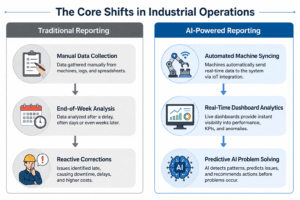
1. The Power of AI Integrated Software on the Shop Floor
At the absolute center of this transformation lies AI Integrated Software. Traditional Enterprise Resource Planning (ERP) frameworks and standard Manufacturing Execution Systems (MES) excel at tracking static numbers—such as total units produced or aggregate raw materials used—but they consistently fail to extract hidden contextual insights.
When custom artificial intelligence layers are built directly into manufacturing architectures, the software stops acting as a passive database and begins working as a proactive assistant. An AI Integrated Software system systematically examines thousands of concurrent variables—ranging from slight thermal fluctuations in heavy tooling equipment to minor shifts in input energy patterns. By actively cross-referencing this data with historical performance datasets, the system identifies subtle operational anomalies long before a mechanical breakdown occurs.
This predictive shift has a massive direct impact on overall equipment effectiveness (OEE). Instead of halting a critical assembly line for emergency repairs during a peak cycle, systems leverage smart machine learning algorithms to alert technicians to schedule targeted maintenance during planned downtime.
2. Unlocking Supercharged Responses with an Autonomous AI Agent
In high-speed assembly and processing facilities, even five minutes of miscommunication or delayed response can mean thousands of dollars in lost yield. This is where an intelligent, operational AI Agent for Quick Response becomes an invaluable manufacturing asset.
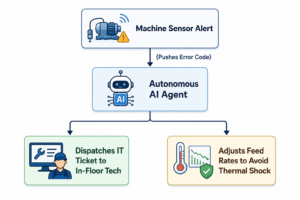
Rather than waiting for a plant engineer to read a text report or manually spot an error code on a physical terminal, an AI Agent for Quick Response actively monitors systemic telemetry data. When a bottleneck or failure pattern begins to develop:
- The agent instantaneously calculates the probable root cause of the slowdown.
- It automatically dispatches precise corrective instructions to on-floor technical teams via integrated communication channels.
- It can execute micro-adjustments directly within the software layer, slowing feed rates or re-routing raw parts to prevent sudden thermal shock or mechanical damage.
This level of autonomous problem-solving ensures that industrial environments maintain continuous operational resilience without requiring constant, manual oversight from executive leadership.
3. The Digital Pulse: AI Production Reporting Dashboards with Quick Statistics
Data is only truly valuable if it can be easily understood and acted upon by stakeholders. A comprehensive Production Report Dashboard with Quick Statistics acts as the centralized digital nerve center for the entire facility, consolidating complex telemetry streams into clean, accessible data charts.
These modern performance interfaces display instant operational metrics, providing floor supervisors, plant engineers, and C-level executives with immediate answers to key operational questions:
- What is our precise operational equipment effectiveness (OEE) across individual shifts?
- Are current raw material consumption rates aligning with our predictive weekly targets?
- Which specific production cells are experiencing unexpected micro-stoppages?
By deploying an intuitive Production Report Dashboard with Quick Statistics, teams no longer have to dig through complex databases or sort through messy spreadsheets to uncover operational trends. Everything required to make smart, time-sensitive decisions is displayed clearly on a single screen, accessible from any desktop or mobile device.
4. Unifying the Floor: Seamless Machine to Software Integration
The greatest historical challenge to achieving true automation is operational fragmentation. A typical production facility often runs a mix of older legacy hardware alongside state-of-the-art robotic systems. Bringing these disparate systems together requires robust Machine to Software Integration.
Without direct, native hardware communication, data silos naturally form. When plants implement comprehensive Machine to Software Integration, they open up real-time communication channels between physical hardware and cloud analytics platforms. By using smart industrial internet of things (IIoT) protocols, edge devices can capture every mechanical strike, rotational change, and thermal variance directly from programmable logic controllers (PLCs). This continuous stream of raw shop-floor data powers the core analysis engine, ensuring that your automated metrics reflect exactly what is happening on the line at that exact moment.
5. Agile Manufacturing via Custom Software Tailored to Fleet Realities
Every industrial assembly setup is unique. A specialized pharmaceutical packaging facility operates under vastly different constraints, compliance rules, and workflows than a heavy automotive stamping facility. Because off-the-shelf software solutions often force facilities to change their proven workflows to fit rigid application layouts, choosing Custom Software According to Redirection and unique workflow configurations is essential for long-term operational success.
By focusing on custom-built digital layouts, enterprises can tailor their data capture systems to track the exact key performance indicators (KPIs) that matter most to their specific market. Custom data models accommodate specialized custom workflows, unique compliance requirements, and specific operational goals. This bespoke approach ensures that your software scales naturally alongside your operations, adapting fluidly as your manufacturing requirements evolve over time.
6. Driving Continuous Efficiency Through Advanced Process Automation
The ultimate goal of adopting modern technical frameworks is complete, end-to-end Process Automation. When software systems communicate smoothly with physical production machinery, organizations can eliminate slow, repetitive manual tasks from their daily routines.
With an optimized Process Automation strategy in place, an system can automatically handle complex administrative workflows:
- When a production run finishes, the system automatically checks total batch yield against initial quality assurance specs.
- It immediately compiles compliance logs and updates localized inventory levels within the ERP framework.
- It generates digital shipping manifests and assigns transport tasks without requiring human data entry.
This automated approach allows engineers to move away from tedious data logging and focus their energy on optimizing plant floor layouts, refining product designs, and driving overall business growth.
Key Advantages of Modern AI Production Reporting
Implementing an AI-driven data strategy delivers clear, measurable operational improvements across every level of production management:
| Operational Focus Area | Traditional Analytics Method | Advanced AI Approach | Strategic Enterprise Benefit |
| Data Gathering | Manual transcription and shift logs | Continuous automated sensor capture | Eliminates data errors and entry delays |
| Maintenance Action | Reactive fixes after equipment fails | Predictive modeling of wear indicators | Significantly reduces unplanned downtime |
| Quality Control | Periodic manual spot checks | Real-time computer vision monitoring | Drastically lowers material waste and scrap |
| Resource Planning | Rigid static schedules | Agile, algorithmic task balancing | Maximizes overall machine utilization |
Digital Transformation with Nucleosys Tech
Transitioning from legacy production tracking to an advanced digital infrastructure requires a knowledgeable technology partner. Nucleosys Tech specializes in engineering world-class web applications, robust custom databases, and cutting-edge industrial software solutions that bridge the gap between complex physical machinery and scalable cloud intelligence.
Whether your organization needs to build an AI Integrated Software engine from the ground up, implement a responsive AI Agent for Quick Response, or deploy a customized Production Report Dashboard with Quick Statistics, our dedicated engineering team has the expertise to bring your vision to life. We work closely with your operational stakeholders to design and deploy scalable digital ecosystems that seamlessly connect with your existing shop floor hardware, helping your business unlock hidden cost savings and maximize daily production output.
Ready to optimize your manufacturing workflows? Learn more about our custom solutions by exploring our comprehensive Software Development Services or discover how our technical teams build next-generation platforms on our dedicated Company Blog Insights.
The Future of Manufacturing Analytics
The rapid evolution of industrial intelligence makes one thing clear: the future of manufacturing belongs to operations that know how to leverage their data effectively. Relying on manual reports and disconnected legacy systems makes it difficult to stay competitive in a rapidly changing global market. Adopting AI Production Reporting gives facilities the clarity and agility needed to respond instantly to changing floor conditions.
Embracing deep machine integration, automated analytics, and custom-designed software environments allows organizations to optimize their resource allocation, protect their physical assets, and build a highly resilient business model. The tools required to build a smarter, more efficient factory floor are available today—and implementing them will redefine your production potential for years to come.
Accelerate Your Industry 4.0 Journey
Do not let outdated reporting methods slow down your operational growth. Partner with the digital transformation specialists at Nucleosys Tech to build a secure, scalable, and highly intelligent production analytics platform tailored to your precise manufacturing workflows.
Our engineering team specializes in deep industrial integrations, advanced cloud data pipelines, and clean dashboard design, ensuring your leadership team has the exact insights needed to maximize floor efficiency. Contact our consulting team today to schedule your live software demonstration and take the first step toward building a truly data-driven production environment.
Connect with an Industry 4.0 Architect at Nucleosys Tech Today!
Frequently Asked Questions
How does AI Production Reporting integrate with older, legacy factory equipment?
Connecting legacy machinery to modern analytics systems is achieved through advanced hardware protocols and external industrial gateway devices. By installing specialized sensors or using modern communication bridges, engineers can pull critical operational data directly from older programmable logic controllers (PLCs). This allows companies to enjoy the benefits of real-time cloud data tracking without having to invest in expensive new production machinery.
What makes custom manufacturing software a better choice than standard off-the-shelf applications?
Standard out-of-the-box software packages are built for broad market appeal, which often means they lack the flexibility needed to handle unique industrial workflows or specialized compliance requirements. Choosing custom software allows you to design your application around your proven operational processes. This approach ensures seamless data flow across your existing toolsets and provides the long-term scalability needed to support your business as it grows.
How do automated data systems help minimize material waste and scrap rates on the line?
Automated tracking software continuously monitors production quality indicators by analyzing real-time sensor streams and automated inspection points. If a machine begins drifting out of its optimal operating parameters, the software flags the variance immediately. This rapid alert system allows floor technicians to make adjustments before a small defect ruins a whole batch of material, keeping your scrap rates low and saving significant material costs.
What role does predictive data analysis play in optimizing daily equipment maintenance?
Instead of waiting for a critical machine component to break down and halt production, predictive algorithms analyze continuous data streams to look for early signs of mechanical wear—such as subtle thermal changes or unusual vibration patterns. By identifying these warning signs early, maintenance teams can schedule targeted repairs during planned operational breaks, preventing costly emergency shutdowns and extending the lifespan of your factory hardware.

