
Last Updated on July 15, 2026 by Nucleosystech
In the hyper-competitive digital landscape, data dictates the success of corporate operations. Modern sales teams no longer struggle with a lack of lead information; instead, they face structural bottlenecks in filtering actionable opportunities. Traditional systems act as digital ledger books, requiring manual tracking, tedious entry protocols, and fragmented communication setups. However, the introduction of specialized AI CRM Software has initiated a paradigm shift in data management. By unifying scattered metrics with self-learning models, modern platforms turn passive data collection into proactive, intelligent operations. Implementing advanced AI CRM Software allows enterprises to transcend standard operational boundaries, unlocking real-time data visibility, automated pipelines, and accelerated pipeline conversion velocities.
For high-growth organizations aiming to scale effectively, manual lead filtering is no longer sustainable. The integration of an intelligent pipeline infrastructure shifts your team’s focus from administrative management to closing high-value deals. Across global markets, business leaders are realizing that manual tracking cannot match the execution speed of modern, automated ecosystems. The transition to an AI-powered CRM: The Future of Sales Automation represents a fundamental structural upgrade. It turns historical records into predictable revenue channels while freeing up internal human capital.
The Genesis of Sales Transformation: Embracing AI CRM Software
Legacy customer relationship management solutions were designed as systems of record. Sales professionals spent hours logging phone calls, archiving emails, and updating status fields manually. This operational lag frequently resulted in outdated metrics and missed deal conversions. Today, selecting an advanced AI CRM Software suite changes the dynamic from manual tracking to automated execution.
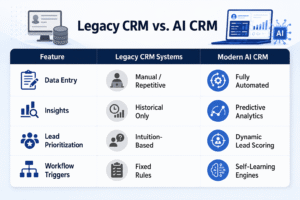
Integrating artificial intelligence directly into your core enterprise applications creates a continuous cycle of process optimization. An enterprise-grade, AI Powered CRM works quietly in the background, analyzing operational history, interpreting client text patterns, and predicting buying signals before your sales reps even pick up the phone. This shift gives organizations a distinct competitive advantage, replacing guesswork with data-driven strategic decisions.
Core Pillars of a Modern Intelligent CRM
Building a highly productive modern enterprise requires deploying tools that go beyond basic contact storage. True CRM Automation leverages interconnected models to manage complex administrative workflows seamlessly. An Intelligent CRM operates across three main functional pillars:
1. Advanced Automated Data Architecture
Instead of relying on reps to copy-paste information, an advanced AI CRM Software platform pulls context directly from emails, calendars, financial records, and historical communication trails. This eliminates blind spots and ensures account records remain accurate and up-to-date without human intervention.
2. Deep Customer Insights and Predictive Text Analysis
By using Natural Language Processing (NLP), the software analyzes client emails and voice interactions to measure customer sentiment. These real-time Customer Insights help teams adjust their communication strategies on the fly, tailoring pitches to align perfectly with the client’s current sentiment.
3. Dynamic Workflow Automation
When a prospect views a pricing page or downloads a whitepaper, the platform immediately triggers context-aware follow-up sequences. This level of CRM Automation guarantees that high-intent accounts receive immediate attention, keeping hot leads from slipping through the cracks.
Maximizing Conversion Rates with AI-Driven Lead Scoring
One of the biggest drivers of sales inefficiency is time spent chasing cold prospects. Standard platforms organize prospects based on rigid, manual rules that fail to capture shifting purchasing behaviors. In contrast, an AI Powered CRM processes historical buyer profiles to establish an accurate, automated model for Lead Scoring.
This intelligent engine calculates conversion probabilities based on hundreds of data points, including:
- Specific corporate roles and operational sizes.
- Exact engagement frequencies across digital assets and content downloads.
- Intent signals, such as pricing page views and feature comparisons.
- Historic sales velocity patterns for similar market sectors.
This automated prioritization ensures account executives focus their energy on prospects with the highest statistical probability of conversion. As a result, companies experience shorter sales cycles and significantly higher average contract values.
Strategic Precision with Predictive Sales Forecasting
Accurate financial projection is a cornerstone of sustainable business scaling. Yet, traditional forecasting models often rely on subjective updates from individual reps. Embracing comprehensive Sales Automation Software removes this human bias from revenue tracking.
By continuously analyzing the current deal pipeline alongside historic closed-won records, the system generates accurate models for Sales Forecasting. This deep analytical approach allows leadership teams to predict quarterly revenues, balance inventory demands, and allocate budgets with precision.
Furthermore, these predictive systems help flag at-risk accounts early. If an active opportunity shows a sudden drop in communication frequency or prolonged pipeline stagnation, the platform alerts managers immediately. This allows teams to step in with targeted retention campaigns before the deal stalls completely.
Architectural Growth: Custom AI CRM Development
Off-the-shelf software solutions often force scaling businesses to alter their internal workflows to fit the tool’s limitations. For enterprises managing proprietary workflows or complex cross-functional operations, investing in custom AI CRM Development is the ideal path forward.
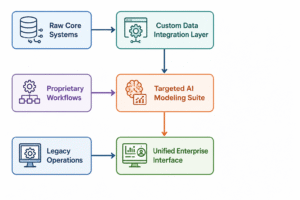
Building a custom system allows you to embed targeted algorithmic logic directly into your unique workflow setup. Whether you need to connect with legacy supply chain tools, integrate custom enterprise resource databases, or build proprietary compliance guardrails, dedicated development ensures complete structural alignment. Developing a tailored application turns your operational software into a proprietary asset that drives long-term market differentiation.
Driving Revenue Velocities via CRM for Lead Generation
Top-of-the-funnel growth requires constant, contextual communication across multiple channels. Deploying a dedicated CRM for Lead Generation transforms how organizations locate, nurture, and convert potential customers.
Instead of executing broad blast marketing campaigns, an Intelligent CRM builds distinct customer personas based on actual engagement patterns. It identifies which target groups engage most with specific content, allowing your marketing teams to refine their campaigns for maximum ROI.
Once new leads enter the pipeline, automated nurturing flows handle introductory outreach. By using historical data to determine optimal delivery times and messaging structures, the software delivers hyper-personalized content that keeps prospects engaged until they are ready to talk to a sales representative.
Engineering Seamless Workflows: The Power of Sales Automation Software
When enterprises combine predictive capabilities with robust Sales Automation Software, they eliminate the friction that typically slows down growing sales teams. Administrative tasks—like routing leads, setting follow-up reminders, and generating contracts—are handled instantly by automated triggers.
This deep operational efficiency yields significant benefits across the organization:
- Shorter Onboarding Timelines: New hires can rely on automated guided selling playbooks built directly into the CRM workspace.
- Unified Cross-Channel Messaging: Marketing, sales, and account management teams share access to a single, real-time source of customer truth.
- Elimination of Human Error: Automated workflows ensure no prospect is forgotten, no follow-up is missed, and every contract adheres to compliance guidelines.
Overcoming Modern Implementation Obstacles
While the business benefits of intelligent sales ecosystems are clear, deployment requires a deliberate, strategic approach. Companies transitioning to automated models often face three core challenges:
Data Fragmentation and Silos
AI engines require clean, structured inputs to generate accurate predictions. Running siloed communication tools or disconnected spreadsheets limits the platform’s effectiveness. Organizations must focus on centralizing their data architectures before launching advanced automation models. Learn more about data formatting standards via the W3C Data Architecture Framework.
User Adoption Friction
Sales reps are often hesitant to adopt new platforms if they feel the tools add complexity to their daily routines. To ensure high adoption rates, management must provide structured training that highlights how the software reduces administrative tasks and directly helps reps close more deals.
Technical Integration Hurdles
Connecting new intelligence platforms with legacy enterprise systems can create technical friction. Partnering with experienced development agencies ensures smooth data bridges via robust APIs, protecting data integrity across all business applications. For deeper insights on global software integration practices, review the IEEE Software Engineering Guidelines.
Choosing the Right Partner for Enterprise Transformation
Deploying an advanced sales ecosystem involves more than just purchasing a software license. It requires a deep review of your current business workflows, building clean data channels, and engineering scalable software models.
At Nucleosys Tech, we specialize in bridging the gap between complex artificial intelligence models and practical business growth. Our expert engineering teams build custom software solutions tailored to your specific organizational goals.
Whether you want to implement advanced predictive forecasting models, update your workflow frameworks with our targeted AI Software Solutions, or deploy a tailored pipeline system via our CRM Software Development services, we build the digital infrastructure your business needs to scale. We focus on removing technical complexity so your sales teams can focus on what they do best: building relationships and driving revenue.
Partner with Nucleosys Tech to Automate Your Growth Strategy
Leaving your sales performance up to manual tracking limits your growth potential in today’s fast-paced markets. Transitioning to an automated framework is a vital strategic move to maximize sales efficiency and unlock predictable revenue streams.
Our team at Nucleosys Tech is ready to help you plan, build, and deploy high-performance software systems tailored to your unique workflows. Don’t let operational friction slow down your sales pipelines.
Contact our software engineering experts today to schedule your comprehensive operational audit and explore our custom development services.
Frequently Asked Questions (Q&A)
What distinguishes basic CRM software from advanced AI CRM Software?
Basic systems act primarily as static digital databases that require manual updates for calls, emails, and statuses. An advanced intelligence system automatically gathers data from your communication tools, predicts future buying behaviors, automates routine tasks, and provides real-time strategic recommendations.
How does automated Lead Scoring improve overall sales conversion rates?
Instead of ranking leads based on arbitrary rules, the platform uses historical closed-won data to score prospects dynamically. By evaluating real-time engagement patterns and intent signals, it helps your sales team prioritize the highest-value opportunities, resulting in faster deal closures.
Can custom AI CRM Development integrate smoothly with our existing legacy systems?
Yes. Opting for custom software development allows you to build dedicated API bridges and integration layers. This ensures your new intelligence tools connect seamlessly with your existing databases, financial software, and operational systems without disrupting daily workflows.
How does predictive Sales Forecasting help corporate leadership teams?
Predictive forecasting analyzes your active deal pipeline alongside historical performance trends to generate highly accurate revenue projections. This removes human bias from sales goals, allowing executives to make data-backed decisions regarding hiring, resource allocation, and market expansion.
What security measures protect sensitive corporate data in an AI CRM?
Enterprise-grade software solutions feature robust data protection frameworks, including end-to-end encryption for data both at rest and in transit, multi-factor authentication, and granular, role-based access controls. These measures ensure your customer data remains fully protected and compliant with global privacy regulations.

