
Why Website Security Matters: The Ultimate Guide to Protecting Your Digital Asset in 2026

In the current digital landscape, your website is often the first point of contact between your business and your customers. As a business owner, you might focus on aesthetics and user experience, but there is one question that should be at the forefront of your strategy: Why Website Security Matters? With the rapid evolution of technology, cyber threats have become more sophisticated, making robust security not just an option, but a fundamental necessity for survival. At Nucleosys Tech, we believe that a secure website is the foundation of a successful online presence. Whether you are running a small blog or a complex enterprise platform, understanding the gravity of protection is the first step toward long-term growth. Understanding Why Website Security Matters for Modern Businesses When we discuss website security, we aren’t just talking about a single plugin or a strong password. It is a comprehensive ecosystem of protocols designed to protect your site from unauthorized access, data theft, and malicious attacks. 1. Protecting Sensitive User Data The most critical reason why website security matters is the protection of user data. From email addresses and phone numbers to sensitive credit card information, your website likely handles a significant amount of private data. A single data breach can lead to catastrophic consequences, including identity theft for your users and massive legal liabilities for your company. 2. Safeguarding Brand Reputation and Trust Trust is the currency of the internet. If a visitor sees a “Not Secure” warning in their browser or, worse, experiences a security incident on your site, that trust is instantly shattered. Rebuilding a reputation after a hack is significantly more expensive and time-consuming than investing in website maintenance services from the start. 3. Boosting SEO and Google Search Rankings Security is a confirmed ranking factor for search engines. Google prioritizes sites that use the HTTPS protocol secured by SSL certificates. If your site is compromised, Google may even blacklist it, removing it from search results entirely to protect users. Therefore, if you want to rank higher, you must treat security as a core component of your SEO strategy. Common Cyber Threats and How to Mitigate Them To truly appreciate why website security matters, one must understand the threats lurking in the digital shadows. The Rise of Automated Malware and SQL Injections Hackers often use automated bots to scan the web for vulnerabilities. SQL injection remains one of the most common methods used to attack database-driven websites, allowing attackers to view or delete data they are not authorized to access. Phishing and Cross-Site Scripting (XSS) These attacks target the users of your site rather than the server itself. By injecting malicious scripts into your pages, attackers can steal session cookies or redirect users to fraudulent websites. Robust malware protection and regular security audits are the only ways to stay ahead of these evolving tactics. The Technical Pillars of a Secure Website Ensuring your site is safe requires a multi-layered approach. Here are the essential components every business should implement: SSL Certificates & HTTPS: This encrypts the data transmitted between your server and the user’s browser. Regular Software Updates: Outdated CMS versions or plugins are the primary entry points for hackers. Web Application Firewalls (WAF): These act as a filter between your website and the internet, blocking malicious traffic before it reaches your server. Secure Coding Practices: At Nucleosys Tech, our development team follows strict security-first protocols to ensure every line of code is resilient against attacks. Why Website Security Matters for E-commerce Platforms For online stores, the stakes are even higher. E-commerce security is not just about protecting your site; it’s about protecting your livelihood. According to recent cybersecurity statistics from Palo Alto Networks, the speed of data exfiltration has increased significantly, meaning breaches happen faster than ever. If your e-commerce site is compromised, you risk losing not only sales but also the ability to process payments if you are found non-compliant with PCI-DSS standards. Investing in e-commerce website development with built-in security features is the smartest move for any growing retailer. The Financial Impact of Ignoring Security Many small businesses believe they are “too small” to be targeted. However, small businesses are often the preferred targets because they typically have weaker defenses. The cost of a breach includes: Legal fees and regulatory fines (especially under GDPR). The cost of forensic investigation and site recovery. Loss of revenue during downtime. Increased customer acquisition costs due to lost trust. According to research by the University of San Diego, the global cost of cybercrime is projected to reach trillions of dollars by 2028. This highlights exactly why website security matters for businesses of all sizes. How Nucleosys Tech Secures Your Digital Future Building a secure website is a complex task that requires expert knowledge. At Nucleosys Tech, we offer specialized Website Maintenance Services designed to keep your site updated, backed up, and shielded from the latest threats. Our team doesn’t just build websites; we build digital fortresses. From implementing advanced firewall configurations to performing routine vulnerability scans, we ensure that your focus remains on growing your business while we handle the technical safety. Partner with the Experts Don’t wait for a security breach to happen before taking action. Protecting your digital presence is an investment in your brand’s future. Get a Free Security Audit Today – Contact Nucleosys Tech! Frequently Asked Questions (Q&A) Q1: How often should I update my website security? Website security is an ongoing process. You should perform software and plugin updates weekly, while comprehensive security audits should be conducted at least quarterly or after any major site changes. Q2: Does an SSL certificate protect me from all hacks? No. An SSL certificate only encrypts data in transit. While it is essential for user data privacy, it does not protect your site from malware, DDoS attacks, or server-side vulnerabilities. Q3: Can a hacked website affect my SEO rankings? Absolutely. Google and other search engines prioritize safe browsing. If your site is flagged for malware, your rankings will drop significantly,
The Ultimate Website Speed Optimization Guide: Accelerate Your Digital Growth in 2026

In an era where digital patience is measured in milliseconds, the performance of your online presence is no longer a luxury—it is a survival requirement. This comprehensive Website Speed Optimization Guide is designed to help you navigate the complexities of modern web performance. Whether you are running a complex e-commerce engine or a sleek corporate portfolio, the speed at which your pages load directly dictates your search engine rankings, user retention, and, ultimately, your bottom line. Why Website Speed Optimization Matters for SEO Search engines like Google have explicitly stated that page experience is a primary ranking factor. When a user clicks a link and faces a delay, the likelihood of a “bounce” increases by over 32% as load time goes from one to three seconds. By following a structured Website Speed Optimization Guide, you aren’t just pleasing bots; you are crafting a seamless journey for your customers. 1.Understanding Core Web Vitals and User Experience To begin any Website Speed Optimization Guide, we must look at the metrics that Google prioritizes. Core Web Vitals—comprised of LCP (Largest Contentful Paint), FID (First Input Delay), and CLS (Cumulative Layout Shift)—measure how real users experience your site. LCP: Measures loading performance. Aim for 2.5 seconds or faster. FID: Measures interactivity. Aim for less than 100 milliseconds. CLS: Measures visual stability. Aim for a score of less than 0.1. High-performance sites often utilize advanced frameworks. For businesses looking for robust builds, exploring BigCommerce developers can provide a foundation where speed is integrated into the architecture from day one. 2. Image Compression and Next-Gen Formats Images often account for the bulk of a webpage’s weight. A key pillar of this Website Speed Optimization Guide is the transition to next-gen formats like WebP or AVIF. Lossless Compression: Reduces file size without sacrificing quality. Lazy Loading: Ensures images only load when they enter the user’s viewport. Responsive Images: Serving different sizes based on the user’s device (Mobile vs. Desktop). 3. Minimizing HTTP Requests and Script Bloat Every time a browser fetches a file (CSS, JS, or images), it creates an HTTP request. Too many requests result in a “bottleneck.” Combine Files: Merge multiple CSS files into one. Minification: Remove unnecessary characters (spaces, comments) from your code. Asynchronous Loading: Allow scripts to load in the background so they don’t block the visual rendering of the page. For those managing high-traffic platforms, ensuring your backend is optimized is vital. You might consider how PHP development services can streamline server-side processing to reduce Initial Server Response times. 4. Leveraging Browser Caching and CDNs A Website Speed Optimization Guide wouldn’t be complete without mentioning the power of the edge. Browser Caching: Instructs the visitor’s browser to store parts of your site locally, so they don’t have to re-download everything on their second visit. Content Delivery Networks (CDN): Distribute your content across a global network of servers. Using a service like Cloudflare ensures that a user in London accesses data from a London server, not one in New York. 5. Mobile-First Speed Performance With over 50% of global traffic coming from mobile devices, your Website Speed Optimization Guide must prioritize the mobile experience. Mobile networks (4G/5G) are less stable than fiber-optic home internet. Prioritize Above-the-Fold Content: Load the top of the page first. Reduce JavaScript Execution Time: Heavy scripts can cause mobile processors to lag, leading to a poor user experience. 6. Database Optimization for E-commerce For dynamic sites, the database is often the culprit behind slow speeds. Clean Up Overheads: Remove old plugin data and post revisions. Indexing: Ensure your database tables are properly indexed for faster retrieval. If you are scaling an online store, professional e-commerce development can help optimize these background processes to ensure lightning-fast checkouts. Transform Your Digital Performance Today Reading a Website Speed Optimization Guide is the first step, but implementation requires technical precision. At Nucleosys Tech, we specialize in turning sluggish websites into high-conversion engines. Our team of experts handles everything from code minification to server-side architecture, ensuring your business stays ahead of the competition and the search engine algorithms. Contact Nucleosys Tech for a Performance Audit. Frequently Asked Questions (Q&A) Q: How does website speed affect my SEO ranking? Google uses speed as a ranking signal. A faster site improves user experience metrics, which leads to higher rankings and more organic traffic. Q: What is a good page load time? Ideally, your site should load in under 2 seconds. Anything slower than 3 seconds sees a significant increase in bounce rates. Q: Can I optimize my site speed without coding knowledge? While plugins can help with basic tasks like image compression, deep optimization (like fixing render-blocking JS) usually requires professional development. Q: Is mobile speed different from desktop speed? Yes. Google uses mobile-first indexing, meaning your mobile speed is often more important for your overall SEO than your desktop speed.
SEO vs GEO vs AEO: Why You Need All Three to Compete in 2026
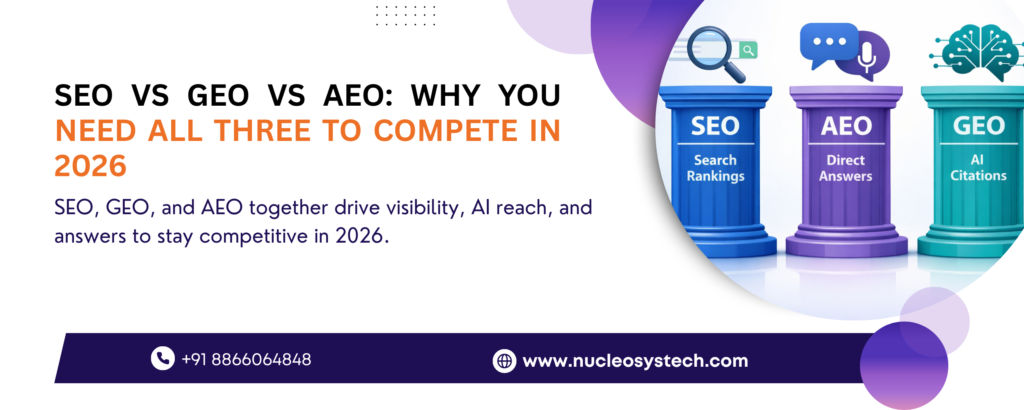
The digital landscape has shifted, and the debate around SEO vs GEO vs AEO is more relevant than ever. While SEO remains essential for visibility, it’s no longer enough on its own. GEO (Geographical Optimization) ensures your business shows up in local and “near me” searches. AEO (Answer Engine Optimization) structures your content for voice assistants and AI tools, delivering quick, direct answers. With AI-driven and location-specific searches rising, relying solely on keywords and backlinks puts your digital presence at risk. To compete in 2026 and beyond, you need a unified strategy: SEO for visibility, GEO for local reach, and AEO for voice and AI discovery. The Shift in Search Behavior: Why Traditional SEO Alone Isn’t Enough SEO is foundational, but the way users search has evolved. They’re asking full questions, speaking to voice assistants, and expecting instant, precise results. Platforms like Google have responded with: Featured snippets AI-powered summaries Voice-first results Location-based prioritization This evolution shows that traditional SEO cannot meet all user intents. You need GEO and AEO to address local search and conversational queries. Understanding SEO vs GEO vs AEO: Key Differences and Use Cases SEO – Traditional Search Engine Optimization for Web Visibility Focuses on: Keywords On-page optimization Backlinks Meta titles/descriptions Technical performance Best for blog posts, landing pages, and long-form content targeting broad or niche keywords. GEO – Local SEO for Geographic Search Dominance Focuses on: Google Business Profile Location-based keywords Reviews from local clients Local maps and directory listings Ideal for businesses serving specific regions like “metal fabrication UAE” or “welding service Pune.” AEO – Answer Engine Optimization for Voice and AI Search Focuses on: Structuring content to answer questions Using FAQ formats and schema markup Voice-friendly answers in 50–80 words Essential for ranking in tools like Siri, Alexa, and ChatGPT when users ask, “What is a welding rotator?” SEO vs GEO vs AEO Comparison Table Category SEO GEO AEO Focus Organic search rankings Local search visibility AI/voice-driven answers Audience Global/niche keyword users Nearby/local service seekers Voice assistant & AI users Best Tools Ahrefs, SEMrush, GSC Google Maps, GMB, Yelp Schema markup, FAQs, Q&A tools Use Cases Blogs, ecommerce Local services, stores, B2B Featured snippets, how-tos The Modern User Journey Requires SEO, GEO, and AEO Together Example: User in Abu Dhabi types “welding turntable UAE” → GEO Someone asks Alexa “What is a welding turntable?” → AEO Another searches “heavy-duty welding rotator manufacturer” → SEO Using only one strategy misses out on 2/3 of potential traffic. Case Study: SEO + GEO + AEO in Action for Industrial Businesses Let’s say your company sells welding automation equipment across the GCC region. SEO: Ranks blog for “welding rotator manufacturer India” GEO: Shows up in “welding turntable supplier Dubai” AEO: Appears for “best rotator for 30-ton welding jobs” via voice or featured snippets This full-stack visibility improves both reach and lead generation. Future-Proof Your Digital Strategy: Combine SEO, GEO & AEO Now Optimize SEO Fundamentals Target long-tail keywords Improve page speed and UX Update blog and website content regularly Implement GEO for Local SEO Strength Set up and verify Google Business Profile Create location-specific landing pages Collect localized client testimonials Enhance AEO for Voice & AI Search Use tools like AnswerThePublic to find questions Add FAQ sections and concise answers Apply FAQ & How-To schema Final Thoughts: Don’t Just Compete—Dominate Search In 2026, depending on traditional SEO alone is outdated. Your competitors are already integrating GEO and AEO into their strategies—reaching users through mobile, local, voice, and AI-powered platforms. You can do more than catch up—you can lead. Want to Lead, Not Lag? At Nucleosys Tech, we help industrial and B2B companies dominate digital visibility with integrated SEO, Local SEO (GEO), and Answer Engine Optimization (AEO) strategies. 📩 Contact us today to future-proof your online presence.
5 Signs Your BIM Firm Has Outgrown Excel (And What to Use Instead)
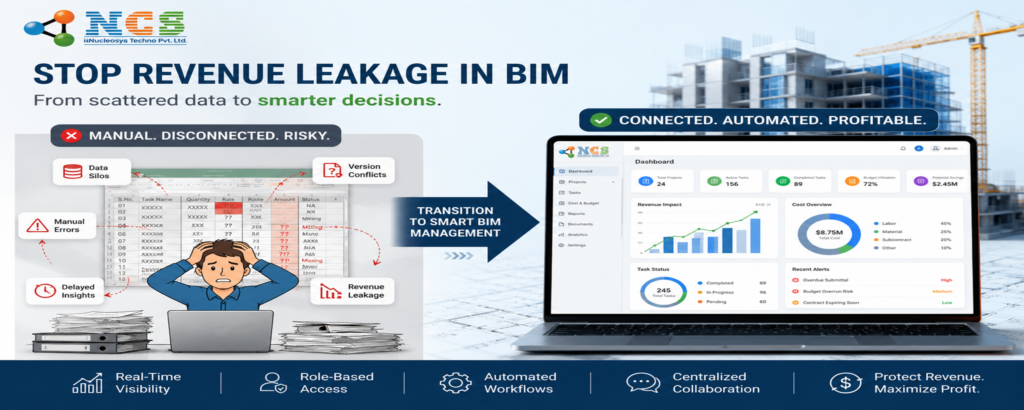
In the early days of a Building Information Modeling (BIM) firm, Microsoft Excel is the ultimate ally. It’s flexible, free, and everyone knows how to use it. You start by tracking a few architectural drafts and simple client timelines. But as your firm scales, that once-reliable spreadsheet starts to feel like a house of cards. One broken formula or a forgotten manual update, and your entire project timeline collapses. If you are still relying on manual spreadsheets for complex modeling workflows, you likely need a dedicated BIM project management software to maintain your competitive edge. The transition from a startup to a mid-sized firm requires more than just better architects; it requires a digital infrastructure that can handle the weight of real-time data. 1. The Chaos of Manual Entry and Version Control The most immediate sign that you’ve outgrown Excel is the “Version Final_v2_Updated” syndrome. When multiple Project Managers, Team Leads, and Employees are all trying to update the same tracker, data integrity vanishes. In a fast-paced BIM environment, manual entry is the enemy of accuracy. A single typo in a cell can lead to misallocated resources or missed deadlines. Unlike a professional MIS (Management Information System), Excel lacks role-based access control. In a dedicated system like the one developed by Nucleosys Tech, an Admin or Director can see the high-level bird’s eye view, while an Employee only sees their specific tasks. This eliminates the clutter and prevents accidental deletions that haunt spreadsheet-based firms. 2. Why Excel Can’t Track “Real-Time Profitability” Can you tell, at this exact moment, if your current project is under budget? If you are using Excel, the answer is likely “I’ll know after the weekly manual update.” Excel is a static tool. It doesn’t “know” when an employee has spent ten extra hours on a complex Revit model unless someone manually types it in. To truly scale, you need a system that integrates timesheet management with project milestones. High-growth firms use BIM execution planning tools to ensure technical standards, but they often forget the financial side. Without real-time tracking, you only realize a project was unprofitable after it’s already finished. 3. The “Information Silo” Between Teams and Clients As your BIM firm grows, the gap between what the team is doing and what the client sees often widens. In Excel, feedback is usually buried in long email chains. A robust BIM project management software solves this by centralizing client management. Imagine a portal where a client can provide direct feedback on a milestone, and that feedback is immediately visible to the Project Manager. When information related to clients, projects, and tasks is stored in separate spreadsheets, things fall through the cracks. A unified MIS ensures that every stakeholder, from the Director to the Client, is looking at a single source of truth. 4. Lack of Automated Reporting and Error Tracking How long does it take your team to generate a “Load Factor Report” or an “External Error Report”? If it takes hours of copying and pasting from different sheets, you have outgrown your tools. For a BIM firm, quality control is everything. You need to track internal error reports and performance reports to ensure your models meet international standards. Modern systems allow you to generate these reports with a single click. Whether it’s a milestone report for a stakeholder or an efficiency report to see which team members are over-leveraged, automation is the only way to scale without adding massive administrative overhead. 5. Inefficient Task Allocation and Time Management In Excel, assigning a task usually involves sending an email or a message. There is no built-in timer for time management or a structured way to approve tasks. When a Team Lead or Project Manager can assign a task directly within a system—complete with a running timer—accountability skyrockets. This level of granularity is essential for BIM projects where “resource-based” and “project-based” planning happen simultaneously. You need to know exactly how many hours were spent on a “Service Master” versus a “Document Management System.” Introduction to India’s First Dedicated MIS for BIM: Nucleosys Tech If these signs sound familiar, it’s time to move beyond the grid. Nucleosys Tech has developed a specialized Management Information System (MIS) designed specifically for the rigorous demands of technical firms. Our MIS is not a generic tool; it is a comprehensive ecosystem that handles: Role-Based Access: Tailored views for Admin, Director, Project Manager, Team Lead, and Employees. End-to-End Management: Seamlessly manage clients, projects (Resource or Project-based), and complex timesheets. Advanced Task Module: PMs can assign tasks to themselves or others, with built-in approval workflows. Real-Time Analytics: Access Milestone reports, Feedback modules, and Error tracking instantly. By switching from fragmented spreadsheets to a unified MIS, you empower your team to focus on BIM excellence rather than data entry. Boost Your Firm’s Efficiency with Professional Solutions Stop fighting with spreadsheets and start scaling your BIM operations with precision. At Nucleosys Tech, we specialize in creating custom software solutions that bridge the gap between technical expertise and operational efficiency. Whether you need a robust MIS or a custom content strategy for your digital presence, we are here to help. Contact Nucleosys Tech Today for a Free MIS Demo. Q&A: Navigating the Shift from Excel to MIS Q1: Is it hard to migrate data from Excel to a new MIS? Most professional systems, including our MIS, allow for bulk data imports via CSV or Excel, making the transition much smoother than manual entry. Q2: How does an MIS improve BIM model quality? By using the Internal Error Report and Feedback modules, PMs can track recurring issues in models and implement training or process changes to fix them. Q3: Can I manage both freelance resources and full-time staff? Yes. Our system supports both resource-based and project-based options, allowing you to track time and tasks for your entire workforce in one place. Q4: What is the benefit of role-based access? It ensures data security and reduces “dashboard fatigue.” Employees only see what they need to work on,
Remote BIM Team Tracking: Attendance vs. Performance
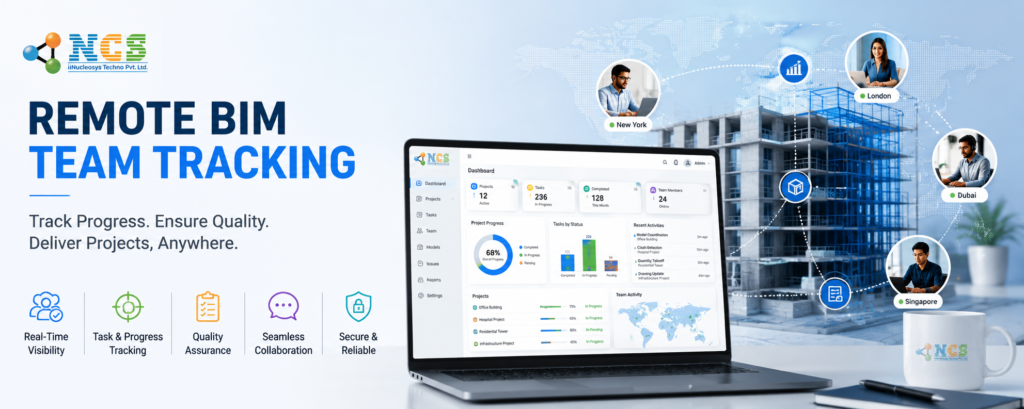
In the modern AEC landscape, the transition to remote work has been both a blessing and a source of silent anxiety for firm owners. You see the “Active” green status on Microsoft Teams. You see the 8-hour logs on the weekly spreadsheet. But as a manager, a nagging question remains at the back of your mind: Are they actually modeling, or are they just moving the mouse? This is the “Ghost Employee” fear. In a high-precision field like Building Information Modeling (BIM), presence does not equal productivity. When a remote team member underperforms, the ripple effect doesn’t just hit one project—it creates a bottleneck that threatens your entire delivery schedule and firm reputation. To scale a successful remote BIM operation, you must move past simple attendance and master the art of Remote BIM Team Tracking. 1. The 8-Hour Fallacy: Why Logging Time Isn’t Enough The most common mistake in employee management is equating a full timesheet with a productive day. In BIM coordination, a technician might spend three hours fighting a software crash and another two hours on uncoordinated “quick fixes” that weren’t in the scope. If your tracking system only asks for a total number at the end of the day, you are missing the context of labor. Attendance tells you they were “at work.” Performance tells you they delivered an LOD 400 model on schedule. Without a granular Management Information System (MIS), you are managing by “gut feeling” rather than data. 2. Understanding Load Factor & Utilization in BIM To truly understand if your team is working, you need to look at two critical KPIs: Utilization Rate and Load Factor. What is Utilization? Utilization is the percentage of an employee’s total logged time spent on billable project tasks versus non-billable administrative work. In a healthy BIM firm, your “production” staff should ideally maintain a utilization rate of 75-85%. What is Load Factor? Load factor measures the amount of work assigned to a person relative to their capacity. Underloaded: Leads to “time-filling” behavior and boredom. Overloaded: Leads to burnout and high error rates. Using the MIS by Nucleosys Tech, directors can pull real-time reports to see who is carrying the heaviest load and who has the “white space” to take on the next big Revit project. 3. Spotting the Difference: Burnout vs. Laziness Data-driven management isn’t just about catching “slackers”; it’s about protecting your best assets from burning out. The Indicator Burnout Signs Underperformance (Laziness) Signs Task Completion Sudden drop in quality from a previously high performer. Consistently missing deadlines or “forgetting” tasks. Error Reports High frequency of “silly” mistakes in model coordination. Tasks are marked “complete” but remain unstarted in the model. Timer Usage Long, erratic hours logged late at night. Short, inconsistent bursts of activity with long gaps. By utilizing the error report and milestone tracking features in our MIS, managers can intervene with support for a burned-out star or coaching for a struggling junior before the project fails. 4. Solving the Remote Gap with Nucleosys Tech’s MIS At Nucleosys Tech, we designed our MIS specifically to bridge the visibility gap between managers and remote teams. Here is how we turn “Ghost Employees” into high-performing assets: Role-Based Access: Strategic Visibility Our system operates on a sophisticated hierarchy: Admin, Director, Project Manager, Team Lead, and Employee. Admins/Directors see the “Big Picture” of company-wide productivity. Project Managers can assign tasks and monitor progress across multiple clients. Employees have a focused dashboard showing exactly what they need to work on. Real-Time Task & Timer Management Gone are the days of manual, “estimated” timesheets. Our system features an integrated timer for time management. The employee selects an assigned task (e.g., “Clash Detection – Area A”). They start the timer. The system logs exactly how long that specific BIM task took. This level of detail allows you to compare performance across the team. If one coordinator takes 2 hours for a task that takes everyone else 5, you’ve found a high-performer or a potential “corner-cutter.” Integrated Client & Project Hub Whether you bill based on a Resource-Based model (hourly) or Project-Based (fixed-fee), the MIS tracks everything. You can store all client information and link it directly to specific project milestones, ensuring that your remote team’s efforts are always aligned with the contractual scope. 6. Transparency via the Feedback Module One of the biggest hurdles in remote work is the lack of a “closed-loop” communication. Our Feedback Module allows clients to review milestones and provide direct input. This data is fed back into the MIS, allowing managers to see if an employee’s “8 hours” resulted in a satisfied client or a list of revisions. Conclusion: Data is the Cure for Uncertainty Remote work doesn’t have to be a guessing game. When you replace “checking in” with “checking the data,” you build a culture of trust and high performance. The MIS by Nucleosys Tech provides the clarity you need to stop worrying about attendance and start celebrating performance. Ready to transform your remote BIM management? Don’t let inefficiency drain your profits. Empower your managers with the tools they need to lead effectively in a digital-first world. Book a Demo with Nucleosys Tech today and see how our Management Information System can streamline your team tracking and project delivery. Frequently Asked Questions (FAQs) 1.Is “Remote BIM Team Tracking” considered micromanagement? Not when it’s focused on outcomes. Our MIS is designed to provide accountability, not surveillance. By tracking tasks and timers, you are giving employees a clear structure and ensuring they get credit for every hour they actually work. 2.Can the system handle complex BIM projects with multiple stakeholders? Yes. With role-based access, you can involve Team Leads and Project Managers in the oversight process. The system manages Client Management and Project Management (both project-based and resource-based) in one centralized hub. 3.How does the “Timer” feature improve billing accuracy? Manual timesheets are often filled out at the end of the week based on memory, leading to “rounded down” hours and lost revenue. Our integrated timer
Revenue Leakage in BIM: Stop Working for Free | Nucleosys Tech
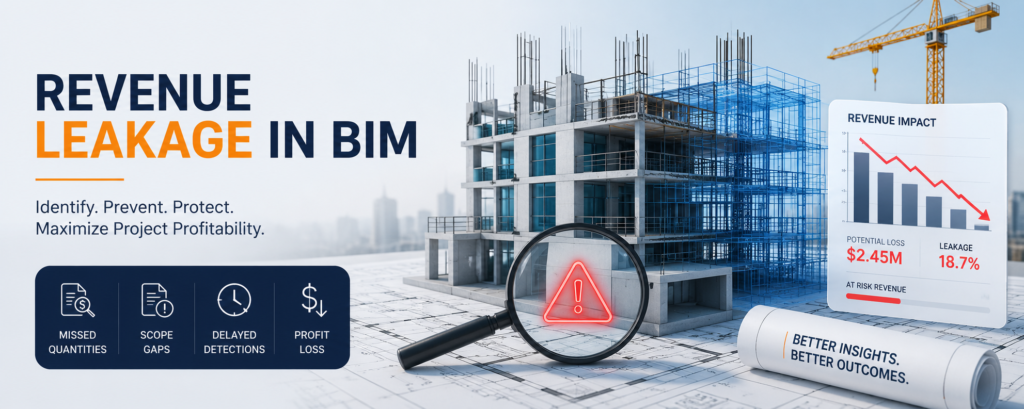
Revenue Leakage in BIM: Why You Are Working for Free (And How to Stop It) The Building Information Modeling (BIM) industry is built on precision. We measure tolerances in millimeters and coordinate complex systems across massive datasets. Yet, when it comes to the financial health of these projects, many firms operate with a “leaky bucket” mentality. Revenue leakage—the unnoticed loss of earned revenue—is the silent killer of BIM consultancy and AEC firms. You might be hitting your project milestones, but if your billable hours aren’t aligning with your bank account, you are effectively working for free. In this deep dive, we’ll explore why BIM projects lose money and how a robust Management Information System (MIS) can plug the holes. What is Revenue Leakage in BIM? Revenue leakage occurs when services are provided but not billed, or when inefficiencies eat into the profit margins of a fixed-fee or resource-based contract. In the world of BIM, this often looks like: Unrecorded “quick fixes” in a Revit model. Excessive coordination meetings that weren’t in the original scope. Manual data entry errors in project tracking. According to industry benchmarks from Harvard Business Review, companies can lose up to 5% to 10% of their annual revenue to leakage. In a high-stakes field like BIM, where margins are already tight, that 10% is often the difference between scaling your business and barely staying afloat. 1. The “Invisible” Thieves: Common Causes of BIM Revenue Leakage Scope Creep without Change Orders In BIM, the line between “standard design development” and “extraordinarily complex modeling” is thin. If your Project Manager (PM) agrees to add a higher Level of Development (LOD) without a formal change order, you are donating your team’s expertise for free. The “Five-Minute” Task Trap BIM Technicians often perform small tasks—re-exporting an IFC file, fixing a minor clash, or updating a sheet—that take “just five minutes.” When these aren’t tracked via a timer for time management, they vanish from the billing cycle. Multiply this by a team of 20, and you’re losing dozens of billable hours every week. Resource Misallocation Using a Senior BIM Coordinator for basic data entry is a form of internal leakage. You are paying a high salary for low-value output. Without role-based access and clear task visibility, it’s impossible to see where your expensive talent is being wasted. 2. Plugging the Holes with MIS (Management Information System) To stop the bleed, you need more than just spreadsheets. You need a centralized nervous system for your firm. This is where MIS by Nucleosys Tech transforms your workflow. Role-Based Access: Accountability at Every Level One of the primary causes of leakage is a lack of oversight. Our MIS platform features sophisticated role-based access, ensuring that: Admins & Directors: Have a bird’s-eye view of client profitability and firm-wide reports. Project Managers: Can assign tasks and monitor “Project vs. Resource” based allocations. Team Leads: Can approve tasks and manage the daily grind. Employees: Focus on their specific tasks with integrated timers. By restricting access based on roles, you ensure that sensitive financial data stays at the top, while operational efficiency stays high at the bottom. 3. Client & Project Management: Resource vs. Project Based Not every BIM project is billed the same way. Some clients prefer a Project-Based (fixed fee) approach, while others utilize Resource-Based (time and material) models. Our MIS allows you to manage both seamlessly. In the Client Management module, you can store every detail of your client history. When a project is initiated, you can categorize it immediately. For Project-Based: Track your progress against Milestones to ensure you aren’t over-burning hours before the next payment gate. For Resource-Based: Every second spent by an employee is logged, ensuring that every “five-minute” task is accounted for on the final invoice. Pro Tip: Integrating your BIM execution plan with an ISO 19650 compliant workflow and an MIS tracking system ensures that your technical and financial data are always in sync. 4. Master Task Management and the Power of the Timer How much does a clash detection report actually cost you in labor? If you can’t answer that, you have a leakage problem. In the MIS Task Management module: PMs assign tasks to themselves or employees with clear deadlines. Employees activate the integrated timer the moment they open their modeling software. Real-time tracking eliminates the “guessing game” at the end of the week when filling out manual timesheets. When the timer stops, the task is sent for Approval. This extra step ensures that the work meets quality standards before it’s marked as “Billable,” reducing the risk of costly re-work—another major source of leakage. 5. Reporting: Identifying the “Error” in Your Profit You cannot fix what you cannot measure. The reporting engine in the Nucleosys Tech MIS provides: Error Reports: Identify which tasks are frequently sent back for revision. If a specific Revit family is causing errors, you’ll see it in the data. Milestone Reports: Are you hitting your LOD 300 targets on time? Client Feedback Module: By integrating client feedback directly into the project cycle, you prevent “expectation gaps” that lead to unpaid disputes. 6. The Nucleosys Tech Advantage: Why Choose Our MIS? At Nucleosys Tech, we didn’t just build a generic project management tool. We built a system designed for the complexities of modern technical services. Our MIS is the bridge between your technical expertise and your financial success. Features at a Glance: Feature Benefit for BIM Firms Role-Based Access Prevents unauthorized data changes and streamlines hierarchy. Timer Management Captures every billable second, eliminating manual errors. Milestone Tracking Ensures billing aligns with project delivery phases. Feedback Module Reduces disputes by involving the client in the QA process. Conclusion: Stop the Leak, Start the Growth Revenue leakage isn’t just a financial issue; it’s a morale issue. When your talented BIM team works late on “scope creep” tasks that never get billed, the firm loses money and the team loses motivation. By implementing the MIS by Nucleosys Tech, you gain a partner in profitability. You move away from
AI Knowledge System for Manufacturing Industry
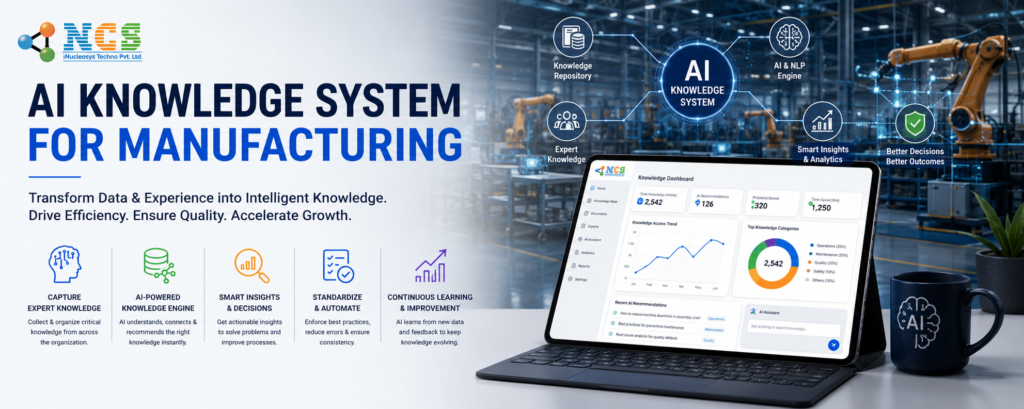
Manufacturing is rapidly evolving toward intelligent, data-driven operations where machines, people, and digital systems collaborate seamlessly. While modern factories generate enormous amounts of operational data, many organizations still struggle to transform that data into actionable knowledge. At Nucleosys Tech, we believe the future of manufacturing lies in AI-powered knowledge intelligence — where every machine event, engineering decision, and operational experience contributes to continuous organizational learning. What is an AI Knowledge System? An AI Knowledge System is an intelligent platform that captures, organizes, learns, and applies knowledge across manufacturing operations using Artificial Intelligence. It transforms factory information into a centralized digital intelligence ecosystem that supports faster decisions, optimized production, and smarter maintenance. AI Knowledge System = Industrial Data + Human Expertise + Artificial Intelligence Nucleosys Tech: Driving Intelligent Manufacturing Transformation Nucleosys Tech specializes in developing custom software solutions and AI-driven enterprise platforms tailored to modern industrial environments. Working alongside industry pioneer clients, Nucleosys Tech designs scalable technology solutions that bridge the gap between traditional manufacturing operations and next-generation smart factories. Our approach focuses on: Custom AI software development Industrial digital transformation Smart factory intelligence platforms AI-powered knowledge management solutions Data-driven operational optimization Through our AI-powered Knowledge Systems, we help manufacturing companies convert operational complexity into structured intelligence. Why Manufacturing Companies Need AI Knowledge Systems Manufacturers commonly face challenges such as: Critical knowledge remaining with individual operators Recurring machine failures without historical learning Reactive maintenance practices Disconnected data systems Long onboarding time for engineers Limited visibility into operational performance Nucleosys Tech’s AI Knowledge System enables organizations to move from experience-dependent operations to AI-assisted decision-making environments. How Nucleosys Tech AI Knowledge System Works 1. Intelligent Data Acquisition Our platform integrates seamlessly with: CNC & VMC machines PLC and SCADA systems Industrial IoT sensors ERP & MES platforms Maintenance records Quality inspection systems Engineering documentation All operational data becomes part of a unified knowledge ecosystem. 2. AI Intelligence Engine Nucleosys Tech develops customized AI models that continuously learn from factory operations. The system can: Predict machine failures before breakdowns occur Analyze production inefficiencies Detect hidden performance patterns Recommend optimized process parameters Capture expert knowledge automatically The factory evolves into a self-learning operational environment. 3. Digital Manufacturing Knowledge Hub Our AI-powered platform creates a centralized repository including: Machine performance history Standard Operating Procedures (SOPs) Troubleshooting intelligence Lessons learned database Expert engineering knowledge This ensures organizational knowledge is preserved permanently. 4. AI Decision Support System Engineers and managers can interact with the system through intelligent interfaces: “Which machine requires preventive maintenance?” “Why did productivity drop last shift?” “What process settings deliver best quality output?” AI provides instant, contextual recommendations powered by real operational data. Key Solution Modules Delivered by Nucleosys Tech Predictive Maintenance Intelligence AI-driven equipment health monitoring Failure prediction models Maintenance planning optimization Production Intelligence Platform OEE analytics Bottleneck detection Cycle time improvement Quality Knowledge Management Defect pattern learning Root cause intelligence Continuous improvement insights Workforce Knowledge Platform Digital work instructions Skill intelligence mapping AI-powered operator assistance Technologies behind Nucleosys Tech Solutions Nucleosys Tech leverages advanced Industry 4.0 technologies: Artificial Intelligence & Machine Learning Industrial IoT Integration Large Language Model AI Assistants Knowledge Graph Architecture Cloud & Edge Computing Predictive Analytics Platforms Smart Dashboard & KPI Systems Business Impact for Manufacturing Companies Organizations implementing Nucleosys Tech AI Knowledge Systems achieve: Reduced downtime and maintenance cost Faster troubleshooting and decision-making Improved product quality Knowledge retention across workforce changes Accelerated employee training Data-driven operational excellence Most importantly, factories transition from reactive operations to intelligent autonomous manufacturing. The Future Vision by Nucleosys Tech At Nucleosys Tech, our vision is to build self-learning manufacturing enterprises where: Machines communicate intelligently AI supports engineering decisions Knowledge grows automatically Production systems continuously optimize themselves The future factory will not only automate machines — it will automate intelligence. Summary AI Knowledge Systems are becoming a strategic foundation for next-generation manufacturing organizations. Companies that invest in AI-driven knowledge management today will lead tomorrow’s Industry 4.0 revolution. Nucleosys Tech empowers manufacturing companies with custom AI software and intelligent knowledge platforms that transform data into competitive advantage.
Why Manufacturing Companies in Pune Need SEO in 2025 | SEO for Manufacturing Industry

Introduction Pune has firmly established itself as one of India’s most powerful industrial and manufacturing hubs. With automotive giants, engineering firms, machine tool producers, heavy equipment manufacturers, and precision engineering companies, the city contributes significantly to India’s domestic and global economy. Industrial belts like Chakan, Talegaon, Pimpri-Chinchwad, Ranjangaon, and Bhosari MIDC are buzzing with factories that supply products and components to both Indian and international clients. However, while Pune’s manufacturing output is world-class, many companies still face a silent but serious challenge: digital invisibility. The problem isn’t in their machines or manpower — it’s in their online presence. In 2025, procurement managers, distributors, and buyers no longer rely only on trade fairs or references. Their search for new suppliers now begins online, with a single Google search. This digital-first approach has made SEO for manufacturing industry a necessity, not an option. SEO ensures that when buyers search for terms like “machine tool suppliers in Pune” or “precision component manufacturers India”, your company shows up at the top of search results. Without SEO, even the best factories risk being invisible. In this blog, we’ll explore: The challenges Pune manufacturers face online. Why buyers and distributors are shifting to digital research. Real success stories from Pune-based manufacturers. A deep-dive case study of Cubuilt Engineers Pvt. Ltd. Actionable SEO strategies for 2025. The Digital Challenges Manufacturers Face Even though Pune-based factories excel in production quality, many fail to attract digital visibility. Some of the most pressing issues include: 1. Weak Online Presence A large share of manufacturers still rely heavily on personal referrals, distributor channels, or repeat clients. While valuable, these are not enough in today’s digital-first procurement environment. Buyers expect suppliers to maintain a modern website with product catalogs, certifications, and enquiry options. Without it, you miss new leads every day. 2. Outdated Industrial Websites Many industrial websites resemble static brochures. They lack mobile responsiveness, clear product details, and enquiry forms. Since most B2B buyers browse on laptops or mobile devices, a poor website experience translates into lost credibility. 3. Global Competition on Google International suppliers are actively targeting the Indian market and investing heavily in SEO. Their websites often outrank Pune factories, meaning local buyers may end up contacting overseas competitors first, simply because they show up higher in search results. 4. No Lead Generation System A manufacturing website should be a 24/7 lead generation engine. Without proper keyword optimization, product-based landing pages, and strong calls-to-action, manufacturers lose the chance to attract high-intent leads. 5. Underestimating SEO’s Role Many SMEs believe industrial buyers still prefer offline interactions. While relationships matter, the first step of almost every B2B journey is digital discovery. If your factory isn’t visible during that search, you’re out of the race. Why Buyers and Distributors Search Online The procurement cycle in 2025 looks very different compared to a decade ago. Today’s buyers: Shortlist Faster – With Google, buyers can find 10 suppliers in 10 minutes. Expect Transparency – Websites showcasing product specifications, certifications, and client logos build instant trust. Use Local Search – Buyers often look for suppliers in specific clusters like “gear manufacturers in Talegaon” or “automation companies near Pimpri.” Check Credibility Digitally – Updated websites, ISO certifications, and professional online presence are trust signals. Prefer Digital Enquiries – Online enquiry forms and instant communication are faster than traditional calls. For Pune manufacturers, this means your website is no longer optional — it is your primary sales channel. Case Study 1: Pune Machine Tool Company Boosts Enquiries by 40% A mid-sized machine tool manufacturer in Pune relied heavily on trade fairs and distributor contacts. Their website was static, outdated, and not optimized for SEO. Leads were declining year after year. They decided to implement a professional SEO strategy. Steps taken included: Website Overhaul: A structured product catalog with enquiry forms and responsive design. Local SEO Focus: Targeted keywords like “machine tool suppliers in Chakan” and “precision engineering companies Pune.” Content Marketing: Publishing blogs and technical insights. Technical SEO Fixes: Improved speed, added SSL, and optimized site structure. Result: Within six months, enquiries grew by 40%. The company started receiving RFQs from both Indian and international buyers, showing that SEO can directly influence industrial sales. Case Study 2: Cubuilt Engineers Pvt. Ltd. Cubuilt Engineers Pvt. Ltd., a Pune-based company specializing in structural steel detailing and BIM services for industrial projects, faced a similar challenge. Despite providing highly specialized engineering services, they struggled with visibility outside their referral network. The Challenge Their website wasn’t ranking for core industry keywords. Most enquiries came from word-of-mouth. They weren’t attracting international clients despite having the expertise. SEO Strategy Implemented Keyword Research & TargetingKeywords were mapped around services like “rebar detailing services Pune,” “steel detailing outsourcing India,” and “BIM services for industrial projects.” Website OptimizationService pages were rewritten with clear descriptions, project images, and strong CTAs. Content CreationCase studies, blogs, and industry insights were published to highlight expertise. International SEOOptimized pages for global searches to attract clients in the USA, UK, and UAE. Technical ImprovementsEnhanced page load speed, ensured mobile readiness, and improved indexing. The Results Cubuilt started ranking on the first page for multiple high-value keywords. Within months, they began receiving enquiries from international clients. The website shifted from being a passive brochure to an active business development tool. This case proves that SEO for manufacturing industry and allied engineering services can not only increase domestic enquiries but also expand reach to global markets. Why SEO Matters More Than Ever in 2025 Google is the New Trade FairInstead of waiting for annual exhibitions, buyers now start with Google. SEO ensures you’re visible 365 days a year. Local Search Drives BusinessWith Pune’s booming industrial clusters, local SEO helps manufacturers dominate geo-targeted searches. Builds Brand AuthorityRanking high establishes credibility and builds long-term trust with distributors and buyers. Cost-Effective Compared to AdsUnlike PPC ads, SEO continues to deliver results long after the investment. Levels the Playing FieldSmall and mid-sized manufacturers can compete with industry giants if their SEO strategy is strong. Practical SEO Strategies
AI-Powered Business Automation: Future of Companies
Introduction AI-Powered Business Automation: Future of Companies is rapidly becoming one of the most important trends shaping modern organizations. Businesses today are under constant pressure to improve efficiency, reduce operational costs, and deliver faster services. Artificial intelligence is helping companies automate repetitive tasks, improve decision-making, and transform the way they operate. From startups to large enterprises, organizations are now adopting AI-based automation to streamline workflows, enhance customer experiences, and gain a competitive advantage. In 2026 and beyond, automation powered by AI will not just support businesses — it will define how successful companies grow and scale. What Is AI-Powered Business Automation? AI-powered business automation refers to the use of artificial intelligence technologies such as machine learning, data analytics, and robotic process automation to manage tasks without constant human involvement. These systems can: Analyze data in real time Automate repetitive processes Improve accuracy Predict trends Enhance productivity Businesses looking to build intelligent platforms can explore development solutions like those available athttps://nucleosystech.com/web-development/ Why AI-Powered Business Automation: Future of Companies Is Transforming Industries AI is not just another technological trend. It is a fundamental shift in how businesses operate. Companies are moving from manual processes to intelligent systems that can perform complex tasks faster and more accurately. AI automation helps companies: Reduce human error Improve efficiency Save time Enhance customer service Scale operations faster Key Benefits of AI-Powered Business Automation: Future of Companies 1. Increased Operational Efficiency One of the biggest advantages of AI automation is efficiency. Tasks that previously took hours can now be completed in minutes. Examples include: Automated data entry Smart scheduling Customer query handling Inventory tracking This allows employees to focus on strategic and creative work. 2. Cost Reduction Automation reduces the need for repetitive manual work, which helps companies lower operational costs over time. Businesses can: Reduce staffing costs for repetitive tasks Minimize errors and rework Optimize resource allocation Over time, AI becomes a cost-effective investment. 3. Better Decision-Making with Data AI systems analyze large volumes of data quickly and accurately. This helps businesses make smarter and faster decisions. AI-driven insights support: Sales forecasting Customer behavior analysis Market trend predictions Performance tracking 4. Improved Customer Experience AI automation enhances customer interactions by providing fast and personalized responses. Applications include: Chatbots for instant support AI recommendation engines Automated service requests These tools help businesses deliver better service 24/7. 5. Scalability and Growth AI automation makes it easier for businesses to grow without increasing operational complexity. Automated systems can handle: Higher workloads Larger customer databases Expanding operations This makes AI ideal for startups and SMEs planning long-term growth. Real-World Applications of AI in Business AI-powered automation is being used across multiple industries. Common applications include: CRM automation HR process automation Finance and accounting automation Supply chain management Marketing automation Businesses adopting digital transformation strategies are also strengthening their websites and online presence to support intelligent automation systems and modern growth models. AI-Powered Business Automation: Future of Companies in Digital Transformation AI plays a central role in digital transformation. Companies that combine AI tools with strong digital infrastructure gain a major advantage. To implement AI successfully, businesses need: Modern websites Scalable software systems Integrated digital platforms Professional development services like those offered at Nucleosys Tech.help companies build intelligent digital ecosystems. Insights from industry discussions on the importance of professional websites and maintaining a strong online presence further highlight how technology and automation together create powerful growth opportunities for modern businesses. AI in Marketing Automation AI is transforming marketing strategies by automating customer engagement and improving targeting accuracy. Examples include: AI-based email campaigns Smart ad targeting Customer segmentation Predictive analytics Businesses can integrate AI with digital marketing strategies through services available atNucleosys Tech. Enhancing Productivity Across Departments AI automation is not limited to one function. It improves productivity across departments: Sales: Lead scoring and automated follow-upsHR: Resume screening and employee onboardingFinance: Automated billing and expense trackingOperations: Workflow optimization This organization-wide efficiency leads to faster growth. AI Automation for SMEs Small and medium businesses can benefit greatly from AI-powered automation. It allows them to compete with larger companies without large teams. Key advantages for SMEs: Faster processes Reduced manual workload Improved accuracy Better customer service AI enables SMEs to scale smarter and operate more efficiently. Challenges Businesses May Face While AI automation offers huge benefits, companies must also address certain challenges: Initial investment costs Data security concerns Employee training requirements Integration with existing systems With the right technology partner, these challenges can be managed effectively. The Future of Companies with AI-Powered Business Autom The future of companies will be shaped by AI-powered systems that: Predict customer needs Automate decision-making Optimize operations Enhance innovation Businesses that adopt AI early will lead the next generation of digital transformation. Building a Strong Digital Foundation for AI AI automation works best when supported by strong digital infrastructure. This includes: Professional websites Scalable software Secure cloud systems Integrated platforms Many organizations are already learning how a well-developed website and strong digital presence play a key role in supporting automation, online growth, and long-term success. Conclusion AI-Powered Business Automation: Future of Companies is not just a concept — it is the reality shaping modern businesses. From improving efficiency and reducing costs to enhancing customer experience and enabling smarter decisions, AI is transforming the way companies operate. Organizations that embrace AI automation today will gain a strong competitive advantage and build a future-ready business. AI-Powered Business Automation: Future of Companies is becoming the backbone of modern digital transformation and long-term business success. For deeper insights, read our article on Why Every Business Needs a Professional Website in 2026 and explore how a strong online presence transforms business growth in 2026. Transform Your Business with AI Solutions Ready to take your business to the next level with AI-powered automation? At Nucleosys Tech, we specialize in developing intelligent software solutions, automation systems, and digital platforms that help businesses grow faster and operate smarter. Whether you need custom software, digital marketing integration, or AI-driven systems, our experts can help you build
Top Digital Marketing Strategies for Indian Businesses
Introduction Top Digital Marketing Strategies for Indian Businesses digital economy is growing at an incredible pace. With millions of users coming online every year, businesses now have a massive opportunity to connect with their audience, build brand awareness, and generate leads. However, with rising competition, simply having an online presence is no longer enough. To stay competitive, companies must adopt the top digital marketing strategies for Indian businesses that drive real results. From SEO and content marketing to social media and paid advertising, the right approach can help businesses reach their target audience and scale faster. In 2026, digital marketing is not just about promotion — it is about creating a strong, visible, and trustworthy brand online. Why Digital Marketing Is Essential for Indian Businesses Indian consumers now rely heavily on the internet to search for products, compare services, and make decisions. Whether it’s a startup, SME, or established enterprise, digital visibility directly affects business growth. A strong digital marketing strategy helps: Increase brand awareness Generate quality leads Build credibility Improve customer engagement Boost revenue To build a strong online foundation, businesses often combine digital marketing with professional website development services like those offered at nucleosystech. 1. Search Engine Optimization (SEO) – The Foundation of Online Growth SEO remains one of the most powerful digital marketing strategies. It helps your website rank higher on Google and attract organic traffic from people actively searching for your services. Benefits of SEO include: Long-term visibility Increased website traffic Better credibility Higher conversion rates Local SEO is especially important for Indian businesses targeting specific cities or regions. 2. Content Marketing for Authority and Trust Content marketing helps businesses educate, inform, and engage their audience. Blog posts, articles, and guides help position your brand as an industry expert. High-quality content: Builds trust Improves SEO rankings Drives organic traffic Supports lead generation As businesses explore digital transformation, many are learning the importance of building strong websites and maintaining a powerful online presence to support long-term growth strategies. 3. Social Media Marketing for Brand Visibility India has one of the largest social media user bases in the world. Platforms like Instagram, Facebook, and LinkedIn allow businesses to connect directly with their target audience. Social media marketing helps: Increase brand awareness Promote services and products Engage with customers Drive website traffic Consistent posting and strategic campaigns create strong brand recall. 4. Pay-Per-Click Advertising (PPC) for Instant Leads PPC campaigns help businesses appear at the top of search results instantly. This strategy is ideal for generating quick leads and boosting visibility. Popular PPC platforms include: Google Ads Meta Ads YouTube Ads 5. Local SEO for Regional Market Domination For businesses targeting Indian cities, local SEO is a game-changer. It helps you appear in location-based searches like: “Best IT company near me” “Digital marketing services in Pune” “Software development company in Mumbai” Local SEO helps drive highly targeted traffic that converts faster. 6. Email Marketing for Customer Retention Email marketing is still one of the most cost-effective strategies for nurturing leads and maintaining relationships. It helps businesses: Share offers and updates Promote services Build loyalty Encourage repeat business With the right strategy, email marketing can deliver consistent ROI. 7. Performance Marketing for Measurable Results Performance marketing focuses on data-driven campaigns where businesses pay for actual results such as clicks, leads, or conversions. This approach allows: Better budget control Measurable ROI Continuous campaign improvement 8. Mobile Marketing for Modern Audiences India is a mobile-first market. Most users browse, shop, and interact with brands through smartphones. Mobile-focused strategies include: Mobile-friendly websites App-based marketing SMS campaigns Mobile ads A responsive digital presence significantly improves user engagement. 9. Video Marketing for Higher Engagement Video content is growing rapidly in India. Businesses using video marketing often see higher engagement and conversion rates. Video marketing can include: Product demos Customer testimonials Educational content Social media reels 10. Website Optimization for Conversion Digital marketing efforts lead users to your website. If your website is not optimized, you may lose potential customers. An optimized website should have: Fast loading speed Mobile responsiveness Clear service pages Strong call-to-action A professionally designed website acts as the backbone of all marketing strategies. Many businesses are realizing the importance of having a strong digital foundation supported by both a professional website and a consistent online presence. For deeper insights, you can explore valuable perspectives on how having a professional website and building a strong online presence contribute significantly to business success and long-term digital growth. Integrating Digital Marketing for Maximum Impact The most successful Indian businesses do not rely on just one strategy. They combine multiple approaches like SEO, content marketing, social media, and paid ads to create a strong digital ecosystem. This integrated approach helps: Increase visibility Generate consistent leads Improve brand authority Drive long-term growth Common Mistakes Indian Businesses Should Avoid Many businesses struggle with digital marketing due to common mistakes such as: Ignoring SEO Inconsistent social media activity Poor website experience Lack of clear strategy Avoiding these mistakes can significantly improve results. Future of Digital Marketing in India The future of digital marketing in India will be shaped by: AI-driven marketing Voice search optimization Hyper-personalized campaigns Automation tools Businesses that adopt these trends early will gain a competitive advantage. Conclusion The top digital marketing strategies for Indian businesses are essential for building visibility, attracting customers, and driving growth in 2026. From SEO and content marketing to social media and performance campaigns, each strategy plays a key role in building a strong digital presence. Businesses that invest in the right digital strategies today will lead the market tomorrow. For deeper insights, read our article on Why Every Business Needs a Professional Website in 2026 and explore how a strong online presence transforms business. Grow Your Business with Expert Digital Marketing Looking to expand your reach, generate quality leads, and grow your brand online? At Nucleosys Tech, we offer result-driven digital marketing, SEO, and web development services tailored for Indian businesses. Our expert team helps you build a strong