How AI is Transforming Custom Software Development
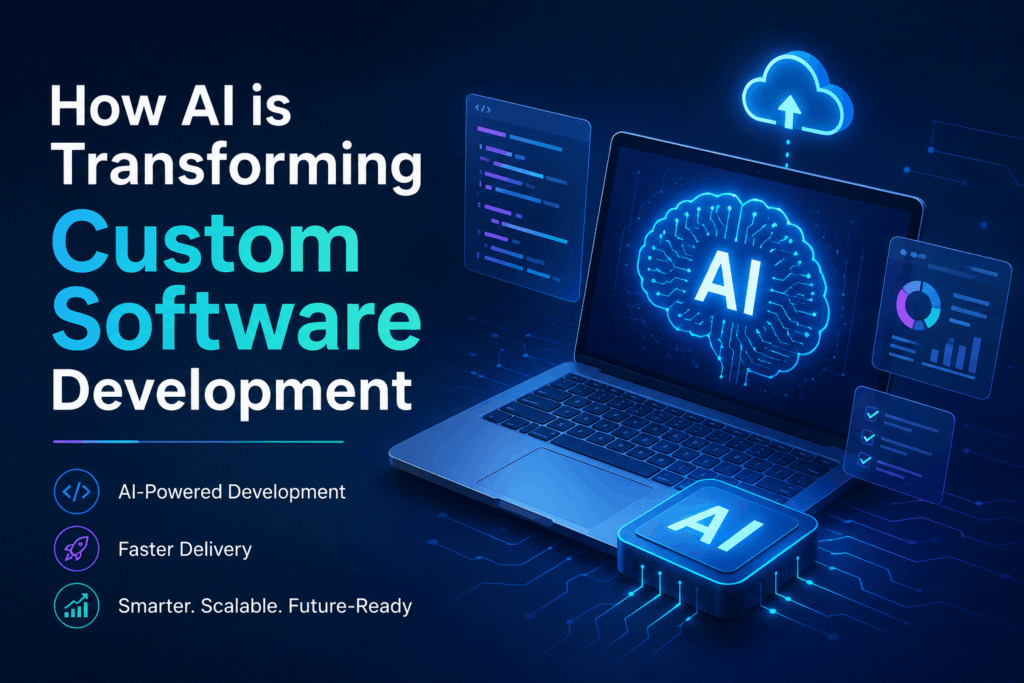
The global software industry is currently undergoing a massive paradigm shift. Traditional coding methodologies, which rely entirely on manual programming and long testing cycles, are rapidly evolving. Today, AI software development has emerged as the core driver of this technical revolution. Modern enterprises no longer look at artificial intelligence as an experimental luxury. Instead, it is a fundamental pillar of sustainable digital transformation. How exactly is artificial intelligence reshaping the custom software landscape? From writing code autonomously to predicting application performance before deployment, artificial intelligence development changes every phase of the traditional Software Development Life Cycle (SDLC). The impact of AI in Software Development spreads across every single phase of application engineering. This shift is accelerating rapidly; according to data published in the GitHub State of the Open Source Ecosystem, AI-powered tools are fundamentally changing how modern development teams build, test, and deploy software. By integrating tools like Machine Learning and advanced automated workflows, businesses can build highly tailored, exceptionally scalable, and secure systems in a fraction of the usual timeframe. For modern companies looking to build a definitive competitive advantage, understanding this evolution is essential. The Evolution: From Traditional Coding to AI Software Development For several decades, custom software engineering followed a highly linear and strict process. Software engineers manually analyzed client requirements, drafted system architectures, and wrote thousands of lines of code line-by-line. This process required significant time, enormous budgets, and a massive tolerance for human error. Debugging and quality assurance routinely consumed up to half of the total development timeline. The introduction of modern Artificial Intelligence Development shattered these legacy barriers. AI-driven platforms act as intelligent co-pilots for developers. Instead of replacing human intelligence, these smart systems enhance human capabilities. They eliminate repetitive boilerplate coding, automate syntactic validation, and abstract complex infrastructural logic. As a result, engineering teams shift their primary focus away from minor syntax details and direct their energy toward high-level business logic, user experience design, and systemic architecture. This evolution significantly lowers the barrier to innovation, allowing organizations of all sizes to launch enterprise-grade platforms rapidly. Deep Dive: Key AI Technologies Driving Custom Software To understand how software is transforming, we must look closely at the underlying technical engines powering this change. AI is not a single tool; it is an interconnected ecosystem of sophisticated technologies that work in unison to build robust, future-proof applications. 1. Machine Learning (ML) At the very heart of smart software lies Machine Learning. Unlike traditional systems governed by hardcoded “if-then” rules, ML algorithms review huge datasets to identify deep conceptual patterns. Once trained, these models make independent, data-driven decisions. In custom applications, machine learning powers highly advanced personalized recommendation engines, autonomous anomaly detection, and sophisticated natural language processing modules. 2. Generative AI The sudden rise of Generative AI has fundamentally changed how developers approach creation. Powered by vast Large Language Models (LLMs), generative systems write complete code snippets, build comprehensive databases, and automatically generate detailed technical documentation based on plain human language prompts. This rapid generation radically accelerates prototyping, allowing product teams to experiment with multiple architectural configurations in real time. 3. AI Automation Manual workflows often slow down software engineering. AI Automation fixes this bottleneck by managing complex, repetitive tasks across the entire development cycle. It seamlessly handles software configuration, controls continuous integration and continuous deployment (CI/CD) pipelines, and automates environment setups. By running these background workflows autonomously, development teams experience fewer operational delays and human errors. 4. Predictive Analytics Building custom software requires long-term planning for scalability and system stability. By embedding Predictive Analytics engines directly into the environment, development teams can analyze historic application performance and precisely project future user behavior. This allows software systems to optimize server resources dynamically, proactively flag potential security vulnerabilities, and fix system bottlenecks before they ever impact an end-user. Phase by Phase: How AI Rewrites the Software Development Life Cycle (SDLC) The impact of AI in Software Development spreads across every single phase of application engineering. Let us examine how intelligent algorithms optimize each stage of the lifecycle. SDLC Phase Traditional Approach AI-Driven Approach Key Benefit Requirements Gathering Manual interviews, long documents, and frequent miscommunications. NLP analysis of market data, user sentiment, and competitive systems. Highly accurate project scoping and reduced feature creep. System Design & Architecture Manual blueprint creation based on architect experience. AI evaluation of thousands of historical system architectures. Optimized resource allocation, scalability, and performance. Code Generation Manual typing of code, libraries, and boilerplate structures. Generative code auto-completion and intelligent refactoring. Up to 40% faster development timelines. Testing & Quality Assurance Manual test scripts and basic, surface-level bug hunting. Autonomous test generation and deep semantic code checking. Immediate bug discovery and zero human bias in QA. Deployment & Maintenance Scheduled updates and reactive debugging after system crashes. Self-healing deployments and proactive system monitoring. Maximum application uptime and seamless user experience. Smarter Requirements Gathering and Conceptualization Every successful software project begins with clear requirements. Historically, misaligned expectations between clients and developers caused over 70% of project delays. Today, advanced text-mining tools analyze initial client documentation, cross-reference it with industry benchmarks, and instantly highlight logical contradictions or missing requirements. This guarantees a highly accurate software blueprint before writing a single line of code. Rapid Prototyping and Code Generation During the development phase, engineering teams utilize advanced AI tools to write clean, syntax-perfect code. Instead of spending hours looking up API documentation or external libraries, a developer can describe a desired feature in plain text. The AI instantly generates the necessary code blocks in frameworks like .NET, Angular, or React. Furthermore, the system analyzes the code as it is being written, actively suggesting structural optimizations and architectural improvements. Eliminating Bugs with Automated Quality Assurance Software testing is often tedious and prone to human oversight. AI completely changes this dynamic by automatically scanning codebase updates, predicting where vulnerabilities are most likely to hide, and writing unique test cases to stress-test the environment. These automated systems check for complex logic flaws, data leaks, and edge-case errors, ensuring code is fully
State of SEO in Pune 2026: What 50+ Local Businesses Revealed About Their Digital Growth
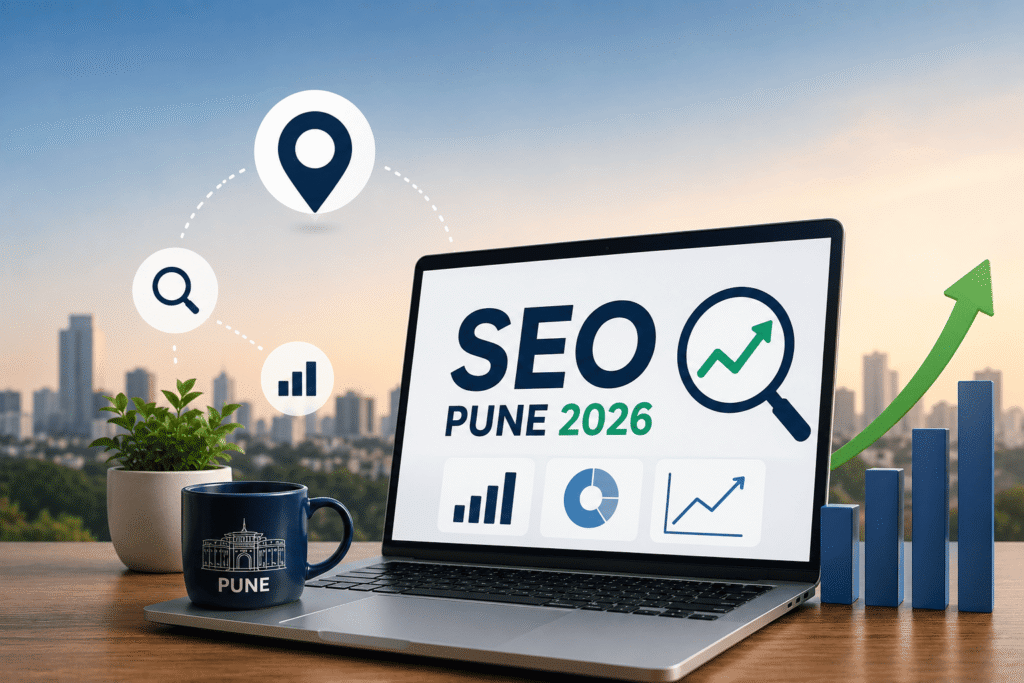
The digital marketplace in Maharashtra’s cultural and IT capital is shifting at a breakneck pace. As we navigate through 2026, standard optimization tactics that worked a few years ago no longer cut through the noise. To uncover what is truly driving organic revenue right now, we conducted an extensive study interviewing over 50 local business owners, marketing directors, and digital stakeholders across Hinjawadi, Koregaon Park, Baner, and Hadapsar. If you want your brand to dominate local search rankings, understanding this data is critical. Working alongside the best seo company in pune ensures that these insights are transformed into structured campaign strategies. From AI-driven hyper-local search intents to conversational voice queries, the playground has evolved. Our data indicates a massive surge in companies transitioning budgets away from traditional outbound media. Instead, they are reinvesting heavily into targeted inbound search strategies. Let’s dive deep into the specific insights, data points, and operational transformations revealed by Pune’s diverse business ecosystem. 1. The 2026 Shift: Why Local Brands are Demanding the Best SEO Services in Pune Out of the 53 businesses surveyed, an overwhelming 84% reported that their customer acquisition costs (CAC) via paid social media channels increased by nearly 40% year-over-year. This ad-spend inflation has forced brands to look at sustainable, long-term organic alternatives. Consequently, searching for the best seo services in pune has become the primary operational objective for B2B enterprises, healthcare facilities, real estate builders, and manufacturing units alike. The Core Drivers of Organic Investment Why are brands pivoting so rapidly? The reasons highlight a maturing digital ecosystem: The Death of Third-Party Cookies: With privacy laws tightening globally and locally, hyper-targeted paid ads are losing precision. Organic search offers a intent-driven audience pool that doesn’t rely on intrusive tracking. AI-Overviews (SGE) Integration: Search engines in 2026 prioritize authoritative, deeply researched content. Businesses realize they need specialized technical expertise to appear in AI-generated search summaries. Localized Consumer Intent: Whether someone is looking for a boutique café in Kalyani Nagar or an enterprise cloud provider in Magarpatta, search behavior is hyper-localized. Partnering with a top-tier seo company in pune is no longer just about tracking keyword positions; it is explicitly about capturing market share within high-intent search pockets before your immediate competitors do. 2. Key Findings: What 50+ Pune Businesses Taught Us About Scale Our data collection spanned multiple industry verticals, including IT services, real estate, boutique hospitality, healthcare, and manufacturing. The responses paint a clear picture of what separates market leaders from struggling brands. Data Point A: Content Depth Over Content Volume For years, brands believed that publishing three low-quality blogs a week would satisfy search engine crawlers. In 2026, that strategy fails entirely. 72% of the surveyed businesses that reported positive ROI from search engine optimization shifted their focus to exhaustive, long-form pillars. By answering every potential user objection within a single, well-structured resource, these brands secured higher topical authority. This is why consulting a premium seo agency in pune is essential. Strategy must precede execution; arbitrary content production is a sunk cost. Data Point B: User Experience (UX) and Interaction Metric Alignments Search engines now heavily weigh real-user interaction metrics like Core Web Vitals, scroll depth, and contextual click-through rates. Metric Tracked Percentage of Successful Businesses Prioritizing This Impact on Conversions Mobile Load Time (<1.5s) 91% +28% Inquiry Forms Filled Contextual Internal Linking 78% +45% Time on Site Structured Schema Markup 65% Higher Snippet Visibility If your website feels clunky, or if users click away within five seconds, your rankings will tank regardless of how many backlinks you possess. A professional seo company pune handles these intricate technical alignments alongside traditional on-page optimizations. 3. Demystifying Technical Frameworks with a Top SEO Company in Pune To rank sustainably in competitive geographical areas, your website’s underlying technical architecture must be flawless. Many business owners assume content is the sole driver of organic visibility, but without technical indexing compliance, your brilliant content remains invisible. When you collaborate with a top seo company in pune, your optimization program is split into structured, measurable modules designed to maximize crawl efficiency. Core Architectural Pillars for 2026 Success: Topical Silo Architecture: Grouping your content into defined categories (silos) establishes clear contextual relevance for search engines. For instance, if you offer software development, all related blogs should link back structurally to your primary service pillar. Advanced Schema Deployments: Utilizing JSON-LD local business schema, product schema, and FAQ schema allows search crawlers to understand your business hours, physical location, and service offerings directly within the SERPs. Optimized Crawl Budgets: Eliminating duplicate URLs, fixing broken links (404 errors), and cleaning up bloated JavaScript ensures that search engine bots spend time indexing your revenue-generating pages rather than getting stuck in technical loops. 4. Maximizing Conversion Rates with Premium SEO Services Pune Traffic without conversion is nothing more than a vanity metric. True business growth occurs when organic visitors transform into qualified inbound leads, phone calls, or e-commerce transactions. Through our research, we discovered that companies employing dedicated best seo services pune methodologies saw a 3x higher conversion rate compared to brands executing random, unguided optimizations. Crafting High-Intent Landing Pages To capture traffic effectively, your content must map to the specific stage of the buyer’s journey: Informational Intent: Users searching for “How to scale a business digitally” require long-form guide content. Commercial Intent: Users searching for the “Best marketing agencies” require case studies, testimonials, and comparative analysis matrices. Transactional Intent: Users searching for “Hire SEO experts today” require friction-free landing pages with immediate clear calls-to-action. By integrating precise semantic indexing throughout your digital properties, an experienced seo agency in pune ensures your site attracts users who are actively prepared to invest in your products or services. 5. Strategic Link Intersections: Merging Internal Equity with Authoritative External Trust A brilliant structural framework requires digital trust to rank on highly competitive search engine results pages. Trust is established by balancing internal page equity with authoritative external validations. To demonstrate this effectively within our own industry analysis, we have integrated high-authority external references alongside
Why Your Pune Business Isn’t Ranking on Google (And How to Fix It in 30 Days)
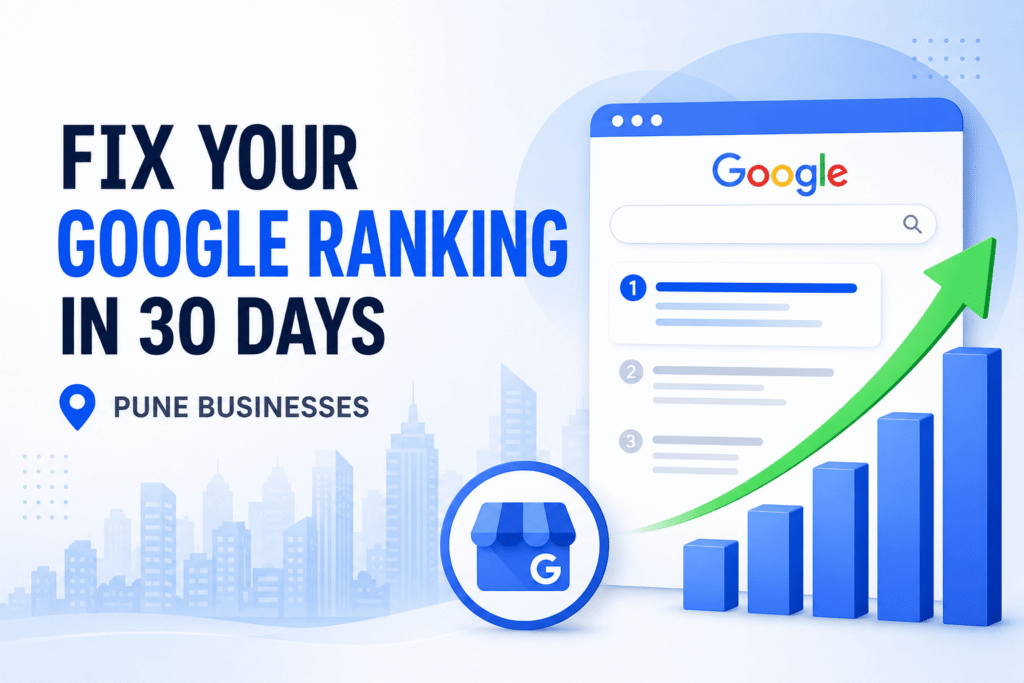
Are you a business owner in Shivaji Nagar, Koregaon Park, or Hinjawadi wondering why your local competitors are flooding their sales pipelines while your website remains invisible? You have poured capital into a beautiful web design, yet your analytics dashboard looks like a ghost town. The hard truth is this: having a website without proper visibility is like printing business cards and keeping them in your drawer. If you are struggling to acquire organic leads, you are likely searching for a reliable seo company in pune to decode why your Pune business isn’t ranking on Google (and how to fix it in 30 days). The digital landscape in Maharashtra’s cultural and economic hub is fiercely competitive. From local manufacturing units in Pimpri-Chinchwad to tech startups in Baner, everyone is fighting for the coveted first page of search engine results pages (SERPs). Fortunately, ranking on Google isn’t a game of luck; it is a game of strategy. By partnerning with a strategic seo company pune, you can systematically diagnose your website’s flaws, optimize its architecture, and scale your local revenue. Let’s dive into the core reasons behind your suppressed rankings and lay out an aggressive, step-by-step 30-day turnaround blueprint to dominate local search queries. Why Your Pune Business Isn’t Ranking: The Diagnosis Before you can fix your visibility issues, you must understand exactly what is holding your website back. Google uses over 200 ranking signals to determine which site deserves the top spot. If your business is buried on page three or four, it usually comes down to three major structural pillars: poor technical architecture, weak localized content, or a complete lack of authoritative trust signals. 1. Your Google Business Profile (GBP) is Neglected For any local enterprise, your Google Business Profile is the virtual storefront. If you haven’t claimed your profile, or if your name, address, and phone number (NAP) data is inconsistent across the web, Google’s algorithms begin to distrust your business’s physical existence. 2. Technical SEO Bottlenecks and Slow Load Times Pune’s mobile internet users expect lightning-fast website interactions. If your site takes more than three seconds to load on a standard mobile network, users bounce immediately. High bounce rates signal to Google that your site provides a poor user experience, forcing your rankings down. Broken internal redirects, unoptimized images, and a lack of mobile responsiveness will actively kill your digital growth. 3. Missing Local Search Intent and Keyword Gaps Many businesses build websites using generic copy that doesn’t target how local Punekars actually search. If your content lacks specific regional phrases and targeted intent keywords, you completely miss out on local transactional traffic. To bridge this gap, working alongside the best seo agency in pune ensures your content targets the exact search phrases your buyers utilize daily. The 30-Day Google Ranking Fix Blueprint for Pune Businesses Reclaiming your digital presence does not require years of waiting. By executing a highly structured, localized optimization campaign, you can begin witnessing significant ranking improvements within a single month. Here is your day-by-day execution strategy to transform your website into a lead-generation asset. Days 1–7: Comprehensive Technical Audit & Core Web Vitals Fix The first week of your recovery campaign must focus entirely on your website’s underlying infrastructure. If search engine crawlers cannot easily read and index your pages, no amount of quality writing will save your rankings. Step 1: Check Indexation Status: Open Google Search Console and verify how many of your pages are genuinely indexed. Address any crawl errors, 404 pages, or faulty redirect loops immediately. Step 2: Maximize Mobile Performance: Since the vast majority of local searches happen on smartphones, utilize Google’s PageSpeed Insights to look over your mobile metrics. Compress large images, eliminate render-blocking JavaScript, and implement aggressive browser caching. Step 3: Secure Your Architecture: Ensure your site has an active SSL certificate (HTTPS). Google explicitly prioritizes secure websites, classifying unsecured portals as unsafe for transactional consumer traffic. For businesses that lack an in-house development team to execute these technical alterations, relying on the best seo services in pune can streamline this entire phase, ensuring your site’s code meets Google’s strict modern standards. Days 8–14: Dominate Local SEO with Google Business Profile Optimization Once your technical foundation is rock solid, turn your attention to local search real estate: the Google Local Map Pack. To optimize your visibility within this map grid, execute the following actions: Claim and Verify: Ensure ownership of your Google Business Profile. Fill out every single field, including your exact operating hours, services offered, and business categories. Hyper-Local Keyword Integration: Weave relevant regional phrases naturally into your business description. Mention the specific neighborhoods you serve throughout Pune. Visual Proof: Regularly upload high-resolution images of your office, team, and local projects. Profiles with fresh imagery receive significantly more map directions and click-throughs than stale profiles. Days 15–21: Deploy Geo-Targeted Landing Pages and Local Content Generic service pages will not help you rank against deep-rooted local competitors. To outpace them, you need dedicated, contextually rich pages tailored to your target geographic audience. If your corporate headquarters are based in Kothrud, yet you want to secure high-value clients across the city, build out unique landing pages for areas like Viman Nagar, Hinjawadi, and Hadapsar. Every page you create must feature custom, non-duplicated copywriting that highlights your operations within those specific sectors. Integrating specialized expertise from a trusted seo company pune allows you to discover localized search trends and craft structured content layouts that fulfill Google’s rigorous Helpful Content guidelines. Days 22–30: Build High-Authority Local Citations and Review Funnels The final stretch of your 30-day plan centers on building authoritative trust signals around your brand name. Establish NAP Consistency: Your Business Name, Address, and Phone number must match perfectly across every online directory. Audit your details on platforms like Justdial, Sulekha, and Indian Yellow Pages to clean up old data fragments. Launch an Automated Review Funnel: Reach out to your satisfied historical clients via email or WhatsApp, offering them a direct shortcut link to leave a Google
Ecommerce SEO company in Pune
Ecommerce SEO Company in Pune: Your Partner for Online Growth In today’s digital world, having a strong online presence is critical for any e-commerce business. If you own an online store or plan to launch one in Pune, ranking high on search engines like Google can be a game-changer. That’s where an Ecommerce SEO company in Pune comes into play. They specialize in helping online businesses increase their visibility, drive organic traffic, and boost sales through tailored search engine optimization strategies. In this blog, we’ll explore why hiring an expert Ecommerce SEO company in Pune is essential, what services they offer, and how they can help you outperform your competitors. Why Is Ecommerce SEO Important? E-commerce SEO focuses on optimizing your online store to rank higher in search engine results. Unlike traditional SEO, ecommerce SEO involves optimizing product pages, category pages, and the overall website structure to attract the right audience. Without proper SEO, your store may remain invisible to potential customers, regardless of how good your products are. A dedicated Ecommerce SEO company in Pune understands these unique challenges and can craft strategies that increase your store’s visibility, improve user experience, and ultimately drive conversions. Key Benefits of Hiring an Ecommerce SEO Company in Pune 1. Local Expertise An ecommerce SEO company based in Pune knows the local market dynamics and consumer behavior. This localized knowledge helps in crafting SEO strategies that are more relevant and effective for your target audience. 2. Customized SEO Strategies Every ecommerce business is different, and a one-size-fits-all SEO approach rarely works. A professional SEO company designs personalized campaigns based on your product niche, competition, and business goals. 3. Technical SEO Optimization From site speed to mobile responsiveness and secure checkout processes, technical SEO plays a vital role in ranking. SEO experts ensure your website meets Google’s guidelines and delivers a seamless user experience. 4. Content Optimization Content is king, especially for ecommerce stores. The right product descriptions, blog posts, and metadata make your store attractive to search engines and shoppers alike. SEO agencies help create optimized and engaging content. What Services Does an Ecommerce SEO Company in Pune Offer? 1. Keyword Research and Analysis Finding the right keywords that your potential customers use is the foundation of SEO. A good SEO company conducts in-depth keyword research to identify high-traffic and low-competition keywords tailored to your ecommerce niche. 2. On-Page SEO This includes optimizing product titles, descriptions, images, URLs, and internal linking to ensure each page performs well on search engines. 3. Off-Page SEO Building quality backlinks from relevant websites enhances your store’s authority and trustworthiness in the eyes of search engines. 4. Technical SEO Audits Regular audits to identify and fix issues such as broken links, duplicate content, slow page loading times, and crawl errors. 5. Competitor Analysis Understanding your competitors’ strategies allows SEO companies to create tactics that can give you a competitive edge. 6. SEO Reporting and Analytics Transparency is key. Professional companies provide regular reports and analytics to track your SEO campaign’s progress and make data-driven decisions. How Ecommerce SEO Helps Your Pune-based Business Grow Increased Organic Traffic: Higher rankings mean more visitors to your online store without paying for ads. Better User Experience: SEO optimizations also improve website navigation and loading times, keeping customers engaged. Higher Conversion Rates: Targeted traffic is more likely to convert, leading to increased sales and revenue. Brand Credibility: Appearing on the first page of Google builds trust among customers and strengthens your brand presence. Choosing the Right Ecommerce SEO Company in Pune: What to Look For? 1. Proven Track Record Check case studies or client testimonials to ensure the company has successfully improved ecommerce SEO rankings. 2. Transparent Pricing Avoid companies that hide costs. Look for transparent pricing and clear deliverables. 3. Tailored Approach Each business needs a custom SEO plan. The company should offer strategies based on your unique needs. 4. White-Hat SEO Practices Avoid companies that use unethical SEO tactics (black-hat SEO) which can penalize your website in the long run. 5. Strong Communication A good SEO partner keeps you informed, listens to your concerns, and adapts strategies as needed. Common Ecommerce SEO Challenges and How Experts Solve Them Duplicate Content: SEO experts implement canonical tags and optimize product descriptions to avoid duplication issues. Slow Loading Speeds: Optimization of images, server response times, and code minification to improve speed. Mobile Optimization: Ensuring your store is fully responsive and easy to navigate on all devices. Managing Large Catalogs: Using effective site structure and navigation for user and search engine ease. Success Story: How Ecommerce SEO Transformed a Pune Retailer One Pune-based apparel store saw a 150% increase in organic traffic within six months of partnering with a reputed Ecommerce SEO company. Through meticulous keyword targeting, on-page SEO, and content marketing, the store doubled its sales and expanded its customer base nationally. Are you ready to take your online store to the next level? Partner with a trusted Ecommerce SEO company in Pune like Nucleosys Tech to unlock your store’s full potential. 👉 Contact us today for a free SEO audit and personalized strategy session! Final Thoughts With the rising competition in online retail, investing in ecommerce SEO is no longer optional but necessary. The right Ecommerce SEO company in Pune can help you navigate the complexities of SEO, attract high-quality traffic, and grow your business sustainably. Focus on choosing a partner who understands your market, offers customized strategies, and stays updated with the latest SEO trends to ensure lasting success.
How AI-Powered Production Reporting is Transforming Modern Manufacturing

For decades, industrial floors relied on manual logbooks, legacy spreadsheets, and delayed shifts to measure performance. Plant managers would often sit down at the end of the week, analyzing historical data that could only explain past failures rather than prevent them. In today’s fast-paced corporate environment, this reactive model is no longer sustainable. Industry 4.0 demands immediate action, leading forward-thinking organizations to shift toward comprehensive automation. The implementation of modern AI Production Reporting is completely transforming modern manufacturing by replacing historical guesswork with dynamic, instant, and predictive operational visibility. With modern smart software architectures, the production floor is no longer an isolated physical space; it functions as an interconnected, highly intelligent ecosystem. Advanced automated processing enables operations to minimize administrative overhead, avoid structural operational bottlenecks, and significantly reduce human error. Whether managing localized machine performance or multi-plant global setups, utilizing a data-driven approach to tracking operational efficiency has evolved from a progressive choice into a core operational standard for modern enterprise survival. The Core Shifts in Industrial Operations 1. The Power of AI Integrated Software on the Shop Floor At the absolute center of this transformation lies AI Integrated Software. Traditional Enterprise Resource Planning (ERP) frameworks and standard Manufacturing Execution Systems (MES) excel at tracking static numbers—such as total units produced or aggregate raw materials used—but they consistently fail to extract hidden contextual insights. When custom artificial intelligence layers are built directly into manufacturing architectures, the software stops acting as a passive database and begins working as a proactive assistant. An AI Integrated Software system systematically examines thousands of concurrent variables—ranging from slight thermal fluctuations in heavy tooling equipment to minor shifts in input energy patterns. By actively cross-referencing this data with historical performance datasets, the system identifies subtle operational anomalies long before a mechanical breakdown occurs. This predictive shift has a massive direct impact on overall equipment effectiveness (OEE). Instead of halting a critical assembly line for emergency repairs during a peak cycle, systems leverage smart machine learning algorithms to alert technicians to schedule targeted maintenance during planned downtime. 2. Unlocking Supercharged Responses with an Autonomous AI Agent In high-speed assembly and processing facilities, even five minutes of miscommunication or delayed response can mean thousands of dollars in lost yield. This is where an intelligent, operational AI Agent for Quick Response becomes an invaluable manufacturing asset. Rather than waiting for a plant engineer to read a text report or manually spot an error code on a physical terminal, an AI Agent for Quick Response actively monitors systemic telemetry data. When a bottleneck or failure pattern begins to develop: The agent instantaneously calculates the probable root cause of the slowdown. It automatically dispatches precise corrective instructions to on-floor technical teams via integrated communication channels. It can execute micro-adjustments directly within the software layer, slowing feed rates or re-routing raw parts to prevent sudden thermal shock or mechanical damage. This level of autonomous problem-solving ensures that industrial environments maintain continuous operational resilience without requiring constant, manual oversight from executive leadership. 3. The Digital Pulse: AI Production Reporting Dashboards with Quick Statistics Data is only truly valuable if it can be easily understood and acted upon by stakeholders. A comprehensive Production Report Dashboard with Quick Statistics acts as the centralized digital nerve center for the entire facility, consolidating complex telemetry streams into clean, accessible data charts. These modern performance interfaces display instant operational metrics, providing floor supervisors, plant engineers, and C-level executives with immediate answers to key operational questions: What is our precise operational equipment effectiveness (OEE) across individual shifts? Are current raw material consumption rates aligning with our predictive weekly targets? Which specific production cells are experiencing unexpected micro-stoppages? By deploying an intuitive Production Report Dashboard with Quick Statistics, teams no longer have to dig through complex databases or sort through messy spreadsheets to uncover operational trends. Everything required to make smart, time-sensitive decisions is displayed clearly on a single screen, accessible from any desktop or mobile device. 4. Unifying the Floor: Seamless Machine to Software Integration The greatest historical challenge to achieving true automation is operational fragmentation. A typical production facility often runs a mix of older legacy hardware alongside state-of-the-art robotic systems. Bringing these disparate systems together requires robust Machine to Software Integration. Without direct, native hardware communication, data silos naturally form. When plants implement comprehensive Machine to Software Integration, they open up real-time communication channels between physical hardware and cloud analytics platforms. By using smart industrial internet of things (IIoT) protocols, edge devices can capture every mechanical strike, rotational change, and thermal variance directly from programmable logic controllers (PLCs). This continuous stream of raw shop-floor data powers the core analysis engine, ensuring that your automated metrics reflect exactly what is happening on the line at that exact moment. 5. Agile Manufacturing via Custom Software Tailored to Fleet Realities Every industrial assembly setup is unique. A specialized pharmaceutical packaging facility operates under vastly different constraints, compliance rules, and workflows than a heavy automotive stamping facility. Because off-the-shelf software solutions often force facilities to change their proven workflows to fit rigid application layouts, choosing Custom Software According to Redirection and unique workflow configurations is essential for long-term operational success. By focusing on custom-built digital layouts, enterprises can tailor their data capture systems to track the exact key performance indicators (KPIs) that matter most to their specific market. Custom data models accommodate specialized custom workflows, unique compliance requirements, and specific operational goals. This bespoke approach ensures that your software scales naturally alongside your operations, adapting fluidly as your manufacturing requirements evolve over time. 6. Driving Continuous Efficiency Through Advanced Process Automation The ultimate goal of adopting modern technical frameworks is complete, end-to-end Process Automation. When software systems communicate smoothly with physical production machinery, organizations can eliminate slow, repetitive manual tasks from their daily routines. With an optimized Process Automation strategy in place, an system can automatically handle complex administrative workflows: When a production run finishes, the system automatically checks total batch yield against initial quality assurance specs. It immediately
Best Remote Project Management and Tracking Software for Teams in 2026
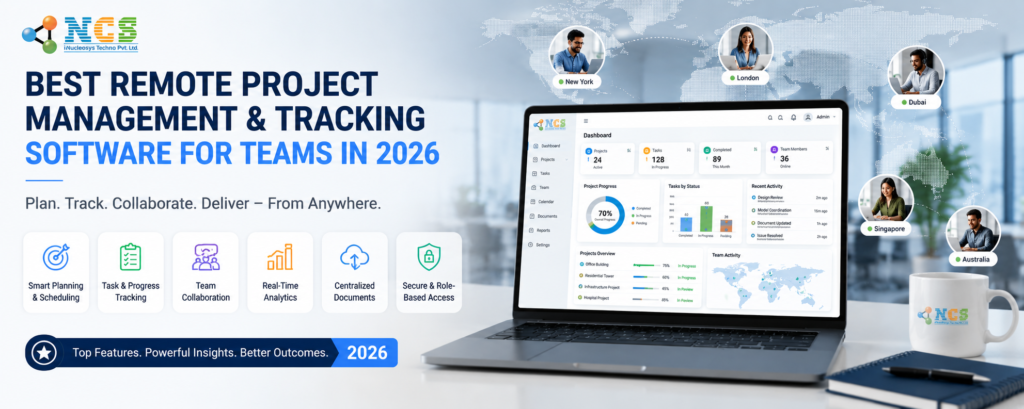
Remote work is no longer a temporary trend. In 2026, businesses across the globe are operating with distributed teams, hybrid employees, and virtual project workflows. To maintain productivity, transparency, and accountability, companies now require powerful remote project management software that can centralize operations in one platform. Managing remote teams without a proper system often creates communication gaps, delayed deadlines, inaccurate time tracking, and poor visibility into employee performance. Businesses using disconnected tools for task management, employee monitoring, and reporting struggle to scale efficiently. This is where MIS by Nucleosys Tech becomes a game-changing solution. Designed for modern businesses, this cloud-based Management Information System helps organizations streamline workflows, monitor employee productivity, manage projects, and improve collaboration from anywhere. Whether you run an IT company, marketing agency, software development team, or enterprise operation, MIS provides everything needed to manage remote teams effectively. Why Businesses Need Remote Project Management Software in 2026 Traditional project management methods are no longer effective for remote and hybrid work environments. Companies now require centralized workflow management software that improves visibility, automates reporting, and simplifies collaboration between teams. Modern businesses are looking for: Task management software Employee monitoring software Time tracking systems Team collaboration platforms Workflow automation software Productivity tracking tools Client management systems Using multiple disconnected applications increases operational complexity and reduces efficiency. A unified remote workforce management platform eliminates these issues by bringing every business process into one dashboard. MIS by Nucleosys Tech is specifically developed to solve these modern remote work challenges. What is MIS by Nucleosys Tech? MIS by Nucleosys Tech is an advanced remote employee management software designed to help organizations manage tasks, projects, teams, and reporting through a single centralized platform. The system combines: Project management software Employee productivity tracking Smart time tracking Workflow automation Client feedback management Performance analytics Team collaboration tools This all-in-one business productivity software helps companies improve operational efficiency while maintaining complete visibility over remote teams. Key Features of MIS Remote Project Management Software 1. Role-Based Access Control (RBAC) Security and data control are essential for enterprises managing distributed teams. MIS includes a powerful 5-level Role-Based Access Control system. User Roles Include: Admin Director Project Manager Team Lead Employee Each role receives customized access permissions based on responsibilities. This protects sensitive business information while improving workflow management. Benefits include: Secure project handling Controlled employee access Better operational transparency Improved data security This makes MIS an ideal enterprise workflow software for growing businesses. 2.Advanced Project & Client Management MIS offers powerful project management tools for handling multiple client engagements simultaneously. The platform supports two flexible models: Project-Based Management Perfect for fixed-cost projects with milestones and deadlines. Resource-Based Management Ideal for hourly billing, dedicated developers, and agile teams. Businesses can: Track project progress Monitor resource allocation Manage client accounts Control project timelines Improve billing accuracy This makes MIS one of the best project management software solutions for remote teams in 2026. 3.Smart Task Management with Automated Time Tracking One of the most important features of any remote work software is accurate task and time tracking. MIS includes an integrated smart timer system that allows employees to: Start and stop task timers Track active working hours Log breaks Update task progress Manage daily work schedules Managers can monitor: Productivity levels Employee performance Billable hours Task completion status Work efficiency Unlike traditional time tracking software, MIS combines employee productivity tracking with real-time project monitoring. 4.Employee Monitoring & Productivity Tracking Remote businesses require visibility into team activities without micromanaging employees. MIS helps organizations: Track employee activity Monitor project progress Measure productivity Analyze workload distribution Generate efficiency reports The platform improves accountability while supporting flexible remote work culture. This makes MIS a highly effective employee monitoring software for modern businesses. 5.Workflow Automation & Team Collaboration Managing remote teams manually can slow down operations. MIS simplifies communication and workflow automation through centralized collaboration features. Teams can: Assign tasks instantly Share updates Review project milestones Approve deliverables Receive automated notifications The platform improves team coordination and reduces communication delays. For businesses searching for a scalable team collaboration platform, MIS offers enterprise-grade workflow management capabilities. 6.Client Feedback & Approval Management MIS includes a dedicated client portal where clients can: Review project progress Approve tasks Share feedback Monitor milestones Communicate with teams This structured workflow reduces dependency on emails and improves project transparency. It also helps businesses improve client satisfaction and project delivery speed. Advanced Reporting & Business Analytics Data-driven decisions are essential for business growth. MIS provides detailed performance reports that help companies optimize operations. Available Reports Include: Employee Efficiency Reports Project Performance Reports Internal Error Reports External Error Reports Resource Utilization Reports Milestone Tracking Reports Team Productivity Analytics These insights help businesses identify bottlenecks, improve workflows, and maximize productivity. Why MIS is Better Than Traditional Project Management Tools Features Traditional PM Tools MIS by Nucleosys Tech Time Tracking Third-party integrations Built-in smart timer Employee Monitoring Limited Advanced productivity trackin Role-Based Access Basic 5-level RBAC Client Feedback Email dependent Dedicated client portal Workflow Automation Partial Fully integrated Reporting Basic analytics Enterprise-grade reporting Resource Management Limited Advanced allocation tracking MIS combines multiple business functions into one centralized remote project management system. Benefits of Using MIS for Remote Teams Businesses using MIS can: Improve employee productivity Track work-from-home employees efficiently Reduce project delays Simplify client communication Improve billing accuracy Automate reporting Optimize team performance Increase workflow transparency The platform is designed to support startups, SMEs, agencies, IT companies, and enterprise businesses. Why Choose Nucleosys Tech? Nucleosys Tech specializes in building scalable enterprise software solutions for modern businesses. The company provides: Custom MIS software Enterprise workflow systems Project management software Mobile app development Web application development Business automation solutions Their advanced remote workforce management solutions help organizations scale efficiently in a competitive digital environment. Get Free Trial of MIS Software Today Looking for the best remote project management software for your business? MIS by Nucleosys Tech helps you: Manage remote employees Track project progress Improve productivity Automate workflows Simplify team collaboration Request a Free Demo Today Frequently Asked Questions
How to Find an Expert Shopify Developer: The Ultimate Guide to Scaling Your Store

In the hyper-competitive world of e-commerce, your storefront is more than just a digital catalog; it is the heartbeat of your brand. As businesses migrate toward more robust, scalable solutions, Shopify has emerged as the leading platform for creators and global enterprises alike. However, a standard template rarely suffices for a brand aiming for the top tier of the market. This is where the challenge begins: how to find an expert Shopify developer who can transform a generic site into a high-converting, custom machine. Navigating the sea of freelancers and agencies requires a keen eye for technical nuance. It isn’t just about finding someone who can “set up a shop”; it’s about finding a partner who understands the intricacies of the Shopify ecosystem. Why Technical Expertise Matters in Shopify Development Many merchants fall into the trap of thinking Shopify’s “user-friendly” reputation means professional development is unnecessary. On the contrary, to achieve unique functionality, seamless third-party integrations, and lightning-fast load times, you need more than a basic understanding of the dashboard. When you begin the journey of how to find an expert Shopify developer, you must prioritize those who treat code as a craft. An expert doesn’t just install apps—which can bloat your site and slow down performance—they build custom sections and lean Liquid logic to keep your site agile. Assessing Coding Style Capabilities One of the most overlooked aspects of hiring is the developer’s coding style capabilities. Expert developers adhere to “DRY” (Don’t Repeat Yourself) principles and use clean, commented code that is easy for future developers to maintain. When interviewing candidates, ask about their approach to: Vanilla JavaScript vs. Libraries: Do they rely on heavy libraries like jQuery, or can they write efficient Vanilla JS to minimize load times? CSS Architecture: Do they use BEM (Block Element Modifier) or other naming conventions to ensure the styling is scalable? Theme Architecture: Are they proficient in Shopify Online Store 2.0 features, such as JSON templates and app blocks? Deep Dive: Their Expertise and Proven Track Record You cannot learn how to find an expert Shopify developer without looking at their portfolio through a critical lens. Expertise is not just years of experience; it is the relevance of that experience to your specific niche. E-commerce Strategy and UX Design An expert isn’t just a coder; they are a strategist. They should understand user flows, checkout optimization, and mobile-first design. If a developer cannot explain why a certain button placement improves conversion, they may lack the high-level expertise needed for a growing business. Knowledge of Shopify’s Core and APIs A true master of the platform has deep knowledge of Shopify internals. This includes: Liquid: The backbone of Shopify themes. Storefront API: For headless commerce builds. Shopify CLI: Essential for modern, efficient development workflows. GraphQL: For fetching data more efficiently than traditional REST APIs. For more technical insights on how backend structures impact front-end performance, you can explore Mozilla’s Web Documentation on modern web standards. Identifying the Right Partner: Agencies vs. Freelancers As you search for how to find an expert Shopify developer, you will face the choice between an individual freelancer and a full-service agency. Freelancers: Great for specific, small-scale tasks. However, they may lack the bandwidth for comprehensive site builds. Specialized Agencies: Organizations like Nucleosys Tech offer a holistic approach. An agency provides not just a developer, but a project manager, a QA tester, and a designer, ensuring that every angle of your store is polished. Strategic Integration and Shopify Web Development Expertise often extends into Shopify Web development. Sometimes, the “off-the-shelf” apps in the Shopify App Store don’t meet your unique business logic. An expert developer can build a private website or a custom integration with your ERP/CRM system. This level of customization is what separates a $100k store from a $1M store. The Vetting Process: Questions You Must Ask To truly understand how to find an expert Shopify developer, you must conduct a rigorous interview. Use these talking points to separate the novices from the pros: “Can you explain your process for theme optimization?” Look for mentions of lazy loading, image compression, and minifying scripts. “How do you handle version control?” An expert will always use Git (GitHub/Bitbucket) to ensure your store’s code is backed up and versioned. “How do you manage Shopify Plus features?” (If applicable). If you are on Shopify Plus, you need someone who understands Shopify Scripts and Flow. For businesses looking to understand the global impact of e-commerce scaling, Statista’s E-commerce Reports provide excellent data on why performance optimization is critical for retention. The Importance of Shopify SEO Best Practices Your store is only useful if customers can find it. An expert developer integrates Shopify SEO best practices into the code from day one. This includes: Proper header tag hierarchy (H1, H2, H3). Schema markup for products and reviews. Fast-loading code that passes Google’s Core Web Vitals. Clean URL structures and canonical tags to avoid duplicate content. At Nucleosys Tech, we emphasize that SEO and Web Development must go hand-in-hand to ensure long-term ROI. Finalizing the Hire: Trials and Communication Before committing to a massive project, consider a “test project.” Ask the developer to fix a specific bug or build a single custom section. This allows you to evaluate their communication style, deadlines, and technical execution. Communication: Do they explain technical hurdles in plain English? Transparency: Do they provide clear timelines and milestones? Documentation: Will they provide a manual or walkthrough of the custom work they’ve done? For those looking to migrate from other platforms, our guide on Magento to Shopify Migration highlights why expert intervention is non-negotiable during data transfers. Understanding how to find an expert Shopify developer is the first step toward digital dominance. At Nucleosys Tech, we don’t just build websites; we engineer high-performance e-commerce experiences. Our team possesses the deep knowledge of Shopify and the advanced coding style capabilities required to build stores that aren’t just beautiful, but are built to convert. Whether you need a custom theme from scratch, a
Custom .NET Application Development & Migration: The Complete 2026 Guide for Growing Businesses
Introduction: Why Businesses Are Rethinking Their .NET Strategy Right Now If your business is still running on a legacy application built years ago, you already know the signs. Slow load times. Integration headaches. Rising maintenance bills. Features that take months to ship. The truth is, outdated software doesn’t just slow down your IT team — it slows down your entire business. Custom dot net application development migration has become one of the most strategic investments a company can make in 2026. Whether you’re moving from an older .NET Framework to .NET 8, rebuilding a monolithic app into microservices, or developing a brand-new enterprise-grade solution, the decisions you make here will shape your technology roadmap for the next decade. At Nucleosys Tech, we’ve helped businesses across industries transform their legacy systems into modern, scalable, and secure .NET applications. In this guide, we’ll walk you through everything — the what, the why, the how, and the common pitfalls to avoid. Let’s dig in. What Is Custom .NET Application Development? Before we talk about migration, it helps to understand what makes custom .NET development different from off-the-shelf software. Custom .NET application development means building software that is designed specifically for your business workflows, data structures, integrations, and user needs — using Microsoft’s .NET ecosystem as the foundation. Unlike generic SaaS tools that force you to adapt your processes to the software, a custom .NET solution adapts to you. Microsoft’s .NET platform (now unified under .NET 6, 7, and 8) supports everything from web APIs and enterprise dashboards to cloud-native microservices and real-time applications. It’s cross-platform, open-source, highly performant, and backed by one of the largest developer ecosystems in the world. For businesses that have outgrown their current tools — or that need tight integration between systems, role-based access control, or complex data processing — custom dot net application development is often the most cost-effective long-term option. What Is .NET Application Migration and Why Does It Matter? .NET migration refers to the process of moving an existing application from an older version or framework — typically .NET Framework 3.5, 4.x, or older ASP.NET — to a modern .NET runtime like .NET 6, 7, or 8. But migration isn’t just a technical upgrade. It’s a business transformation. Here’s why companies are prioritising .NET application migration in 2026: End of support for legacy .NET frameworks: Microsoft has ended mainstream support for several older .NET Framework versions. Running unsupported software is a compliance and security risk. Performance gains: .NET 8 delivers up to 3x better throughput compared to .NET Framework 4.8 in benchmark tests, according to Microsoft’s official .NET performance blog. That translates directly to faster response times, lower infrastructure costs, and happier users. Cloud readiness: Modern .NET apps are built to run natively on cloud platforms like Microsoft Azure, AWS, and Google Cloud. Legacy apps often weren’t designed with cloud-native architecture in mind. Developer productivity: Newer .NET tooling and language features (C# 12, minimal APIs, Blazor) significantly reduce development time and technical debt. Security improvements: Each new .NET release includes critical security patches, updated cryptography libraries, and stronger default configurations. In short, if your business is running a .NET Framework application that hasn’t been updated in years, migration isn’t optional — it’s urgent. Key Signs Your Business Needs Custom .NET Development or Migration Not sure if now is the right time? Here are clear signals that you should start planning immediately: Your application crashes or becomes unresponsive under peak load. Your developers spend more time fixing bugs than building features. Integration with third-party tools like payment gateways, CRMs, or analytics platforms is painful. You’ve outgrown your current software’s feature set but can’t customise it. Your hosting costs keep climbing without a clear reason. Your team struggles to onboard new developers because the codebase is too complex to understand. Your application has never had a proper security audit. If any of these sound familiar, you’re not alone. These are exactly the challenges that drive businesses to pursue custom dot net application development migration with experienced partners. The .NET Migration Process: Step-by-Step One of the biggest fears businesses have about migration is disruption. “Will we have downtime?” “Will our data be safe?” “How long will this take?” These are fair questions, and the answer depends heavily on how the process is managed. Here’s the approach that experienced .NET development teams typically follow: Step 1: Application Assessment and Audit Before writing a single line of new code, a thorough audit of the existing system is essential. This includes reviewing the current codebase for dependencies, third-party libraries, database structures, and any undocumented logic that lives only in the application layer. This phase often surfaces issues that the business didn’t even know existed. Step 2: Defining the Migration Strategy There are several migration approaches depending on your business goals and risk tolerance. A rehost (lift-and-shift) moves the existing application to a new environment with minimal changes. A replatform involves moving the app to modern .NET with some optimisations but without a full rewrite. A refactor or rearchitect means redesigning key components — often breaking a monolith into microservices — while migrating. A full rebuild is sometimes the right answer when legacy code is too tangled to salvage. Each strategy has trade-offs in time, cost, and risk. The right choice depends on your business context, not a template. Step 3: Environment Setup and CI/CD Pipeline Modern .NET migration includes setting up proper development, staging, and production environments, along with automated testing and deployment pipelines. This is often something legacy systems lack entirely, and getting it right from the start pays dividends for years. Step 4: Incremental Migration with Parallel Running Rather than doing a big-bang cutover, best practice is to migrate features incrementally and run old and new systems in parallel during transition. This dramatically reduces the risk of downtime or data loss. Step 5: Database Migration and Optimisation The database is often the most complex part of any migration. Whether you’re staying with SQL Server, moving to PostgreSQL, or adopting
Website Redesign vs Maintenance: The Ultimate Guide to Scaling Your Digital Presence
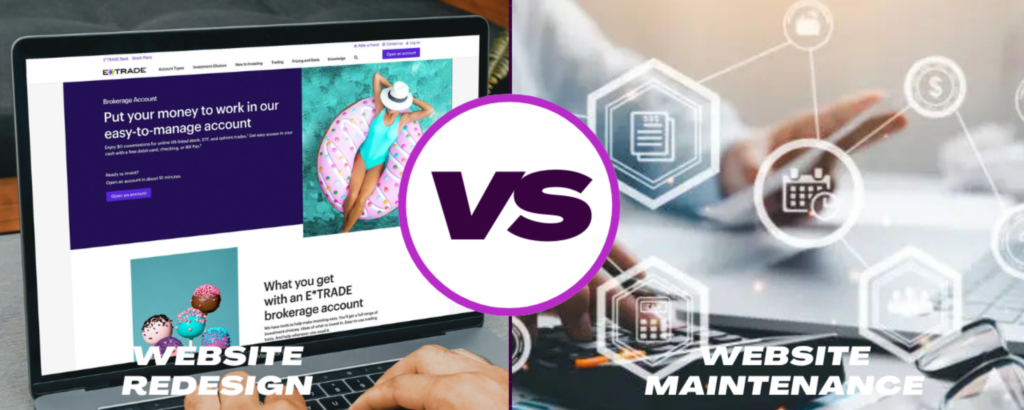
In the fast-evolving digital landscape, business owners often find themselves at a crossroads: should they invest in a complete Website Redesign vs Maintenance? Your website is the digital storefront of your brand, and its performance directly impacts your bottom line. Choosing the wrong path can lead to wasted budgets or, worse, a site that fails to convert. Whether you are looking to refresh your brand identity or simply ensure your site stays secure and functional, understanding the nuances of Website Redesign vs Maintenance is critical for long-term SEO success and user engagement. Understanding the Core: Website Redesign vs Maintenance To make an informed decision, we must first define what these two strategies entail. While they both aim to improve your online presence, their scope and execution differ significantly. What is Website Maintenance? Website maintenance is the ongoing process of keeping your site healthy, secure, and up-to-date. Think of it like regular oil changes for a car. It involves routine tasks such as: Updating CMS versions and plugins. Fixing broken links and 404 errors. Monitoring site speed and performance. Regular security patches to prevent hacking. What is a Website Redesign? A website redesign is a comprehensive overhaul of your site’s visual aesthetics, user interface (UI), and information architecture. This is more like buying a new car or performing a complete engine swap. It is necessary when your current site no longer reflects your brand or fails to meet modern web standards like mobile-first indexing. When to Choose Website Maintenance If your website is currently generating leads and ranking well, a full redesign might be premature. In this scenario, Website Redesign vs Maintenance leans heavily toward the latter. 1. Consistent Search Engine Rankings If you are already appearing on the first page of Google for your primary keywords, a redesign carries the risk of “SEO shock.” By focusing on maintenance, you preserve your existing URL structure and Top-Rated SEO Services that you’ve worked hard to build. 2. Budget and Resource Allocation Maintenance is a cost-effective way to ensure Technical SEO health without the heavy upfront investment of a rebuild. Regular updates keep your Site Speed optimal, which is a core web vital that Google prioritizes. 3. Security and Stability Cyber threats evolve daily. Regular Security Patches are non-negotiable. Maintenance ensures that your Content Management System (CMS) is shielded from vulnerabilities, protecting both your data and your customers’ trust. When a Website Redesign is Mandatory Sometimes, no amount of maintenance can fix a fundamentally broken foundation. When comparing Website Redesign vs Maintenance, a redesign is necessary if: 1. High Bounce Rate and Low Conversions If your analytics show a high Bounce Rate, it’s a sign that users are frustrated. An outdated User Experience (UX) can drive potential customers straight to your competitors. A redesign allows for strategic Conversion Rate Optimization (CRO), turning visitors into leads. 2. Lack of Mobile Responsiveness In 2026, over 60% of web traffic comes from mobile devices. If your site isn’t perfectly fluid on smartphones, you are losing more than half of your market. A redesign ensures your site meets the highest standards of Mobile Responsiveness. 3. Rebranding or Business Scaling If your business has pivoted or grown, your old site may no longer fit your current Digital Marketing Strategy. A redesign aligns your visual identity with your business goals, providing a fresh start for your brand storytelling. Impact on SEO: The Invisible Difference The battle of Website Redesign vs Maintenance is often fought in the backend. Maintenance preserves your current SEO equity. It ensures that crawl bots can easily navigate your site without hitting dead ends. Redesign offers a chance to implement advanced schema markup and cleaner code, but it requires a meticulous 301 redirect map to ensure you don’t lose your current Business SEO Solutions rankings. For high-authority insights on how design affects rankings, refer to Moz’s Guide on Web Design & SEO. Choosing Your Path: A Data-Driven Approach Before deciding on Website Redesign vs Maintenance, audit your current performance. If your site is technically sound but looks dated, perhaps a “facelift” (partial redesign) is enough. However, if your underlying technology is obsolete, a full redesign is the only way to stay competitive. At Nucleosys Tech, we specialize in helping businesses navigate this choice. Whether you need robust ongoing support or a ground-up transformation, our team ensures your digital assets are optimized for growth. We don’t just build websites; we build high-converting engines designed to scale. Ready to elevate your online presence? Whether you need professional Website Maintenance to secure your site or a strategic Website Redesign to dominate your niche, Nucleosys Tech is here to help. Our experts deliver tailored solutions that drive traffic and maximize ROI. Contact Nucleosys Tech Today for a Free Website Audit! Q&A: Frequently Asked Questions Q1: How often should I redesign my website? Typically, a website redesign is recommended every 2–4 years to keep up with changing technology, design trends, and Google’s algorithm updates. Q2: Will a redesign hurt my SEO? If handled poorly, yes. However, with a proper SEO migration strategy—including 301 redirects and maintaining metadata—a redesign can actually significantly improve your Search Engine Rankings. Q3: Can I just do maintenance forever? While maintenance extends the life of a site, eventually the underlying code or CMS becomes “Legacy,” making it slower and more difficult to secure. At that point, a redesign becomes more cost-effective than constant patching. Q4: Is site speed affected more by maintenance or redesign? Both. Maintenance keeps a site fast by cleaning databases and optimizing images. A redesign improves speed by using modern, lightweight coding frameworks. Q5: What is the biggest risk of neglecting maintenance? The biggest risks are security breaches and total site failure. Without regular updates, your site becomes an easy target for malware, which can lead to being blacklisted by Google.
10 Critical Signs Your Website Needs Maintenance: The Ultimate Guide to Rescuing Your Digital Presence

In the fast-evolving digital landscape of 2026, your website is often the first point of contact between your business and potential clients. However, many business owners treat their site like a “set it and forget it” asset. This is a dangerous mistake. Recognizing the signs your website needs maintenance is crucial for sustaining growth, ensuring data security, and maintaining high search engine rankings. If your site is lagging, glitching, or failing to convert, it isn’t just “getting old”—it is actively losing you money. Regular upkeep is no longer a luxury; it is a technical necessity. Search engines like Google now prioritize “technical health” as much as content quality. From core web vitals to advanced security patches, staying on top of your site’s health is the only way to stay competitive. In this comprehensive guide, we will explore the red flags that indicate your platform is underperforming and why professional website maintenance services are the best investment for your brand’s longevity. Why Website Maintenance is Non-Negotiable in 2026 Before diving into the specific signs your website needs maintenance, it’s vital to understand the “why.” A neglected website is like a car that hasn’t had an oil change in years; eventually, the engine will seize. Security: With AI-driven cyber-attacks on the rise, outdated plugins are an open invitation to hackers. User Experience (UX): Modern users expect lightning-fast speeds and seamless navigation. According to Google’s Web Dev insights, even a 0.1-second improvement in mobile speed can increase conversion rates by 8%. SEO Rankings: Google’s algorithms favor sites that are updated frequently and free of technical errors. 10 Major Signs Your Website Needs Maintenance Immediately 1. Sluggish Loading Speeds and Poor Performance One of the most obvious signs your website needs maintenance is a decrease in speed. If your pages take more than 2-3 seconds to load, you are likely suffering from “bloated code” or unoptimized images. This directly impacts your bounce rate, as users will abandon a slow site for a competitor’s faster alternative. 2. Broken Links and 404 Errors Nothing kills credibility faster than a “Page Not Found” error. Over time, internal links can break due to URL changes, or external sites you’ve linked to may disappear. Regular audits help identify these dead ends, ensuring a smooth journey for both users and search engine crawlers. 3. Frequent Security Alerts or Malware Issues If your browser or hosting provider warns you about “suspicious activity,” your site is in the “danger zone.” Outdated CMS versions (like WordPress or Magento) are prime targets for vulnerabilities. This is a critical sign that your security protocols need an urgent refresh. 4. Poor Mobile Responsiveness In 2026, mobile-first indexing is the standard. If your website looks “wonky” on a smartphone—text overlapping, buttons too small to click, or horizontal scrolling—you are failing the mobile-friendly test. This is a top-tier sign your website needs maintenance and a design overhaul. 5. Outdated Content and “Copyright 2022” Check your footer. If the copyright year is outdated, or if your latest blog post was written three years ago, visitors will assume your business is stagnant. Fresh content signals to Google that your site is “alive” and relevant. 6. High Bounce Rates and Low Conversions Are people visiting your site but leaving immediately? An increasing bounce rate is a subtle but powerful indicator that something is wrong with the UX. Whether it’s confusing navigation or broken CTA buttons, professional custom web development can pinpoint and fix these conversion killers. 7. Website Crashing or Intermittent Downtime If your site goes offline frequently, your server environment or backend code is likely unstable. Downtime results in lost leads and damages your brand’s reputation. Routine maintenance includes server optimization to ensure 99.9% uptime. 8. Features or Plugins No Longer Working Modern websites rely on third-party integrations (payment gateways, contact forms, social feeds). As these external tools update, your site’s code must adapt. If your “Contact Us” form isn’t sending emails, it’s a clear technical red flag. 9. Decline in Organic Search Rankings Have you noticed a steady drop in your SERP positions? Technical SEO debt—such as missing meta tags, slow LCP (Largest Contentful Paint), or lack of schema markup—accumulates over time. Maintenance helps clear this debt to keep you on Page 1. 10. The Backend is Difficult to Manage If adding a simple image or updating a price takes your team hours because the backend is slow or confusing, your site’s architecture is outdated. Maintenance can involve cleaning up the database to make the admin experience as smooth as the user experience. The Strategic Advantage of Professional Upkeep Identifying the signs your website needs maintenance is the first step, but fixing them requires expertise. Many businesses attempt “DIY maintenance,” only to break their site further by installing incompatible updates. By partnering with experts insoftware testing and quality assurance, you ensure that every update is vetted before going live. This proactive approach prevents emergencies and keeps your digital storefront open 24/7. To understand the global standards for web performance, refer to these industry leaders: Mozilla Developer Network (MDN): The gold standard for web standards and technical documentation. Search Engine Journal: For the latest updates on how technical maintenance affects your SEO rankings. Conclusion: Don’t Wait for a Crash Your website is a living organism. If you ignore the signs your website needs maintenance, you aren’t just risking a slow site; you’re risking your entire digital reputation. From security patches to speed optimization, staying proactive is the only way to thrive in the modern economy. Pitch for Excellence: Let Nucleosys Tech Handle the Heavy Lifting At Nucleosys Tech, we specialize in transforming sluggish, outdated sites into high-performing lead machines. Whether you’ve noticed the signs your website needs maintenance or you want to prevent them entirely, our team is here to help. We offer comprehensive maintenance packages, including security monitoring, SEO audits, and custom development to ensure your site stays ahead of the curve. Ready to secure your digital future?Contact Nucleosys Tech Today for a Website Health Audit! Q&A: