
The Digital Marketing Role for Business Online Presence in 2026
In an era where digital transformation shapes every industry, having a solid online presence isn’t optional—it’s essential. At the core of this transformation lies the digital marketing role for business online presence. Whether you’re a startup or an established company, digital marketing plays a critical part in reaching, engaging, and converting your target audience online. In this article, we’ll explore why digital marketing is the backbone of your online visibility, how it benefits your brand, key strategies to implement, and how it drives long-term growth. Why Your Online Presence Depends on Digital Marketing Digital marketing isn’t just about running ads or creating social media profiles—it’s a full-scale approach to building and managing your brand in the digital space. The digital marketing role for business online presence involves a mix of strategies and tools designed to help your brand become visible, trusted, and competitive. Key Benefits: Enhanced visibility: Helps your brand appear where your audience is looking—Google, social media, or other digital platforms. Better engagement: Drives two-way communication with customers, building loyalty and trust. Data-driven decisions: Gives you measurable insights into what’s working and what’s not. Core Elements of Digital Marketing To understand the digital marketing role for business online presence, you must break it down into core areas that influence how your business is seen online. 1. Search Engine Optimization (SEO) Improves your website’s ranking on search engines, ensuring your business appears when potential customers search for relevant keywords. 2. Content Marketing Creates valuable content (blogs, videos, infographics) that informs and educates your audience while building brand authority. 3. Social Media Marketing Promotes your brand on platforms like Facebook, Instagram, LinkedIn, and Twitter to build community and engagement. 4. Email Marketing Drives personalized communication with leads and customers, increasing retention and conversions. 5. Pay-Per-Click (PPC) Advertising Brings immediate traffic and leads through paid ads on platforms like Google Ads or Facebook Ads. 6. Analytics & Reporting Tracks performance and refines strategy using tools like Google Analytics, HubSpot, or SEMrush. Digital Marketing’s Role in Shaping Online Identity Think of your online presence as your digital storefront. Without effective digital marketing, that storefront remains invisible. Here’s what digital marketing enables: Establish brand authority: Through consistent messaging and valuable content. Boost credibility: Positive reviews, active social media, and an optimized website create trust. Expand reach: Connect with local and global audiences, 24/7. Your business may have the best product or service, but without a strategic digital marketing plan, your ideal customers may never find you. How Small Businesses Can Leverage Digital Marketing Even small businesses with limited budgets can harness the digital marketing role for business online presence with the right approach. Tips for Small Businesses: Start with local SEO to attract nearby customers. Use Google Business Profile for increased visibility. Create blog content answering common customer questions. Focus on one or two social platforms where your audience is most active. Digital marketing levels the playing field—allowing smaller brands to compete with bigger names if executed strategically. Building a Digital Marketing Strategy in 2026 To fully embrace the digital marketing role for business online presence, you need a structured strategy tailored to your goals. Step-by-step Strategy: Define goals: What do you want to achieve? (e.g., traffic, leads, sales) Know your audience: Understand their needs, habits, and pain points. Choose the right channels: Focus on SEO, content, and social media initially. Create a content calendar: Consistency is key to building trust and visibility. Use automation tools: Platforms like Mailchimp, Buffer, or HubSpot save time and enhance impact. Analyze & optimize: Review your metrics regularly and tweak strategies for better results. Trends Shaping the Future of Digital Marketing The landscape is constantly evolving. To stay ahead, keep an eye on emerging trends that are reshaping the digital marketing role for business online presence: AI and automation: Personalized experiences through chatbots and predictive marketing. Voice search: Optimizing for queries like “best plumber near me” is becoming essential. Video content: Short-form videos on TikTok, Instagram Reels, and YouTube dominate attention. Interactive content: Quizzes, polls, and interactive infographics increase user engagement. Staying adaptable and innovative is key to maintaining a strong online presence. Mistakes to Avoid in Digital Marketing Even with the best intentions, some businesses fall into traps that hurt their digital presence. Common Mistakes: Ignoring mobile optimization Not updating website content Overlooking customer feedback on social platforms Using outdated SEO practices Lacking a clear call-to-action (CTA) Avoiding these mistakes ensures your digital marketing efforts are effective and future-proof. Real-World Impact of a Strong Digital Presence Let’s take a quick example. A local bakery starts publishing blog posts on trending cake designs, optimizes its Google listing, and runs a Facebook ad campaign for its festive offers. Within 3 months, they see: 65% increase in website traffic 40% more in-store footfall 2X online orders from new customers This shows how digital marketing role for business online presence can lead to measurable business outcomes. Conclusion The digital marketing role for business online presence is no longer a choice—it’s a necessity. It helps businesses create visibility, build trust, and scale faster than traditional methods. As more consumers shift online, companies that prioritize digital strategies will stay ahead. Whether you’re starting out or scaling up, investing in digital marketing is investing in the future of your business.
How Organic SEO help eCommerce website to generate business
How Organic SEO Helps Ecommerce Businesses Thrive in a Competitive Market In today’s digital-first world, having an online store is just the beginning. The real challenge lies in driving consistent, high-quality traffic to your website and converting visitors into loyal customers. This is where organic SEO help ecommerce brands not only survive—but truly thrive. Search Engine Optimization (SEO) is the process of improving your website’s visibility in unpaid, or “organic,” search results on platforms like Google. Unlike paid ads, organic SEO offers long-term results and builds trust with your target audience. If you run an ecommerce business and are struggling with visibility, sales, or growth, this guide will help you understand why organic SEO is the most sustainable and cost-effective strategy for success. What Is Organic SEO? Organic SEO refers to the techniques used to improve a website’s natural (non-paid) ranking on search engines. This includes on-page optimization, quality content creation, keyword targeting, site architecture, technical SEO, and backlink building. Unlike paid search campaigns, which end when your budget runs out, organic SEO continues to deliver value over time. Once your ecommerce website starts ranking for relevant keywords, it draws in consistent traffic without additional ad spend. Why Ecommerce Sites Need Organic SEO The ecommerce space is highly competitive. No matter what you sell, chances are hundreds—or even thousands—of other websites offer similar products. Without strong search engine visibility, your site risks getting lost in the noise. Here’s how organic SEO help ecommerce stores: Increases Visibility: Most users never go past the first page of Google. Ranking high means more people see your store. Boosts Trust and Credibility: Websites that appear at the top are seen as more credible by users. Generates Long-Term ROI: Unlike PPC ads that stop the moment you stop paying, SEO delivers ongoing traffic and leads. Improves User Experience: SEO improvements like faster site speed, mobile optimization, and intuitive navigation also enhance the shopping experience. Key Benefits of Organic SEO for Ecommerce Businesses 1. Cost-Effective Traffic Generation With paid advertising, costs can quickly escalate, especially in competitive niches. Organic SEO brings in traffic at no per-click cost, helping you reduce your customer acquisition expenses over time. 2. Better Conversion Rates Visitors from organic search often have higher intent. They’re actively searching for products or solutions, making them more likely to convert than cold leads from ads or social media. 3. Builds Brand Authority By consistently showing up in search results for relevant queries, your brand becomes familiar and trusted in the eyes of potential customers. 4. Enhances Mobile Performance With Google’s mobile-first indexing, optimizing your ecommerce site for organic search ensures it performs well on smartphones and tablets—where most shopping now happens. Core Elements of Organic SEO for Ecommerce To fully understand how organic SEO help ecommerce brands, it’s important to know what goes into it: 1. Keyword Research Finding and targeting the right keywords is the foundation of effective SEO. These are the phrases your potential customers type into Google when searching for products you offer. 2. On-Page SEO This includes optimizing product titles, meta descriptions, headers, and images to match targeted keywords. On-page SEO also ensures your site content is clear, relevant, and helpful. 3. Technical SEO Technical elements like site speed, mobile-friendliness, secure HTTPS protocol, and clean URL structures affect both user experience and search engine rankings. 4. Content Marketing Creating blogs, buying guides, how-to articles, and other content helps you attract organic traffic while establishing your authority in the industry. 5. Backlink Building When reputable websites link to your store, search engines see your site as trustworthy. This boosts your authority and improves rankings. 6. User Experience (UX) and Navigation A well-structured website with intuitive navigation helps users find what they need quickly, reducing bounce rates and increasing time spent on site. How Organic SEO Outperforms Paid Ads Over Time While PPC campaigns can deliver instant results, their benefits stop the moment the budget ends. SEO takes time, but its impact grows and compounds over months. Once your ecommerce store ranks for profitable keywords, the traffic is steady, targeted, and free. Here’s a simple comparison: Feature Paid Ads Organic SEO Cost per Click High Zero Long-Term ROI Low High Trust Factor Lower Higher Sustainability Ends when budget ends Continuous If you’re looking for a long-term marketing solution, organic SEO help ecommerce stores build sustainable visibility and revenue streams. Real-World Example An online fashion retailer in India partnered with an SEO agency to revamp their website structure, target relevant keywords, and build blog content around customer interests. Within 6 months, their organic traffic grew by 120%, and their revenue from search engines doubled—all without increasing their ad spend. This is a clear example of how organic SEO transforms ecommerce performance. Common Mistakes to Avoid Even with the best intentions, ecommerce brands often make errors that hurt their SEO: Duplicate Product Descriptions: Use unique content for every product. Poor Site Speed: Compress images and use caching tools. Ignoring Mobile Optimization: Most users browse via mobile; your site must be responsive. Keyword Stuffing: Focus on natural usage and relevance, not keyword density. Neglecting Analytics: Monitor performance and adjust strategies accordingly. Call to Action If you’re serious about long-term growth, stop relying solely on paid ads and short-term tactics. Let Nucleosys Tech, your trusted ecommerce SEO partner, guide you in building a strong, organic search presence that drives consistent traffic and sales. Contact Nucleosys Tech today for a free SEO consultation and get your ecommerce store on the path to sustainable success! Final Thoughts In a digital ecosystem full of distractions and competitors, organic SEO help ecommerce businesses rise above the noise and connect with customers who are ready to buy. It’s not a quick fix—but a long-term investment with massive returns. By investing in keyword research, technical optimization, content creation, and user experience, your ecommerce store can dominate search engine results, reduce ad dependency, and grow sustainably. Now is the time to focus on SEO—not just as a marketing tactic, but as a critical
Why Hiring an SEO Agency is a Smart Move for Your Business Growth
In today’s highly competitive digital marketplace, simply having a website is not enough. To stand out and attract the right audience, your site needs to be optimized to rank high on search engines. This is where hiring an SEO agency becomes essential. Leveraging expert knowledge and specialized tools, an SEO agency can help your business improve visibility, increase organic traffic, and ultimately boost revenue. If you’re wondering whether outsourcing your SEO efforts is the right step, this blog will guide you through the benefits of hiring a professional SEO partner and how it can transform your online presence. What Does an SEO Agency Do? An SEO agency specializes in improving your website’s ranking on search engines like Google, Bing, and Yahoo. Their services often include: Keyword research and strategy On-page optimization (meta tags, content, URLs) Technical SEO (site speed, mobile optimization, crawlability) Content marketing and link building Performance tracking and analytics By combining these efforts, an SEO agency ensures your website not only attracts more visitors but also targets the right audience who are more likely to convert. Why Hiring an SEO Agency is a Game Changer 1. Access to Expert Knowledge SEO is a complex and ever-evolving field. Search engines constantly update their algorithms, making it challenging for non-experts to keep up. When you’re hiring an SEO agency, you tap into a pool of experts who stay updated on the latest trends, best practices, and tools. This expertise translates into a well-crafted strategy tailored specifically to your business goals. 2. Save Time and Focus on Core Business Managing SEO internally can be time-consuming, especially if you lack dedicated resources. By outsourcing, you free up your team to focus on what they do best — running your business. Meanwhile, the SEO agency handles the research, optimization, and reporting, ensuring consistent progress. 3. Cost-Effective and Scalable Many businesses assume that hiring an SEO agency is expensive. In reality, it can be more cost-effective than hiring an in-house team, especially for small to medium businesses. Agencies offer scalable solutions, meaning you can start with essential services and expand as your business grows. 4. Advanced Tools and Technologies Professional SEO agencies invest in premium tools for keyword tracking, backlink analysis, and competitor research. These tools provide valuable insights that help craft more effective campaigns — resources that may be too costly or complex for businesses to handle on their own. What to Look for When Hiring an SEO Agency Choosing the right SEO partner can significantly impact your results. Here are some factors to consider: ● Proven Track Record Look for an agency with case studies or client testimonials demonstrating successful SEO campaigns in your industry or niche. ● Transparency and Communication Clear reporting and open communication are vital. Your agency should provide regular updates, performance metrics, and be available to discuss strategy adjustments. ● Customized Strategies Beware of agencies offering one-size-fits-all solutions. Your business has unique goals, and your SEO plan should reflect that. ● White Hat SEO Practices Ensure the agency uses ethical SEO techniques that comply with search engine guidelines. Black hat tactics might deliver short-term gains but can harm your site’s reputation and rankings. Common Misconceptions About Hiring SEO Agencies Many businesses hesitate to invest in SEO due to misunderstandings. Let’s debunk a few common myths: “SEO guarantees instant results.”SEO is a long-term strategy. Results may take weeks or months, but they are sustainable and grow over time. “I can do SEO myself for free.”While DIY SEO is possible, it requires significant time and expertise. Mistakes can be costly. “All SEO agencies are the same.”Quality varies widely. Research is key to finding a trustworthy and effective partner. How Hiring an SEO Agency Enhances Your Marketing Mix SEO doesn’t work in isolation. When paired with content marketing, social media, and paid ads, it amplifies your overall digital marketing success. A competent SEO agency understands this synergy and can help integrate SEO seamlessly with your other marketing efforts. Ready to Take Your Business to the Next Level? If you want to increase your website traffic, improve search rankings, and generate more leads, hiring an SEO agency could be the game-changing move your business needs. Don’t let your competitors outrank you while you struggle to manage SEO on your own. Contact us today for a free consultation and discover how our expert SEO services can drive measurable results for your business! Conclusion In the digital age, your online presence determines your business’s success. SEO is a critical component of that presence, but it requires expertise, time, and ongoing effort. Hiring an SEO agency provides the professional support and strategic guidance necessary to navigate the complex world of search engine optimization. From customized strategies to advanced tools and transparent communication, an experienced agency helps you stay ahead of the competition and achieve sustainable growth. Invest wisely in your website’s future by partnering with the right SEO experts—your business deserves nothing less.
What is ASP.Net Used For? A Complete Guide for Beginners
If you’re exploring web development technologies, you might wonder, what is ASP.Net used for? ASP.Net, developed by Microsoft, is a popular open-source framework that enables developers to create robust web applications, APIs, and enterprise tools. It has remained a staple in the industry due to its flexibility, security, and performance. In this article, we’ll explore where ASP.Net fits in today’s tech ecosystem, the industries that rely on it, and why it remains a smart choice for developers. What is ASP.Net? To begin with, ASP.Net is a server-side framework built on the .NET platform. It supports multiple languages like C#, VB.NET, and F#. Moreover, it enables developers to build modern web apps, dynamic content, and secure services. Initially released in the early 2000s, the framework has evolved significantly. Its latest version—ASP.Net Core—is a complete redesign that offers cross-platform compatibility, better performance, and cloud-native capabilities. What is ASP.Net Used For? Now, let’s take a closer look at the real-world applications of this powerful framework. 1. Building Web Applications One of the most common uses of ASP.Net is developing responsive and scalable websites. Thanks to features like MVC (Model-View-Controller) architecture, developers can separate logic from UI, making code easier to manage. As a result, everything from personal blogs to high-traffic business portals can be built efficiently. 2. Developing Enterprise Software Businesses use ASP.Net to build systems like customer portals, HR management tools, and internal dashboards. Because the framework is secure and stable, it’s particularly favored in industries like finance, healthcare, and logistics. 3. Creating APIs and Microservices In the modern tech landscape, APIs are everywhere. With ASP.Net Core, developers can easily build lightweight RESTful APIs. Furthermore, these APIs integrate well with mobile apps, third-party platforms, and cloud services. 4. Running Cloud Applications ASP.Net works seamlessly with Microsoft Azure, enabling the deployment of cloud-based solutions. In addition, it supports auto-scaling, CI/CD pipelines, and containerization, which are essential for modern DevOps practices. 5. Building E-Commerce Sites ASP.Net is also a solid choice for building online stores. Features like user authentication, payment gateway integration, and inventory management are easier to implement thanks to built-in libraries and third-party tools. Why Developers Choose ASP.Net Understanding what is ASP.Net used for becomes even clearer when you consider the advantages it offers. High-Level Security ASP.Net comes with built-in features such as request validation, role-based access, and data encryption. Therefore, it’s ideal for building applications that handle sensitive information. Exceptional Performance The framework compiles code before execution, which speeds up page load times. Additionally, it supports asynchronous programming, improving responsiveness even under heavy loads. Cross-Platform Flexibility ASP.Net Core supports Windows, macOS, and Linux. Consequently, development teams can use the same codebase across different platforms without compatibility concerns. Easy Integration Whether you’re working with SQL Server, MySQL, or third-party services like Stripe or Twilio, ASP.Net provides smooth integration. This saves time and reduces complexity in large-scale applications. Rich Tooling Ecosystem Thanks to Visual Studio and Visual Studio Code, ASP.Net developers enjoy powerful debugging, testing, and deployment tools. This ultimately results in faster development cycles and fewer errors. Real-World Applications Across Industries To give you a better idea, here are just a few examples of how ASP.Net is applied in real-world settings: Healthcare: Clinics use it for appointment scheduling and managing electronic medical records. Finance: Banks and fintech startups rely on its secure environment for online transactions. Education: Institutions develop learning portals and virtual classrooms using ASP.Net. Retail: E-commerce brands create scalable platforms with user authentication, shopping carts, and product management. Public Sector: Governments implement citizen service portals and internal management systems. How ASP.Net Compares to Other Frameworks Naturally, choosing the right framework depends on your goals. However, ASP.Net compares favorably to many alternatives. Framework Advantages Considerations ASP.Net Secure, scalable, and performance-driven Steeper learning curve for beginners Node.js Ideal for real-time apps May struggle with CPU-heavy processes PHP Simple for small websites Lacks structure for large applications Django Fast development with Python Less enterprise-friendly Core Framework: Modern and Future-Ready Microsoft’s Core framework is the evolution of the traditional .NET web platform. It’s lightweight, open-source, and optimized for modern application needs. Not only is it modular, but it also supports containerized deployments and microservice architecture. Moreover, its performance benchmarks rank among the best in the industry, making it a top choice for developers targeting cloud-native solutions. Final Thoughts So, what is this Microsoft web framework used for? It powers everything from simple websites and APIs to full-scale enterprise systems and cloud platforms. Because it combines speed, security, and scalability, it remains a leading solution in web development. Whether you’re building an e-commerce portal, an enterprise dashboard, or a cloud-native application, this .NET-based technology offers the tools and support needed to succeed.
Popular Ecommerce Framework: Choosing the Right Platform for Your Online Store
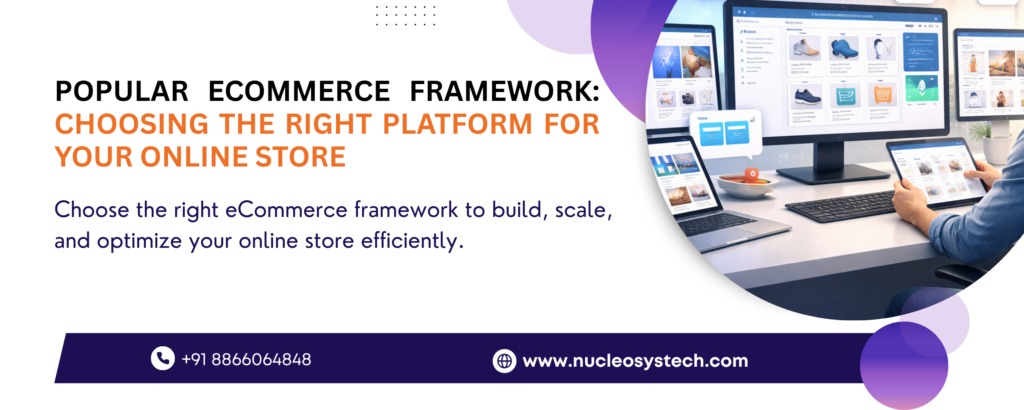
In the fast-growing world of online retail, selecting the right popular ecommerce framework can make or break your business. Whether you are launching a startup or expanding an existing brand, the framework you choose will impact everything from site performance to customer experience. But with so many options available, how do you decide which ecommerce framework is the best fit for your needs? In this blog, we’ll explore what an ecommerce framework is, the benefits of using one, and review some of the most popular ecommerce frameworks powering online stores today. By the end, you’ll be well-equipped to pick a solution that aligns with your business goals and technical requirements. What is an Ecommerce Framework? An ecommerce framework is a pre-built software platform designed to help businesses create, manage, and grow their online stores efficiently. It provides the essential building blocks such as product catalogs, payment gateways, shopping carts, user management, and security features — all in a customizable package. Unlike custom-coded websites, ecommerce frameworks offer ready-made solutions that reduce development time and cost. They often come with themes, plugins, and APIs to extend functionality without reinventing the wheel. This allows businesses to focus more on marketing and customer service rather than technical details. Why Choose a Popular Ecommerce Framework? Choosing a popular ecommerce framework offers several advantages: 1. Proven Reliability Popular frameworks have large user bases and active communities, ensuring that the platform is continually tested, improved, and supported. This reduces bugs and security vulnerabilities, providing a stable foundation for your online store. 2. Rich Features Leading ecommerce frameworks come packed with features like inventory management, mobile responsiveness, SEO tools, and analytics dashboards. These built-in capabilities accelerate your store’s growth and improve customer experience. 3. Scalability As your business grows, so do your technical needs. Popular frameworks are designed to scale easily, whether you’re adding more products, increasing traffic, or expanding internationally. This future-proofs your investment. 4. Customizability While these platforms offer out-of-the-box functionality, they also allow for deep customization. Whether through themes, plugins, or direct code modification, you can tailor your store’s look and behavior to match your brand identity perfectly. 5. Integration Support Popular ecommerce frameworks often support integrations with popular payment processors, marketing tools, shipping providers, and third-party services. This flexibility makes it easy to automate workflows and enhance customer satisfaction. Top Popular Ecommerce Frameworks in 2025 Here’s a look at some of the most widely used ecommerce frameworks today, along with their key features and use cases. 1. Magento (Adobe Commerce) Magento remains a heavyweight in the ecommerce space, especially for mid-to-large businesses. It offers a highly customizable and scalable platform, supporting complex product catalogs and multiple storefronts. Strengths: Robust inventory and order management, strong SEO capabilities, and extensive marketplace for extensions. Best For: Enterprises and rapidly growing businesses needing flexible solutions. 2. Shopify Shopify is a cloud-based ecommerce platform known for its ease of use and quick setup. It offers a wide variety of templates and apps that allow even non-technical users to create beautiful online stores. Strengths: User-friendly interface, strong support system, built-in hosting, and payment processing. Best For: Small to medium-sized businesses and entrepreneurs seeking fast deployment. 3. WooCommerce WooCommerce is a WordPress plugin that transforms any WordPress site into a fully functional ecommerce store. It’s open-source, highly customizable, and benefits from WordPress’s extensive ecosystem. Strengths: Flexibility, huge community support, wide range of plugins, and SEO-friendly. Best For: Businesses already familiar with WordPress looking for cost-effective ecommerce solutions. 4. BigCommerce BigCommerce combines SaaS convenience with powerful built-in features. It supports multiple sales channels, including social media and marketplaces, making it a versatile choice. Strengths: No transaction fees, multi-channel selling, built-in security, and performance. Best For: Businesses aiming for omnichannel presence and scalability. 5. OpenCart OpenCart is a lightweight, open-source framework offering an intuitive dashboard and a variety of extensions. It’s a cost-effective option for businesses wanting control without complexity. Strengths: Simple to install and manage, large extension marketplace, and SEO-friendly. Best For: Small to medium businesses seeking a straightforward ecommerce solution. How to Choose the Right Ecommerce Framework? Selecting the right ecommerce framework requires careful consideration of your business needs and technical constraints. Here are some tips: Define Your Budget: Cloud-hosted solutions often involve monthly fees, while open-source frameworks require hosting and development costs. Assess Technical Skills: Some platforms are user-friendly for beginners, while others need developer expertise. Consider Your Product Range: Large catalogs with complex variations may require more powerful platforms. Plan for Growth: Choose a framework that scales with your business. Evaluate Support Options: Check whether you prefer community support, professional support, or a combination. Benefits of Using a Popular Ecommerce Framework Investing in a popular ecommerce framework not only accelerates your store launch but also improves long-term success. Some additional benefits include: Improved Security: Popular frameworks frequently release security patches to protect your store from cyber threats. SEO Advantages: Built-in SEO tools help improve your store’s visibility in search engines. Mobile Optimization: Most leading frameworks provide responsive designs, catering to the growing number of mobile shoppers. Faster Time to Market: With pre-built features and themes, you can launch your store much quicker than building from scratch. Community and Ecosystem: Access to forums, tutorials, and third-party extensions allows you to continually enhance your store’s functionality. Conclusion Choosing a popular ecommerce framework is a critical step in establishing a successful online store. From Magento’s robustness to Shopify’s ease of use, each platform offers unique strengths tailored to different business needs. Remember, the best ecommerce framework for you depends on your budget, technical expertise, business model, and growth plans. Take time to evaluate your options, and don’t hesitate to seek professional guidance.
How to Optimize Google Business Profile

Optimize Google Business Profile to Boost Local Search Visibility In today’s digital-first world, local businesses must compete for visibility where it matters most—on Google. When potential customers search for services or products “near me,” your Google Business Profile (GBP) often serves as their first impression of your business. That’s why learning how to optimize Google Business Profile is not just helpful—it’s essential for local success. A well-optimized profile increases your chances of appearing in the Google Local Pack—the top map listings shown to nearby users. Whether you’re a restaurant, clinic, retail store, or service provider, a strong Google business listing is critical to attracting and converting local customers. Why You Should Optimize Google Business Profile for Local SEO Google is the world’s most-used search engine—and it’s the top place people go to find local services. When someone types in “best bakery near me” or “electrician in Pune,” your Google Business Profile determines if you show up in those results. When you optimize Google Business Profile, it helps: Boost visibility in local searches Improve Google Maps rankings Enhance brand credibility Drive foot traffic and inquiries Google favors accurate, engaging, and frequently updated listings. By refining your profile, you signal to both Google and your customers that your business is active and trustworthy. How to Optimize Your Google Business Profile Step-by-Step 1. Complete Every Detail in Your Business Profile Start by ensuring all essential information is filled out correctly and consistently. This includes: Business Name Physical Address Phone Number Website URL Business Hours Categories and Services Offered Keep your details consistent across all online platforms (like Yelp, Facebook, etc.). Discrepancies in information confuse Google’s algorithm and can hurt your ranking. 2. Use High-Quality Images to Improve Engagement Businesses with high-resolution photos get significantly more clicks and customer engagement. Make sure to add: Exterior and interior shots Team photos Product and service images A high-quality logo and cover image Photos not only attract more attention but also help potential customers get a feel for your business before visiting. 3. Encourage and Respond to Customer Reviews Online reviews are one of the strongest local ranking signals. Ask satisfied customers to leave reviews Respond to all reviews politely and professionally Use responses to reinforce your brand values Google looks at both the number and quality of your reviews when ranking businesses locally. 4. Use Targeted Keywords in Your Business Description Include local keywords naturally in your business description and service listings. For example: “We are a Pune-based salon offering haircutting, coloring, bridal makeup, and grooming services. Visit us for expert care and great deals.” Incorporating terms like your city name and primary services improves discoverability and user relevance. 5. Publish Regular Posts and Updates Just like social media, your Google Business Profile allows you to publish posts. Use this feature to: Promote discounts and events Share blogs or tips Announce new products or services Posting regularly shows that your business is active and engaged, which can lead to higher rankings in local search. 6. Enable Messaging and Use the FAQs Section Let customers message you directly through your profile. It improves accessibility and customer satisfaction. Also, answer common questions in the Q&A section. Address topics like: Pricing Appointment policies Payment methods Product availability This helps users get information quickly and improves user experience on your listing. Advanced Local SEO Tips to Improve Google Business Ranking Use Schema Markup for Better Search Understanding Adding localBusiness schema to your website helps Google understand your NAP details and business type, improving your chances in search rankings. Embed Google Maps on Your Website Add a Google Map of your business location to your contact page to improve local relevance. Track Insights from Google Business Profile Monitor analytics like: How users found you (search/maps) Most common search terms Customer actions (calls, visits, directions) Use these insights to improve your local SEO strategy over time. Long-Term Benefits of Google Business Optimization When you consistently optimize Google Business Profile, you: Get found more often in local searches Build a strong online reputation Drive steady customer traffic Gain an edge over less-optimized competitors The work you put into local SEO now will pay off in the long run. Regular updates, reputation management, and engagement build lasting visibility and trust. Let Nucleosys Tech Help You Optimize Google Business Profile At Nucleosys Tech, we specialize in helping businesses optimize Google Business Profile for better visibility, credibility, and conversions. From photo uploads and keyword-rich descriptions to managing reviews and improving Google Maps rankings—we do it all.
Switch from Magento to Shopify: A Smart Move for Scalable E-commerce Success
In today’s rapidly evolving e-commerce landscape, businesses must constantly assess whether their current platform is meeting their needs. If you’re running an online store on Magento and finding it increasingly complex or costly to manage, it may be time to switch from Magento to Shopify. Whether you’re a small startup or a mid-sized business looking for growth, Shopify offers a user-friendly, scalable, and robust platform that simplifies online selling. In this comprehensive guide, we’ll explore the key reasons to consider this transition, the benefits, challenges, and a strategic plan to migrate seamlessly. Why Consider a Platform Migration? Magento is a powerful and flexible platform, especially for businesses with large development teams and a custom tech stack. However, it comes with significant drawbacks: High development and maintenance costs Complex upgrade processes Hosting and security responsibilities Steeper learning curve for non-technical users On the other hand, Shopify is a fully hosted, all-in-one solution that requires little to no technical knowledge to operate. This is why many merchants are choosing to switch from Magento to Shopify. Top Benefits of Switching to Shopify 1. Ease of Use Shopify is designed with user-friendliness in mind. The intuitive drag-and-drop interface allows store owners to easily manage products, customers, and content without needing a developer for every change. 2. Lower Total Cost of Ownership Magento often requires paid hosting, third-party extensions, and ongoing developer support. Shopify simplifies these expenses with a monthly subscription that includes hosting, security, and regular updates. 3. Scalability Shopify can support businesses from small startups to enterprise-level stores using Shopify Plus. As your business grows, the platform scales without compromising performance. 4. Integrated Payment Solutions With Shopify Payments, you don’t need to rely on third-party gateways. This improves checkout speed and reduces transaction friction, increasing conversion rates. 5. App Ecosystem Shopify’s app store offers thousands of integrations for marketing, SEO, analytics, shipping, inventory, and customer support—many of which require no coding knowledge to implement. Common Concerns When Migrating Migrating an e-commerce store is a major decision. Here are some concerns merchants often face: Data Loss: Losing customer data, product information, or order history can be disastrous. SEO Impact: Changing URLs or site structure may affect rankings. Downtime: A poorly planned migration could lead to operational downtime and lost sales. However, with proper planning and the right tools, these risks can be minimized. There are even services and Shopify apps that help automate and simplify the process of migration. Step-by-Step Guide to a Smooth Migration Here’s a brief roadmap to switch from Magento to Shopify with minimal hassle: 1. Evaluate Your Current Magento Store Take stock of your existing features, third-party extensions, data volume, and SEO structure. Knowing what you need to move helps avoid surprises later. 2. Choose the Right Shopify Plan Shopify offers various pricing tiers. Most small to medium stores do well with the standard Shopify plan, while large enterprises might consider Shopify Plus. 3. Backup Magento Data Create a full backup of your store, including customer records, order history, products, and content. 4. Use a Migration Tool or Service Services like LitExtension or Cart2Cart help you transfer data accurately from Magento to Shopify, preserving SEO-friendly URLs, customer accounts, and product details. 5. Design Your New Shopify Store Either use a pre-built theme from Shopify’s library or create a custom design. Shopify themes are responsive, fast, and conversion-focused. 6. Test Before Launch Verify everything from product pages and checkout to SEO tags and redirects. Ensure there are no broken links and that all customer data is intact. 7. Go Live and Monitor Once live, monitor analytics, customer feedback, and sales closely for the first few weeks. Make adjustments as needed. SEO Considerations During Migration To avoid losing valuable organic traffic, here are a few SEO best practices: 301 Redirects: Redirect old Magento URLs to the equivalent Shopify URLs. Preserve Meta Tags: Maintain existing meta titles and descriptions. Update the Sitemap: Submit your new sitemap to Google Search Console. Check for Broken Links: Use tools like Screaming Frog to find and fix broken links. When done right, a migration can actually boost your SEO by improving site speed, mobile performance, and user experience—all ranking factors for search engines. Real-Life Example: Why One Business Made the Switch A mid-sized fashion retailer running on Magento faced constant issues with performance, plugin conflicts, and high developer costs. After deciding to switch from Magento to Shopify, they saw the following improvements within three months: 30% faster page load times 20% increase in conversion rate Savings of $2,000/month in development and hosting costs This shows the tangible impact Shopify can have on operations and profitability. When NOT to Switch While Shopify is ideal for most, Magento may still be a better choice if: You have highly complex product customizations You require complete backend code access and control Your internal team has deep Magento expertise It’s essential to assess your long-term business goals before making the switch. Final Thoughts The decision to switch from Magento to Shopify should be driven by your business goals, resources, and future growth plans. Shopify’s ease of use, cost-effectiveness, and powerful features make it an attractive choice for merchants seeking simplicity and scale. If your current Magento setup is holding you back with constant maintenance, high costs, or limited scalability, it’s time to consider migrating to a platform that grows with your business.
Why Shopify for ecommerce store development
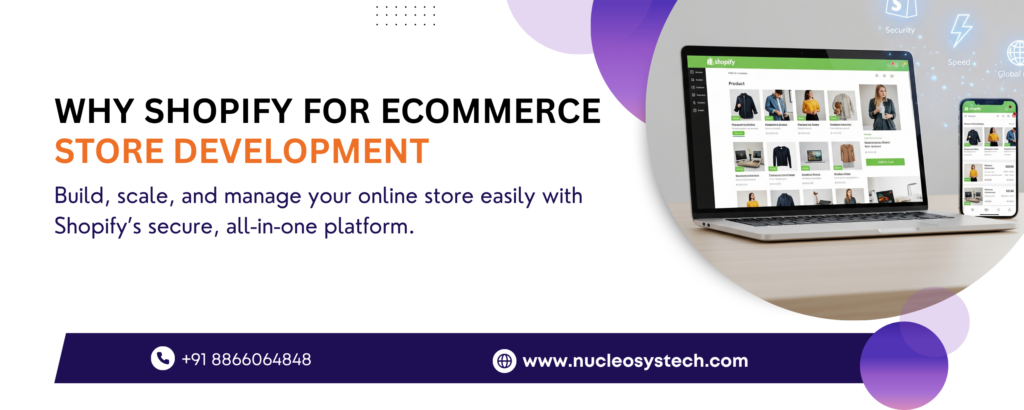
Shopify for E-commerce Store Development: Your Gateway to Online Success The e-commerce landscape is rapidly evolving, and businesses are constantly on the lookout for platforms that can simplify the process of going digital. Among all available platforms, Shopify for e-commerce store development stands out as the top choice for startups and established brands alike. Known for its user-friendly interface, scalable infrastructure, and robust customization options, Shopify makes launching and managing an online store easier than ever. If you’re looking to build a powerful and sales-ready online store, understanding the benefits of using Shopify is crucial. In this blog, we’ll explore why Shopify is ideal for e-commerce development, its top features, and how it compares to other platforms. Why Choose Shopify for E-commerce Store Development? Shopify is a fully hosted e-commerce platform that offers everything you need to create, customize, and manage your online store. Here are the key reasons why it’s the preferred platform for many entrepreneurs: 1. Ease of Use Shopify requires no coding skills to get started. Its drag-and-drop builder and intuitive dashboard make it easy for anyone to build a professional-looking website. 2. Quick Setup and Launch Unlike traditional web development, Shopify allows you to set up your store in a matter of hours—not weeks. This is perfect for businesses wanting a quick go-to-market strategy. 3. Secure and Reliable Shopify ensures top-notch security with SSL certificates and PCI compliance, giving both you and your customers peace of mind. 4. Mobile-Optimized With a growing number of shoppers using mobile devices, Shopify ensures your store looks great and functions smoothly on all screen sizes. Key Features of Shopify That Make It Ideal for E-commerce Let’s dive into the specific features that set Shopify apart from other e-commerce platforms. 1. Extensive App Store Shopify has over 6,000 apps to enhance your store’s functionality. From marketing tools to inventory management, you can customize your store to suit your business needs. 2. Multiple Payment Gateways Shopify supports over 100 payment gateways, including Razorpay, PayPal, and Stripe, ensuring convenience for both domestic and international customers. 3. Built-in SEO Tools To help your store rank better on search engines, Shopify includes built-in SEO features like editable title tags, meta descriptions, image alt texts, and URL structures. 4. Multi-channel Selling You can sell not only through your website but also on Facebook, Instagram, Amazon, and eBay—all managed from a single dashboard. Shopify vs Other E-commerce Platforms Here’s a quick comparison to show why Shopify for e-commerce store development is often the better choice: Feature Shopify WooCommerce Magento Ease of Use Very Easy Moderate Complex Hosting Included Yes No No Built-in Features Extensive Limited Good Maintenance Minimal Medium High Support Availability 24/7 Community Only Limited If ease of use, scalability, and all-in-one functionality are what you seek, Shopify is the platform to go with. When Should You Use Shopify? Shopify is suitable for a wide range of e-commerce businesses, including: Fashion and apparel stores Electronics and gadget retailers Beauty and wellness brands Home decor and furniture sellers Handmade and craft product stores Whether you’re launching a small boutique or scaling a large brand, Shopify provides the tools you need to succeed. Common Mistakes to Avoid When using Shopify, be mindful of these common pitfalls: Using free themes without customization: Your store might end up looking generic. Opt for custom designs to stand out. Ignoring mobile optimization: Always preview and test how your store looks on smartphones and tablets. Neglecting SEO: Utilize Shopify’s built-in SEO features for higher visibility. Lack of app utilization: Leverage Shopify apps to streamline inventory, marketing, and customer service. Cost of Using Shopify for E-commerce Development Shopify offers flexible pricing based on your business size You may also invest in Shopify development services to help with setup, design, and optimization. Case Study: From Local to Global with Shopify A local skincare brand based in Pune started their journey with a Shopify Basic Plan. Within one year, they scaled to international markets, increased their customer base by 300%, and saw a 40% increase in revenue—thanks to effective SEO, theme customization, and app integrations done by certified Shopify experts. Final Thoughts In today’s competitive market, you need more than just a website—you need a fully optimized, secure, and user-friendly store that converts visitors into buyers. Choosing Shopify for e-commerce store development is a smart move for any business serious about online growth. With its powerful tools, flexible features, and low entry barrier, Shopify empowers brands to launch and scale successfully. Ready to build your e-commerce empire?At Nucleosys Tech, we specialize in Shopify for e-commerce store development. Whether you’re just starting out or need a full store revamp, our certified Shopify developers will guide you every step of the way. Contact us today for a free consultation and take the first step toward online success!
Why Hiring a Software Development Outsourcing Company in India Is a Smart Move in 2025
In today’s competitive digital world, partnering with a trusted software development outsourcing company in India can help businesses reduce costs, accelerate delivery, and access top tech talent. India’s IT industry offers scalable solutions tailored to diverse project needs, making it a preferred choice for companies worldwide. Hiring a software development outsourcing company in India offers cost-effective, scalable, and highly skilled solutions to meet a variety of technological needs. From startups to Fortune 500 companies, global enterprises are increasingly turning to Indian outsourcing firms for their development projects—and for good reason. In this guide, we explore why India is the go-to destination for software outsourcing, what services you can expect, and how to choose the right partner for your business. Why Outsource Software Development to India? India has solidified its position as a global technology hub for decades. There are several compelling reasons to outsource software development to Indian companies: 1. Cost Efficiency One of the most obvious advantages is cost. Indian development rates are significantly lower compared to North America and Europe. This allows businesses to reduce development costs without compromising on quality. 2. Highly Skilled Talent Pool India produces over a million engineering graduates every year. Many Indian developers are proficient in modern programming languages, frameworks, and emerging technologies like AI, IoT, blockchain, and cloud computing. 3. Time Zone Advantage India’s time zone (GMT+5:30) allows for flexible scheduling and round-the-clock productivity. While your in-house team is offline, your outsourced team in India can continue working—speeding up delivery times. 4. English Proficiency India has the second-largest English-speaking population in the world, making communication easy and efficient. This eliminates one of the major barriers faced in global collaborations. 5. Proven Track Record A software development outsourcing company in India is not just affordable but also reliable. Many firms have years of experience working with global clients across industries like healthcare, finance, retail, logistics, and more. Services Offered by Indian Outsourcing Firms Software development outsourcing companies in India typically offer a wide range of services, including: Custom Software Development Web & Mobile App Development Enterprise Application Integration Product Engineering SaaS Development Cloud Migration & DevOps AI & ML Solutions QA & Software Testing Services UI/UX Design Maintenance & Support With such a broad range of services, it’s easy to find a partner that fits your project requirements and budget. Benefits of Partnering with a Software Development Outsourcing Company in India 1. Faster Time-to-Market Indian outsourcing firms follow agile development methodologies that prioritize iterative releases and continuous improvements. This ensures that your product hits the market quickly with frequent updates and enhancements. 2. Focus on Core Business Outsourcing your development allows your internal teams to focus on strategic tasks like marketing, sales, and customer engagement while your development partner handles the tech side. 3. Access to Latest Technologies From blockchain to cloud-native apps, Indian developers stay updated with the latest trends and tools. Their expertise ensures that your solution remains future-ready and competitive. 4. Scalability Need to scale your team quickly? A software development outsourcing company in India can ramp up resources in a matter of days, offering flexibility during peak project phases. How to Choose the Right Outsourcing Partner in India Selecting the right partner is critical to your project’s success. Here’s what to consider: Portfolio & Experience Review their past projects, industries served, and types of solutions developed. Technical Expertise Ensure they have developers skilled in the technologies relevant to your project. Communication & Collaboration Look for firms that offer dedicated project managers and have robust communication processes. Security & Compliance Make sure they adhere to global data protection standards like GDPR, HIPAA, or ISO certifications. Reviews & Testimonials Client feedback on platforms like Clutch or GoodFirms offers insights into their reliability and performance. Real-World Success Story A US-based fintech startup outsourced their entire platform development to a software outsourcing firm in Bangalore, India. Within eight months, they launched a secure, scalable product at 60% lower cost than hiring a local team. The outsourced team also helped integrate third-party financial APIs and built a responsive mobile version—speeding up market adoption and investor confidence. Trends Shaping Outsourcing in 2025 The outsourcing landscape is evolving. Here are a few trends that are redefining the industry: AI-Powered Development Tools for faster coding and testing Remote-First Collaboration Models post-COVID-19 Rising Demand for Cybersecurity Expertise Increased Adoption of Agile & DevOps Cloud-Native and Microservices Architecture India’s tech ecosystem is well-positioned to take advantage of these shifts, offering future-proof solutions at scale. Common Myths About Outsourcing to India Let’s bust a few myths: Myth 1: Quality is compromised due to low cost.Truth: Many Indian companies are ISO and CMMI certified, ensuring high-quality standards. Myth 2: Time zone differences make communication hard.Truth: Most firms offer overlapping working hours and flexible meeting schedules. Myth 3: Outsourcing leads to data leaks.Truth: Reputable companies follow strict security protocols and sign NDAs. Final Thoughts In an age where agility, innovation, and cost control are key to business success, partnering with a trusted Indian software outsourcing firm is a strategic move. With access to a large pool of skilled developers, robust infrastructure, and proven methodologies, Indian firms offer everything you need to bring your digital vision to life—faster and more affordably. Whether you’re building a custom web app, launching a mobile platform, or scaling an enterprise solution, India’s outsourcing ecosystem provides reliable, high-quality development services tailored to your needs. Whether you’re building a custom web app, launching a mobile platform, or scaling an enterprise solution, India’s outsourcing ecosystem provides reliable, high-quality development services tailored to your needs.
Software development outsourcing in India
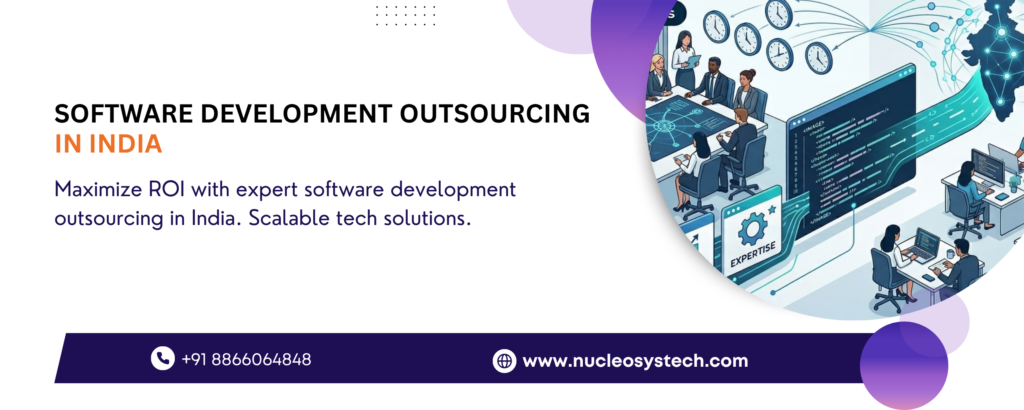
With increasing globalization, software development outsourcing in India has become a trend. Over the years India has become a major offshore software development center. Most of the leading software companies are now outsourcing the work because it’s more convenient, less expensive, and allows them to focus on other core functions of their business. According to the National Association of Software and Services Companies (Nasscom), India is the world’s preferred software development outsourcing destination. Six Reasons to Choose India-based software outsourcing company. Some of the main reasons that make India the most desirable outsourcing destination are: India has highly skilled developers, low labor costs, market size, and innovation. India is a strong competitor to other Asia Pacific countries in terms of maturity, market penetration, resource pool, and brand. Academic Skills: India produces 1 million technical graduates annually specializing in cloud, analytics, software application development, and digital marketing. The Indian IT / ITeS industry has a strong and established customer presence in North America and Europe with customers from industries such as Healthcare, Manufacturing, Retail, BFSI, Media, and Entertainment, among others. India ranks third in Asia for English proficiency according to the EF English Proficiency Index. The English language has developed and spread so widely in India that it is spoken in the country on a par with the rest of the English-speaking world. With an average age of 29, India is well on the way to becoming the country with the youngest and largest workforce. It is estimated that India will have around 2 billion English speakers by the end of 2020. Apart from the immediate benefits like lower costs, flexibility, and higher productivity, there are certainly other long-term benefits that make outsourcing software development to India an extremely profitable business suggestion. Offshoring software development to India also enables a company to concentrate more on core business areas and thus increase profits. Most startups, infect, every SMEs Company have great potential, but they also lack the resources. Outsourcing can be a great boom for them. Nucleosys Tech is a Software development outsourcing Company in India. Having extensive experience providing software outsourcing services to clients and businesses of all sizes, whether small, medium, or large, worldwide. Our focus on new technologies, a rich pool of qualified and experienced resources, proven processes as well as quality and adherence to deadlines make us an attractive option for companies looking for a software outsourcing company from India. Here are some compelling reasons why you should opt for Nucleosys Tech as a Software development outsourcing company in India: Subject Matter Expertise Reducing Operational Cost Timely delivery of work Better Risk Management Better focus on your core responsibilities Increased Quality & Efficiency Post Maintenance support Flexible Models One-Stop Solution Reduced Downtime Higher Security and Vast Pool of Global Resources for Technology Multidisciplinary choice of the right technology Enhancing User satisfaction Software development outsourcing Services in India Some of the Core Services provided by Nucleosys Tech are: Website Design and Development Custom Web Development Mobile App Development Ecommerce Web Development Digital Marketing Product Development QA & Testing Conclusion: India has become the epitome of software outsourcing hubs in the world due to its immensely talented and specialized workforce, value for money, and strict corporate standards. Reduce your business work and risk by Outsourcing Software Development companies in India. Let us know what you are looking for be it any kind of outsourcing services from development, UI/UX design, Digital Marketing, ERP Development, Ecommerce Web Development, or other.