

Last Updated on June 30, 2026 by Nucleosystech
The modern corporate marketplace moves at a breakneck speed, forcing companies to adapt or risk becoming obsolete. Today, surviving and thriving requires a deliberate shift in how your organization delivers value to its customers. Implementing a comprehensive digital transformation strategy is no longer a luxury reserved for tech giants; it is an absolute necessity for survival.
Many executives mistakenly believe that technology upgrades alone equal transformation. However, true evolution involves integrating digital technology into all areas of an organization. This shift fundamentally changes how you operate and deliver value to your clients.
If your organization wants to scale smoothly, reduce operational friction, and secure a competitive advantage, you need a structured roadmap. Partnering with a premier digital partner can turn these technical challenges into a streamlined engine for growth.
Why a Digital Transformation Strategy is Essential for Modern Success
A successful digital transformation strategy functions as a blueprint for changing your organizational culture, underlying processes, and customer experiences. Without a clear plan, technology deployments often become disconnected, creating data silos and wasted capital.
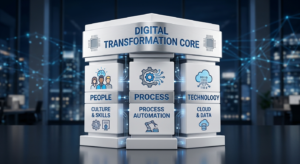
When you align your leadership vision with the right tools, your business shifts from reactive firefighting to proactive innovation. This cultural change breaks down old habits and encourages teams to experiment, challenge the status quo, and become comfortable with iterative growth.
The Strategic Value of Business Digital Transformation
Investing in a business digital transformation enables your organization to build an agile infrastructure that responds instantly to market changes. By re-engineering your workflows, you can eliminate structural bottlenecks and empower your workforce to focus on high-value initiatives.
Shifting from Legacy Systems to Agile Frameworks
Legacy systems often limit modern business expansion. They create information gaps, require expensive upkeep, and isolate critical business intelligence. Embracing modern web architecture and smart platforms helps your enterprise replace rigid, outdated software with fluid, integrated ecosystems.
Enhancing Customer Centricity
Today’s consumers expect personalized, omni-channel interactions. A structured digital framework allows you to track customer touchpoints in real time, anticipating their needs before they even voice them. This level of responsiveness builds long-term customer loyalty and drives recurring revenue.
Core Pillars of a Modern Digital Transformation Strategy
To achieve measurable success, your digital initiatives must target specific operational pillars. Balancing these foundational areas ensures your tech investments deliver tangible business value.
1. Process Automation
Repetitive manual tasks lower employee morale and introduce costly human errors. Integrating process automation into your core workflows lets you handle high-volume administrative tasks with minimal friction. From automated invoicing to automated lead nurturing, intelligent automation optimizes your operational capacity.
2. Cloud Computing
Modern business demands anytime, anywhere accessibility. Transitioning to cloud computing environments gives your organization a flexible infrastructure that scales up or down based on current demand. Secure cloud platforms lower local hardware costs while improving data security and team collaboration across different regions.
3. Data Analytics
Data is one of your most valuable assets, but raw information is useless without organization. Advanced data analytics turn unorganized data pools into clear, actionable business insights. Tracking predictive metrics lets your leadership team make informed, confident choices that improve profitability.
Step-by-Step Blueprint for Enterprise Modernization
Transforming an established organization requires a methodical approach. Follow this structural sequence to execute your enterprise modernization effectively:
1.Assess Current Operational State:Phase 1.
Analyze your existing software, workflows, and culture. Identify data silos, system bottlenecks, and technical gaps that slow down daily productivity.
2.Align Stakeholders and Establish KPIs:Phase 2.
Secure executive buy-in and define clear success metrics. Establish realistic targets for cost reduction, process speed, and customer satisfaction.
3.Select and Integrate Targeted Technology:Phase 3.
Deploy modern solutions tailored to your unique requirements. Implement secure cloud infrastructures, advanced data layers, and automated workflow modules.
4.Train Teams and Cultivate an Agile Culture:Phase 4.
Provide comprehensive training programs across all departments. Encourage open feedback loops to help teams comfortably adopt new tools.
Accelerating Growth with Digital Transformation Services
Navigating this technical evolution alone can overwhelm internal IT departments. Working with specialized digital transformation services gives your leadership team the external expertise needed to de-risk complex rollouts.
Professional digital groups provide deep technical knowledge, helping you select the right platforms, build secure data integrations, and launch scalable systems. This structured support allows your internal teams to focus on core operations while your digital infrastructure upgrades in the background.
Leading the Next Industrial Era with Industry 4.0 Solutions
For production, logistics, and supply chain businesses, true modernization means embracing industry 4.0 solutions. This evolution connects physical manufacturing assets with advanced digital ecosystems.
| Core Technology Component | Primary Operational Benefit |
| Internet of Things (IoT) Tracking | Real-time asset monitoring and supply chain visibility. |
| Predictive Maintenance Systems | Anticipates hardware failures to reduce operational downtime. |
| Integrated ERP Ecosystems | Connects manufacturing lines directly with administrative data. |
By linking machine intelligence with enterprise platforms, organizations gain end-to-end visibility over their entire production lifecycle, minimizing waste and maximizing profit margins.
Overcoming Common Hurdles in Digital Upgrades
Even with the right intentions, digital projects can face structural challenges. Knowing these pitfalls ahead of time helps your leadership avoid common obstacles:
- Employee Resistance: People naturally prefer familiar routines. Counteract this by involving department heads early and emphasizing how the new tools make their jobs easier.
- Fragmented Data Systems: Siloed applications stop the healthy flow of business intelligence. Focus on building unified platforms where information passes securely between departments.
- Vague Success Metrics: Without clear indicators, you cannot measure true ROI. Define explicit goals for every project phase before writing any code.
Strategic Architecture: The Digital Transformation Consulting Framework
Working through these complex technical steps requires an objective, outside perspective. Specialized digital transformation consulting provides the clear framework needed to align your long-term business goals with modern technical capabilities.
Experienced advisors help you identify high-impact opportunities, design robust systems, and avoid expensive vendor lock-in. This structured approach ensures every dollar invested in your technical foundation directly improves your market position and bottom line.
Elevate Your Business Infrastructure with Nucleosys Tech
True digital evolution requires more than standard off-the-shelf software; it demands tailored solutions designed for your specific business goals. At Nucleosys Tech, we engineer high-performance platforms that simplify your daily operations and accelerate long-term growth.
Our expert development teams specialize in CRM Software Development to replace slow legacy systems with agile applications. We also design advanced AI Software Solutions that extract actionable insights from your business data, helping your team make faster, smarter decisions. Whether you need to streamline internal workflows or upgrade your customer-facing tools, we build the reliable digital infrastructure your business needs to lead the market.
Industry Insight: According to authoritative studies by Gartner, enterprises that prioritize unified data integration frameworks scale their operations twice as fast as competitors using fragmented legacy systems.
Frequently Asked Questions
What is the typical timeline for a complete digital transformation strategy?
A comprehensive digital strategy is a journey rather than a quick fix. Initial improvements like automated workflows or cloud transitions usually take three to six months. However, a full organizational update across all departments generally spans one to two years, depending on your company’s size and complexity.
How does cloud computing improve daily business security?
Reputable cloud platforms provide advanced enterprise-level data security features that are often difficult to maintain on local servers. These include end-to-end data encryption, automated security patches, continuous compliance monitoring, and decentralized data backups that protect your business from sudden data loss.
Can small businesses benefit from digital transformation consulting?
Yes, small businesses often see rapid returns on these strategic updates. Because smaller organizations have less bureaucratic inertia, they can pivot and adopt new software much faster than massive corporations, giving them a distinct competitive edge.
How do we measure the direct ROI of our modernization efforts?
You can track clear ROI by measuring specific key performance indicators (KPIs). Look for drops in manual labor hours, faster production and delivery times, lower customer acquisition costs, and higher customer retention rates after deploying your new digital solutions.

