Last Updated on November 23, 2026 by Nucleosystech
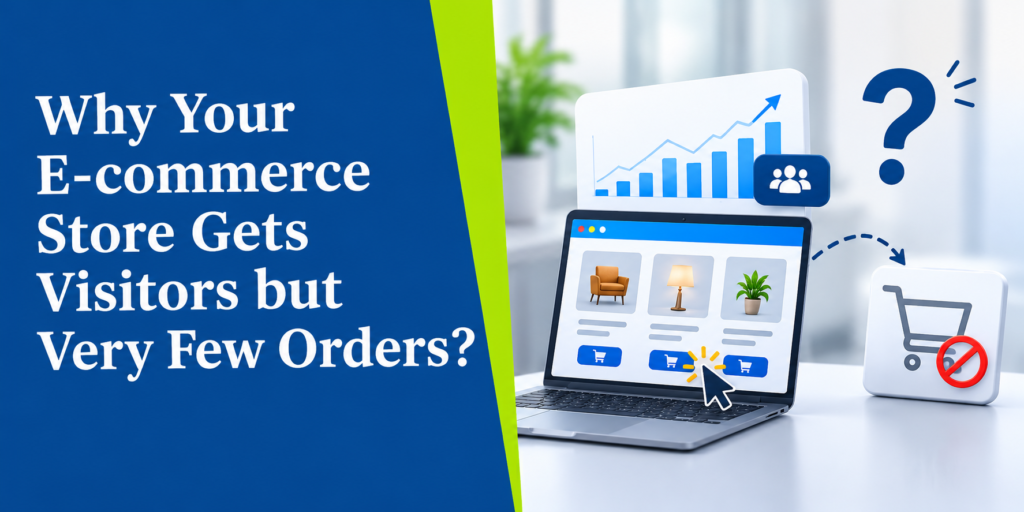
Driving consistent organic traffic to an online shop feels like a major victory until you review your monthly revenue reports. Thousands of unique sessions enter your catalog every week, yet your checkout ledger remains surprisingly quiet. Having an ecommerce website not converting window shoppers into paying customers is one of the most frustrating challenges digital store owners face. High site traffic proves your top-of-funnel marketing works, but a low conversion rate signals severe friction across your user experience, technical setup, or trust signals.
Understanding why your store attracts visitors without generating sales requires examining every touchpoint from page speed to payment gateways. According to global retail benchmarks published on Statista, average e-commerce conversion rates hover between 2% and 3%. If your store falls below 1%, systemic conversion barriers are actively draining your ad spend and SEO efforts.
1. Technical Performance Failures That Cause an Ecommerce Website Not Converting
Modern consumers expect lightning-fast performance across desktop and mobile devices. A minor delay in page loading triggers immediate drop-offs before users even view your catalog.
Slow Page Load Speeds & Mobile Unresponsiveness
When your store takes longer than three seconds to load, bounce rates skyrocket. Mobile shoppers browsing on cellular networks quickly lose patience with unoptimized images, heavy custom scripts, or bloated themes. Google prioritizes mobile-first indexing, meaning poor mobile responsiveness damages both your search rankings and sales conversions.
Ensure your platform uses responsive design principles, next-gen image formats (like WebP), and aggressive browser caching. View our specialized web development services to inspect how custom architecture resolves hidden technical bottlenecks.
Glitchy Navigation and Site Search
If shoppers cannot locate products within two clicks, they leave. Poor category taxonomy, broken filter menus, and inaccurate internal search bars prevent users from finding items they intend to purchase. Implementing intuitive search autocomplete and precise filters keeps users engaged longer.
2. Low-Trust Signals on Product Pages
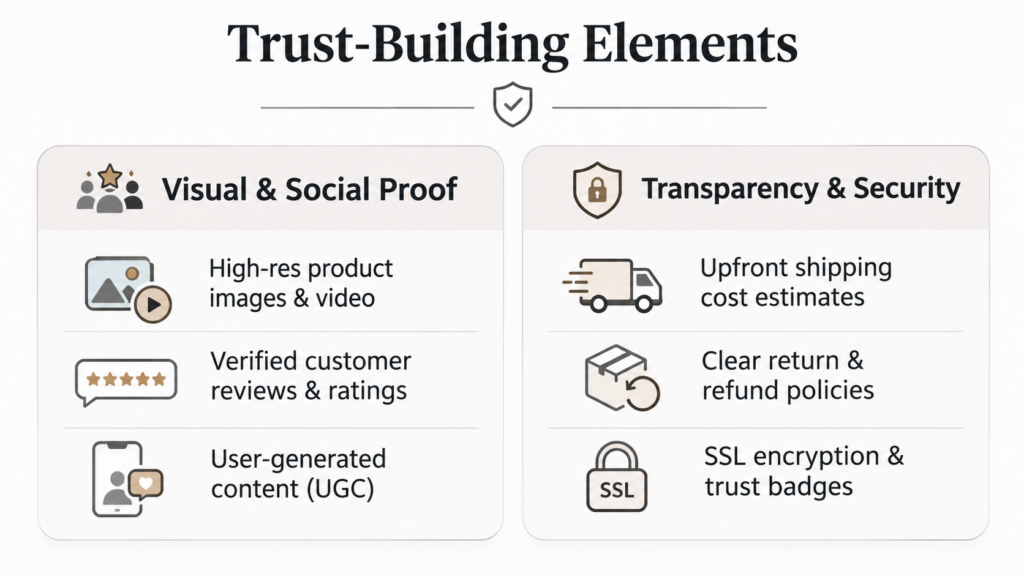
Visitors who land on your product pages evaluate your brand’s credibility within seconds. Without strong visual and social proof, shoppers hesitate to enter their payment details.
Lack of High-Quality Visuals and Detailed Descriptions
Online buyers cannot touch, feel, or try on your items. Relying on single, low-resolution manufacturer images creates doubt. Provide high-resolution galleries, 360-degree views, and contextual lifestyle photography alongside detailed specifications, sizing charts, and material explanations.
Missing Customer Reviews and Social Proof
First-time visitors rarely buy from unfamiliar brands without social validation. A lack of star ratings, verified buyer reviews, or customer photos makes your site look inactive or untrustworthy. Integrating review apps that automatically solicit post-purchase feedback builds immediate credibility.
3. Poor Product Page Optimization and Weak Value Propositions
Even fast, secure websites fail when product presentation does not motivate buying action. Effective product page optimization bridges the gap between passive interest and purchase intent.
Unclear Call-To-Action (CTA) Buttons
If your “Add to Cart” or “Buy Now” buttons blend into your site background or sit below the fold on mobile screens, users skip them. CTAs require high-contrast styling, action-oriented copy, and primary placement above the scroll line.
Weak Value Propositions
Why should a customer buy from you instead of Amazon or a direct competitor? If your product descriptions simply list basic features without highlighting unique benefits, free shipping thresholds, or guarantees, visitors lack compelling reasons to complete their order.
4. Friction During Checkout: The Primary Reason for Abandoned Carts
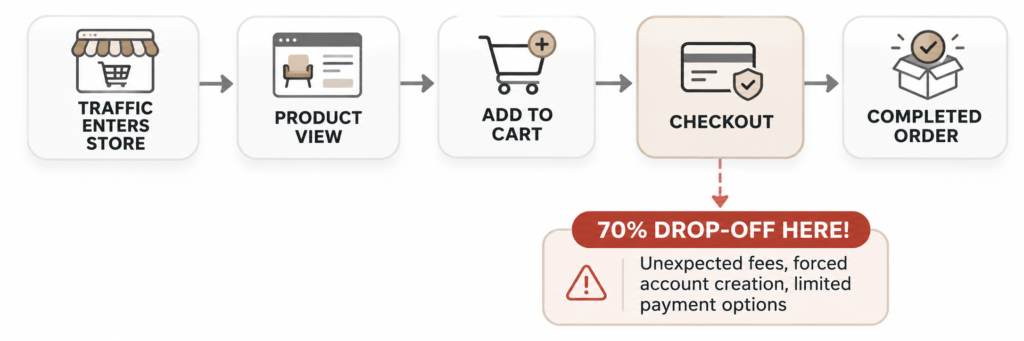
A visitor adding an item to their cart represents high intent, yet standard cart abandonment rates frequently exceed 70%. Eliminating obstacles at checkout directly recovers lost revenue.
Mandatory Account Creation
Forcing visitors to create a full user account before purchasing creates unnecessary effort. Always offer a quick guest checkout option. You can encourage account registration after the order confirmation page by offering order tracking updates.
Hidden Shipping Costs and Unexpected Fees
Surprise charges revealed on the final payment screen are the single largest driver of shopping cart abandonment. Be transparent about delivery costs early by displaying estimated shipping calculators on the cart page or establishing a clear free-shipping threshold.
Limited Payment Gateways
Today’s consumers prefer diverse payment methods, including credit cards, digital wallets (Apple Pay, Google Pay), UPI, and Buy-Now-Pay-Later (BNPL) platforms. Offering only traditional credit card options turns away buyers who prefer instant mobile wallets. Seamless checkout optimization ensures visitors complete purchases using their preferred payment methods.
5. Attracting the Wrong Audience: Mismatched Search Intent
High traffic numbers can be misleading if that traffic consists of users looking for free information rather than physical products.
Target Keywords vs. Buying Intent
If your SEO campaign targets broad informational keywords (e.g., “how to fix a running shoe”) instead of transactional commercial keywords (e.g., “buy marathon running shoes online”), your traffic will not convert. Aligning content with user intent ensures site visitors are ready to buy. Explore our comprehensive SEO services to realign your traffic strategy toward high-converting buyer keywords.
High Bounce Rates from Disconnected Ad Campaigns
If your paid ads showcase a specific discounted item, but the landing page routes users to your generic homepage, visitors leave immediately. Always match ad creative directly to dedicated product or category landing pages.
Strategic Framework: How to Fix an Ecommerce Website Not Converting
Reversing low conversion rates requires a structured approach across analytics, site performance, and user interface design.
| Audit Category | Diagnostic Checkpoints | Recommended Action Plan |
| Technical & Speed | Page load speeds over 3 seconds; mobile display errors; broken search filters. | Compress media assets; implement responsive CSS framework; optimize server response times. |
| User Experience (UX) | High bounce rates on product pages; cluttered navigation menus. | Re-architect category layout; place high-contrast CTAs above the fold; streamline user paths. |
| Trust & Credibility | Missing customer reviews; unclear return policies; no security badges. | Integrate automated review collection software; publish clear shipping/return FAQs on product pages. |
| Checkout Funnel | High cart abandonment rate; mandatory registration; limited payment gateways. | Enable guest checkout; display upfront shipping costs; integrate UPI and digital wallet options. |
| Traffic Alignment | High traffic volume but low average order value; mismatched keyword intent. | Refine keyword strategy toward transactional search intent; align paid ads with landing pages. |
Advanced Strategies for Ecommerce Conversion Rate Optimization
Scaling an online business requires systematic testing rather than guessing. Implementing data-driven digital strategies systematically removes buyer friction.
Implementing Heatmaps and Session Recordings
Tools like Microsoft Clarity or Hotjar allow you to observe real user recordings. Watching where visitors pause, click, or drop off reveals broken links, unreadable text, or distracting layout elements that analytics dashboards miss.
Continuous A/B Testing
Never change your store layout without testing. Run split tests on product page variations, CTA button colors, copy headlines, and checkout steps to measure exact conversion lifts scientifically. Industry guides on HubSpot highlight continuous A/B testing as a core growth driver for modern direct-to-consumer (DTC) brands.
Leveraging Automated Abandoned Cart Recovery
Not all cart abandoners are lost forever. Set up automated email sequences and SMS notifications offering limited-time discounts or reminding users of items left in their cart to recover significant lost revenue.
Elevate Your Online Store with Professional E-commerce Solutions
Fixing conversion issues requires balancing technical site architecture with customer psychology and digital marketing strategies. At Nucleosys tech, we specialize in transforming low-converting websites into high-performing revenue engines.
Our multidisciplinary engineering and marketing teams analyze site bottlenecks, optimize user experience, and drive qualified organic search traffic to your product catalog. Whether you require a platform redesign or targeted organic visibility, discover our full suite of digital solutions tailored for scaling businesses.
If you are struggling to convert site traffic into steady sales orders, our team can help identify hidden store errors and craft an actionable strategy for sustainable revenue growth.
Request an E-commerce SEO Review
Is your online store generating traffic without consistent orders? Let our digital specialists perform an in-depth audit of your store’s search performance, site speed, and conversion funnel.
Request an E-commerce SEO Review today to uncover actionable growth opportunities and transform your visitors into loyal customers.
Frequently Asked Questions (FAQs)
What is a good conversion rate for an e-commerce website?
Average e-commerce conversion rates generally range between 2% and 3% across retail industries. A conversion rate below 1% typically signals user experience issues, site speed bottlenecks, or mismatched search traffic intent that requires immediate optimization.
Why does my store get traffic from social ads but no sales?
Traffic from social media ads often suffers from mismatched expectations or impulsive browsing. If your ad landing page is slow, lacks clear product details, or forces account creation, social visitors drop off quickly without completing an order.
How does page speed impact my e-commerce conversion rate?
Page load speed directly affects user experience and conversion rates. Studies show that every additional second of load time can reduce conversions by up to 7%. Fast pages keep buyers engaged and reduce cart abandonment.
How do I reduce shopping cart abandonment on my website?
To reduce cart abandonment, offer guest checkout, display shipping costs upfront, provide multiple payment methods (including digital wallets), and set up automated cart recovery emails to re-engage prospective buyers.
How can professional e-commerce SEO services improve my sales?
Professional ecommerce SEO services optimize your site for transactional search intent, ensuring you attract ready-to-buy shoppers rather than casual browsers. SEO experts also resolve technical speed issues, site structure flaws, and content gaps to boost search rankings and conversion rates.