Last Updated on November 16, 2026 by Nucleosystech
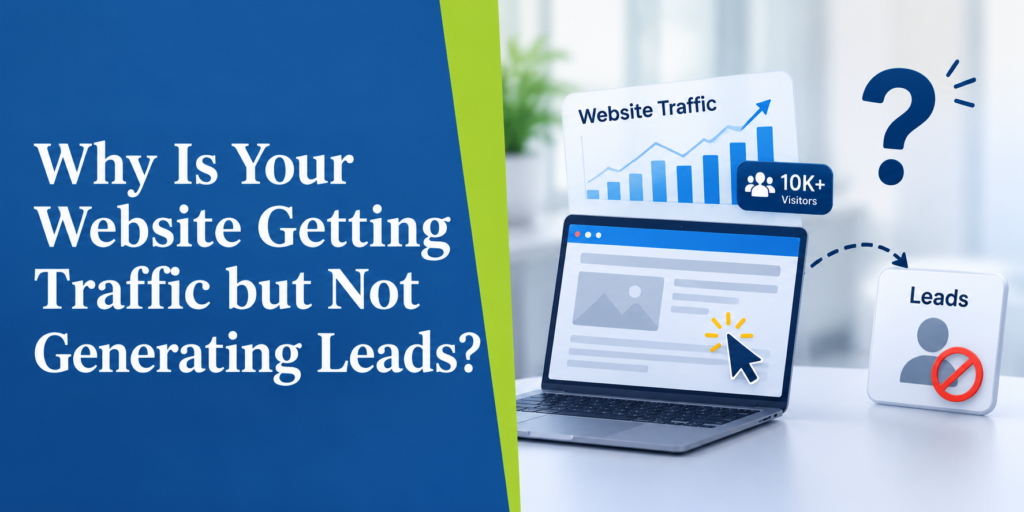
Experiencing high visitor volumes while struggling with website traffic but no leads can be one of the most frustrating challenges for digital marketers, business owners, and entrepreneurs. You invest months—or even years—into search engine optimization, content creation, and paid advertising campaigns, watching your analytics dashboard light up with thousands of unique sessions. Yet, your CRM remains empty, your sales pipeline stays dry, and your return on investment (ROI) falls flat. Why does this happen? The disconnect between high traffic numbers and low lead generation is a classic symptom of operational misalignment between visitor expectations and user experience on your web properties. When visitors arrive at your digital doorstep, they bring specific intents, pain points, and questions. If your website fails to guide them seamlessly toward a conversion action, they bounce without leaving a trace. In this comprehensive guide, we will unpack the exact reasons why your platform is experiencing this friction, explore advanced optimization frameworks, and show you how to transform passive browsers into high-value paying customers.
Understanding the Root Causes of Website Traffic But No Leads
To solve the puzzle of website traffic but no leads, you must first diagnose the underlying bottlenecks in your digital ecosystem. Traffic is merely a vanity metric if it does not translate into qualified business inquiries. Many organizations make the mistake of celebrating rising organic search rankings while ignoring underlying behavioral patterns on their landing pages.
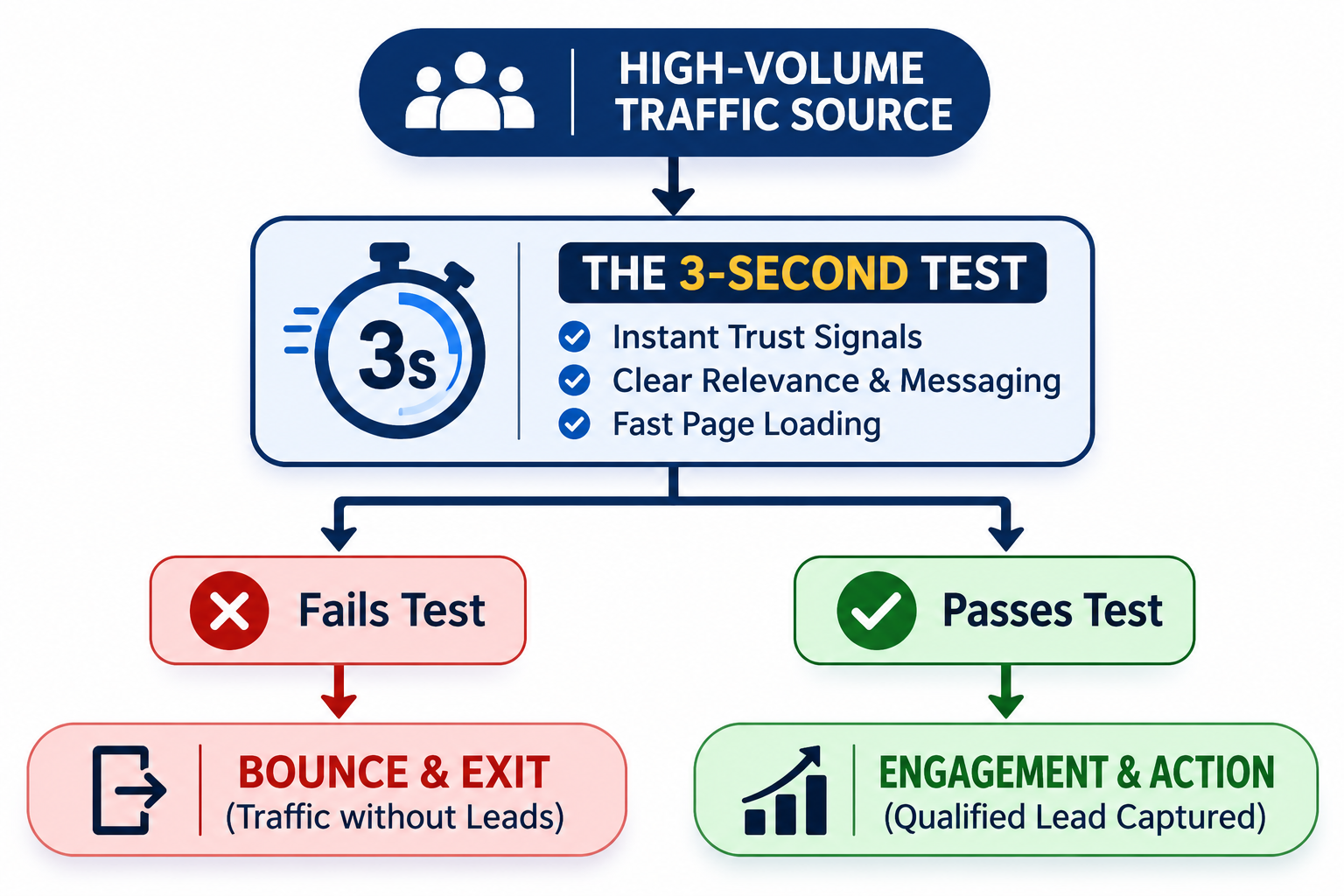
When users land on your site, they undergo a rapid evaluation process known as the “three-second test.” Within moments of arrival, they decide whether your brand looks trustworthy, whether your content directly answers their query, and whether taking the next step is effortless or cumbersome. If any element in this chain breaks down, conversion rates drop to zero, regardless of how many visitors your site attracts.
Attracting the Wrong Audience: Traffic Quantity Over Quality
One of the most pervasive reasons for having website traffic but no leads is a fundamental mismatch in keyword targeting and audience acquisition. If your SEO campaigns or paid ad strategies focus on broad, top-of-funnel keywords that lack commercial intent, you will attract window shoppers rather than serious buyers.
For instance, ranking high for an overly generalized informational term might bring tens of thousands of visitors to your blog, but if those visitors are looking for free templates rather than enterprise solutions, they will never fill out a contact form. Aligning your content strategy with bottom-of-funnel search queries ensures that every visitor stepping onto your site possesses genuine buyer intent, drastically improving your chances of capturing qualified leads. To learn more about targeting the right local or national audience effectively, a specialized approach from the best SEO company in Pune is often required.
The Hidden Impact of a Website Not Generating Leads
When you notice your website not generating leads, it often points to a deeper strategic flaw in your value proposition. Modern consumers are inundated with choices. They compare multiple vendors before making a purchasing decision. If your homepage fails to communicate your unique selling proposition (USP) within seconds, visitors will assume your service is identical to your competitors and navigate away.
Furthermore, a website not generating leads signals that your content fails to address specific customer pain points. Visitors do not care about your company history or internal accolades nearly as much as they care about how your products or services can solve their immediate problems. Shifting your messaging from self-promotional rhetoric to customer-centric value messaging is vital for reversing this trend.
Core Obstacles Why Website Visitors Not Converting
Analyzing why website visitors not converting requires a meticulous examination of on-page user behavior, technical performance, and conversion architecture. Data from industry leaders like Search Engine Journal consistently shows that minor friction points on a webpage can cause exponential drops in conversion rates.
The Anatomy of the Conversion Gap
The journey from a website click to a qualified business lead is paved with dozens of tiny potential roadblocks. A modern landing page optimization is about smoothing this path. If you are struggling with website traffic but no leads, you likely have a critical ‘leak’ in one of these conversion stages.
A standard conversion path involves a visitor arriving, identifying content that meets their need, noticing a call to action, clicking, completing a form, and receiving a confirmation.
For the visual reader, let’s explore this sequence as a conceptual framework in a professional diagram. This diagram illustrates the necessary shift from focusing solely on acquisition toward the systematic reduction of friction.
Poor User Experience (UX) Design and Slow Page Speeds
Technical performance directly impacts your bottom line. If your web pages take longer than three seconds to load, impatient users will abandon ship before your content even renders. This sudden exit spikes your bounce rate and sends negative signals to search engine crawlers. Modern SEO success is predicated on technical wellness.
Implementing robust bounce rate reduction techniques goes hand in hand with deliberate user experience (UX) design. Clean layouts, intuitive navigation menus, readable typography, and mobile responsiveness ensure that every visitor enjoys a frictionless browsing experience. If users struggle to find information on your mobile site, they will never convert into leads. The user must always know where they are, what they are supposed to do, and why they should do it, across all devices.
Ambiguous Call to Action (CTA) and Friction in Navigation
Another primary driver of low conversions is the absence of clear, compelling guidance. If a visitor reads an entire blog post or service page and is left wondering what to do next, you have failed to guide their journey. Every page on your website must feature a distinct, action-oriented call to action (CTA) that tells the user precisely what step to take next. Use strong verbs (e.g., ‘Get Your Guide,’ ‘Schedule a Demo,’ ‘Start Your Trial’) instead of generic words like ‘Submit’ or ‘Click Here’.
Moreover, excessive form fields, confusing checkout steps, or gated content that asks for too much personal information too soon creates massive friction. Simplifying your lead capture mechanisms removes mental barriers, encouraging hesitant visitors to submit their details.
Failure to Build Trust and Establish Authority
The internet is a cautious marketplace. Before a user hands over their contact information—and eventually their money—they need assurance that your business is legitimate, competent, and secure. A website traffic but no leads problem often results from a hidden deficit in trust signals.
To build immediate credibility, your website must prioritize and embed:
- Customer Testimonials and Case Studies: Showcasing social proof and successful client outcomes validates your expertise.
- Industry Certifications and Partner Badges: Displaying awards, Google Partner status, or other recognizable third-party accolades increases credibility.
- Clear Contact Information: A visible phone number, physical address, and team page assure users there is a real organization standing behind the digital storefront.
- Transparent Guarantees: Policies that promise data security (e.g., GDPR compliance, secure SSL certificates) minimize user anxiety about privacy.
Proven Strategies to Increase Website Conversions
Overcoming the barrier of stagnant lead generation requires a structured, data-driven approach to increase website conversions. Rather than relying on guesswork, top digital marketing agencies deploy systematic optimization frameworks to refine every touchpoint on the user journey.
Mastering Landing Page Optimization for Maximum Impact
A specialized landing page is designed with one singular goal: conversion. Unlike generic website pages that serve multiple navigation purposes, a dedicated landing page eliminates distractions and focuses entirely on a specific offer.
Executing professional landing page optimization involves A/B testing headlines, adjusting button colors, streamlining form designs, and embedding social proof elements. Successful landing pages maintain strict message consistency between the ad copy (or search query) that brought the visitor and the page headline. According to insights highlighted by HubSpot Marketing Statistics, businesses that actively test and refine their landing pages experience significantly higher conversion velocities than those that leave their pages static.
The Power of Conversion Rate Optimization (CRO)
Implementing conversion rate optimization (CRO) allows you to extract maximum value from your existing traffic without needing to spend an extra dollar on acquisition. By analyzing heatmaps, session recordings, and user click paths, you can identify precisely where visitors drop off and fix those leaks immediately. For specialized guidance on optimizing your regional or national search presence, you can explore professional solutions like the best SEO company in Pune.
Performing a Comprehensive Lead Generation Website Audit
Before you can fix your conversion pipeline, you must evaluate its current health through a rigorous lead generation website audit. This exhaustive review covers technical SEO health, content relevance, form functionality, and traffic quality.
A proper audit follows a step-by-step checklist:
- Analyze Traffic Sources: Identify which channels bring the highest volume of visitors versus which channels deliver actual leads.
- Evaluate Core Web Vitals: Check mobile speed, server response times, and rendering errors using diagnostic tools.
- Inspect Conversion Paths: Test every form, button, and lead magnet to ensure submissions are tracked correctly in your analytics suite.
- Review Content Alignment: Ensure your meta descriptions, headings, and body copy match user search intent accurately.
- Assess Trust Signals: Verify that privacy policies, secure SSL certificates, client reviews, and contact information are clearly visible.
Conducting this audit reveals hidden technical glitches and messaging gaps that keep your conversion rates suppressed. For broader structural improvements across your digital assets, visit Nucleosys Tech to discover how expert engineering and marketing strategies can revitalize your online footprint.
Transform Your Traffic Into Revenue with Nucleosys Tech
Turning passive web browsers into active, paying clients requires an integrated blend of technical search optimization, compelling copywriting, and frictionless user experience design. When your campaigns focus purely on traffic acquisition while neglecting conversion architecture, your marketing budget is leaking potential revenue.
At Nucleosys Tech, we specialize in diagnosing complex digital bottlenecks and building high-performance growth engines tailored to your business goals. Whether you need an advanced technical site audit, targeted keyword restructuring, or complete conversion funnel redesigns, our team delivers measurable results that turn clicks into qualified commercial leads.
Get a Free Website & SEO Audit
Stop letting valuable traffic slip through the cracks. Partner with industry experts to identify your hidden conversion barriers and unlock your website’s true commercial potential.
Contact Nucleosys Tech Today to Claim Your Free Website & SEO Audit!
Frequently Asked Questions About Website Traffic But No Leads
Why is my website getting visitors but no form submissions?
This typically occurs due to a mismatch in search intent, unclear calls to action, overly complicated form fields, or poor trust signals on your landing pages. Visitors may find your content informative but feel hesitant or confused about how to take the next step.
How can I improve my organic traffic monetization?
Effective monetization starts with targeting commercial-intent keywords, aligning your content with buyer pain points, deploying clear lead magnets, and continuously refining your site through conversion rate optimization (CRO) practices.
What is a good conversion rate for business websites?
While conversion rates vary significantly by industry, the average benchmark across most sectors hovers between 2% and 5%. Implementing targeted landing page optimization and reducing user friction can help push your metrics toward the higher end of this spectrum.
How does site speed affect lead generation?
Slow page load times frustrate users and drastically increase bounce rates. When visitors abandon your site before it finishes loading, they never get the opportunity to see your offers or fill out your lead forms, directly sabotaging your lead generation efforts.
What should be included in a professional lead generation website audit?
A comprehensive audit evaluates traffic quality, mobile responsiveness, form functionality, page load speeds, trust indicators, and the clarity of your calls to action across all high-traffic landing pages.